DNA identification of bodies of deceased: the Ministry of Internal Affairs told how they are working with a record workload

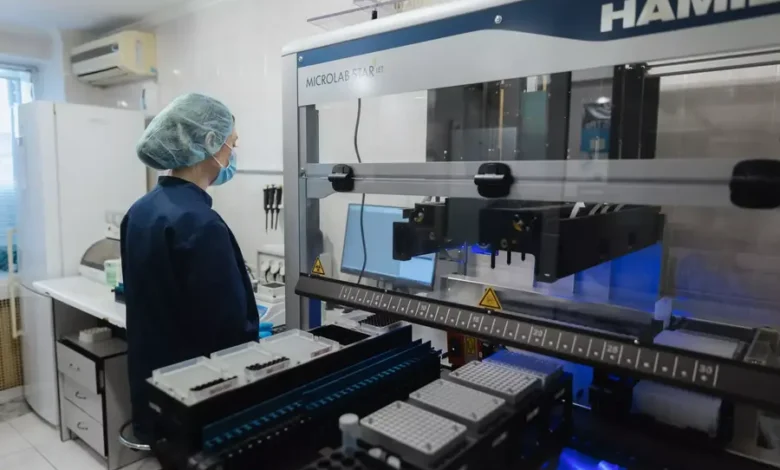
The full-scale war has dramatically increased the workload for molecular genetic laboratories that identify the dead based on biological samples. The MIA institutions perform the majority of such examinations in Ukraine, working simultaneously with materials from unidentified bodies, samples from relatives, and evidence in criminal proceedings. Due to constant repatriations, the discovery of bodies in de-occupied territories, and the difficult condition of some remains, the load on the system remains very high.
Molecular genetic examinations have become one of the busiest areas of work for the MIA expert service, as the war constantly brings bodies, fragments of remains, and biological samples to the laboratories that require accurate DNA profiling. This work includes the identification of unidentified dead, materials from criminal proceedings, and the comparison of samples with data from relatives, without which identification is often impossible.
According to the words of the Deputy Director of the State Research and Development Center Ruslan Abbasov, the MIA institutions perform about 95% of molecular genetic examinations in Ukraine. The volume of materials that pass through the laboratories is measured in tens of thousands of samples, so the workload on an individual specialist remains extremely high.
“On average, today there are about 100 examinations [in progress at the same time] per expert… Over the past year, our institutions received more than 18 thousand packages containing bodies. And on average, twice, three times more samples from them were examined… This is a huge number,” Abbasov reported.
According to him, after 2022, the State Research and Development Center system expanded significantly, as the previous capacities were already insufficient for such an array of work. If at the beginning of a full-scale war, 150 experts worked in the institutions, then as of April 2026, there were over 500 of them. The number of laboratories has also increased: instead of nine units, 22 are operating, and two more laboratories are being prepared for full-fledged launch in Cherkasy and Chernihiv regions, although for now they only examine samples of living people.
There are about 3 thousand samples of biological material from unidentified bodies in the 24 expert centers of the Ministry of Internal Affairs, and this number takes into account the repatriations that took place in January, February and March 2026. If the quality of the material allows you to quickly establish a DNA profile, the study lasts about a month, however, damage to the body, exposure to high temperatures, decay or prolonged exposure of the remains in difficult conditions significantly complicate the work of the laboratories.
Some of the examinations are delayed because years can pass between the death of a person, the discovery of the body, and the transfer of materials to specialists.
“A long period of time passes between the time the body is found and the time it is delivered. And in fact, a person could have died three years ago. The bodies of those missing in 2022 are still being delivered today,” Abbasov explained this problem.
As the deputy director of the State Research and Development Center noted, the quality of biological material deteriorates over time, but experts continue to work even with complex samples, where the result requires more time, reagents, and technical operations. The laboratories also record matches with the bodies of military personnel who died during the ATO/JOS, which confirms the duration and complexity of the identification process. Due to the constant influx of materials, the different condition of the bodies, and the need for accurate DNA comparison, the expert centers of the Ministry of Internal Affairs remain one of the main nodes of work on identifying the deceased.