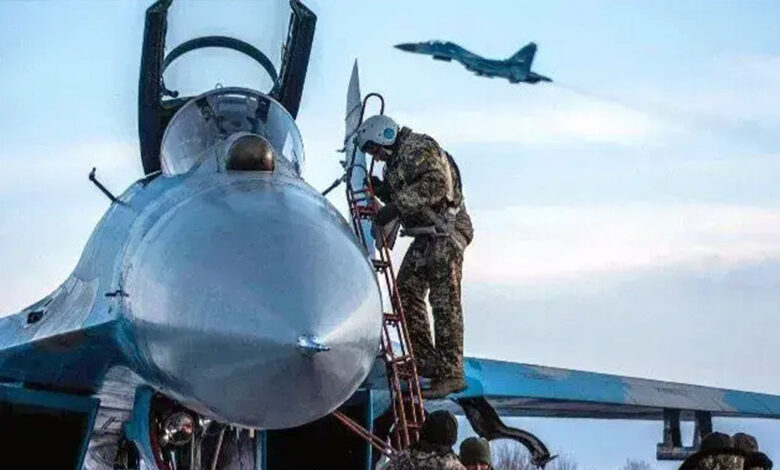
February 28 is celebrated as the Day of the Aviation Navigation Service of the Armed Forces of Ukraine, the Day of the Patrol and Post Service of Ukraine, the World Day of Rare Diseases, the World Tailors Day and the International Tongue-Treading Competition Day. On this day, historical events and discoveries have taken place in different years that have left a noticeable mark on politics, science, culture and technology, from coronations and revolutions to inventions, artistic premieres and important geopolitical decisions.
Day of the Aviation Navigation Service of the Armed Forces of Ukraine
This holiday is a professional holiday established by order of the Minister of Defense of Ukraine in 2008. It is dedicated to honoring specialists responsible for planning and executing flights, navigation and safety of aviation operations. Navigators ensure the accuracy of routes, determine the optimal ways to achieve goals and coordinate the actions of crews in various flight conditions. Their work is critically important both in peacetime and during the performance of tasks to protect the country’s airspace.
The navigator service includes training with modern navigation systems, radio equipment and the use of satellite technologies. From the preparation of routes to monitoring the actual position of aircraft in the air, the effectiveness of all aviation operations depends on it. Navigators also participate in planning tactical maneuvers, assess risks and coordinate actions with other military units, which ensures the coherence and safety of task performance in difficult conditions.
A military navigator is an extremely important and responsible profession in Ukraine, especially during this difficult period for the country. He must master many critically important details and plan the aircraft’s route so that the pilots have the maximum chance of a safe return even in emergency situations. In addition, navigators perform aerial photography, monitor the passage of waypoints and targets, aim and drop bombs, guide and launch missiles, and land personnel, equipment, and cargo. All of this requires high qualifications and thorough knowledge of their field.
Interesting facts
In the Soviet Union, the first military navigators were trained back in the 1920s, and their work included not only navigation, but also mapping new territories.
Ukrainian navigators use modern digital maps with high accuracy, which allow them to plan flights even in difficult weather conditions and during limited visibility.
During World War II, navigators of Soviet bombers could fly tens of thousands of kilometers without modern navigation devices, focusing on rivers, roads, and terrain.
Modern navigators use satellite global navigation systems, which allow determining the exact position of the aircraft with an error of less than one meter.
In Ukraine, there are specialized training centers for navigators, where they train for both combat aircraft and transport and reconnaissance flights.
Navigators participate in international operations with peacekeeping forces, coordinating flights over hard-to-reach areas and ensuring the safety of crews.
In some cases, navigators perform navigation control functions for unmanned aerial vehicles, determining flight routes and tracking the position of drones in real time.
During exercises in the mountains or deserts, navigators practice orientation methods without the use of electronic devices, relying on a compass, map and natural landmarks.
In the history of Ukrainian aviation, there are cases when, thanks to the precise work of navigators, it was possible to avoid disasters during flights in difficult weather conditions and save crews.
Navigators also keep flight logs and analytical records that help predict risks and optimize routes for future operations.
Day of Patrol and Patrol Service Workers of Ukraine
February 28 is celebrated in Ukraine as the Day of Patrol and Patrol Service Workers, who ensure public safety and order in cities and villages. Their work includes patrolling streets, controlling traffic, responding to offenses, and coordinating actions with other law enforcement units. Patrol officers are the first to arrive at the scene, and the safety of citizens and the efficiency of the entire police force depend on the accuracy of their actions.
The patrol service uses modern technologies — GPS navigation, video recording, and mobile applications to quickly respond to calls. In addition to the usual cars, some crews use bicycles, ATVs and electric vehicles to access hard-to-reach areas and parks. Patrol officers are constantly trained in tactics in difficult situations, including mass events and emergencies, which allows them to work effectively in any conditions.
Interesting facts
The patrol and post service in Ukraine was established back in the days of the UNR in 1918 and initially consisted of military officers who patrolled cities and railway stations.
The modern Patrol Police of Ukraine was established on July 4, 2015, when the first patrol officers took the oath in Kyiv, reforming the old patrol and post service of the militia (PPS) and the traffic police. This reform was part of a large-scale change in law enforcement agencies, enshrined in the Law of Ukraine “On the National Police”.
In 2025, patrol officers filed more than 138,000 reports under Art. 130 of the Criminal Procedure Code (drunk driving). They also processed over 103,000 calls, which is critically important for preventing serious crimes. Patrol officers went out and filed materials on 25,934 accidents with victims.
In Kyiv, the patrol police implemented a system of “smart cameras” that automatically recognize cars with expired documents or stolen cars.
In some regions of Ukraine, patrol officers use quadcopters to monitor large crowds during mass events or inspect hard-to-reach areas.
In 2022, during hostilities in eastern Ukraine, patrol officers, together with the military, organize the evacuation of civilians and ensure order in front-line cities.
Patrol officers use video cameras and GPS to track stolen cars and return them to their owners within a few hours.
The patrol service actively uses drones to monitor traffic and record violations in real time, which increases the effectiveness of fines and road safety.
In 2019, Kyiv patrol officers first used the “smart patrol” system, when data from cameras and GPS were combined for the optimal distribution of forces in the city.
In the history of Ukraine, there have been cases when, thanks to the efficiency of patrol officers, serious crimes were prevented, including car thefts, attacks on banks, and armed conflicts on the streets.
World Day of Rare Diseases
Every year, the last day of February is celebrated as World Day of Rare Diseases, the purpose of which is to draw the attention of society and the medical community to the problems of people with such diseases. Rare diseases are characterized by low prevalence among the population, difficulty in diagnosis, and high need for specialized treatment. The prevalence of these diseases often does not allow for mass research, so patients need individual support and access to modern treatment methods.
This day emphasizes the importance of early diagnosis, access to specialized medical services and scientific research that can improve the quality of life of patients. Medical institutions and public organizations join forces to raise public awareness, develop new treatments and support patients and their families, especially in countries with limited resources to combat rare diseases.
Interesting facts
There are more than 7,000 types of rare diseases in the world, most of which are of genetic origin.
In Ukraine, about 300,000 people suffer from rare diseases, but only a part of them has access to specialized medical care.
Some rare diseases are considered “orphan”, that is, they do not have approved treatments and require individual therapy.
There are patient organizations around the world that coordinate fundraising for the treatment of rare diseases and provide access to international clinics.
In the European Union, more than 5% of the population suffers from rare diseases, and special drug subsidy programs are in place for them.
Some rare diseases may only manifest themselves in adulthood, despite their genetic origin, which makes their early diagnosis difficult.
In the USA, there is a National Institute for Rare Diseases, which funds research and creates databases for patients.
In Ukraine, since 2018, the State Registry of Patients with Rare Diseases has been operating to improve monitoring and treatment planning.
Some rare diseases occur in only a few dozen people in the world, which makes each patient’s story unique and important for science.
Genetic testing allows you to detect rare diseases even before symptoms appear, which significantly increases the chances of successful treatment.
World Tailor’s Day
This day is dedicated to the birthday of William Howe, the inventor of the modern sewing machine. This holiday is dedicated to all sewing masters who create clothes, textiles and accessories, combining creativity and technical skill. Tailors are responsible for the accuracy of cutting, the quality of seams, the selection of materials, and compliance with modern standards of fashion and convenience.
The profession of a tailor encompasses not only individual tailoring, but also work on an industrial scale, developing patterns, improving sewing technologies, and adapting traditional methods to modern materials. Craftsmen learn to combine creativity with precise technical skills, control the quality of fabrics and finished products, and use the latest tools and machines to increase productivity and quality of work.
Interesting facts
William Howe received a patent for a sewing machine in 1846, and his chain stitch design became the basis for most modern sewing machines.
The first mechanical sewing machines were so large that they were transported on carts and used in industrial ateliers.
In Ukraine in the 19th century, tailors had their own workshops and guilds, where they trained apprentices and controlled the quality of products.
Modern sewing machines can make up to 5,000 stitches per minute, which significantly speeds up the process of making clothes.
Innovative tailors use 3D modeling of clothes, which allows them to create patterns and prototypes without cutting the fabric.
Some tailors make costumes for film and theater, including historical reconstructions, where the accuracy of details determines the authenticity of the image.
In Japan, there is a tradition of “bunka fashion school”, where students are taught sewing and cutting, combining art and technology.
It is known that a tailor can spend more than 40 hours of manual work on creating one high-quality suit.
The invention of the sewing machine significantly increased the productivity of the clothing industry and made clothing more accessible to the general population.
Some tailors specialize in inclusive clothing for people with disabilities, developing models taking into account the features of movement and comfort.
International Tongue-Treading Day
International Tongue-Treading Day is celebrated every year on the last Saturday of February. This holiday is dedicated to competitions in which participants compete in pronouncing complex and fast speech structures, testing their own articulation and speech dexterity. Competitions are usually held in a friendly atmosphere, combining learning with entertainment, and are aimed at developing diction, concentration and speed of thinking.
The holiday stimulates interest in language games, increases vocabulary and allows participants and spectators to learn the subtleties of language in a playful way. Tongue-treading is used in educational and pedagogical programs to develop pronunciation, work with rhythm and breathing coordination, as well as to train memory and attentiveness.
Interesting Facts
The longest tongue twister in English contains 22 words and repeats the sounds “s” and “sh” in complex combinations, making it almost impossible to pronounce quickly.
In Japan, tongue twisters, or “shikishi,” are traditionally used to teach children correct pronunciation and develop memory.
The Guinness World Record for the fastest pronunciation of the classic English tongue twister “She sells seashells by the seashore” is less than 3 seconds.
In the Ukrainian language, one of the most difficult tongue twisters is “There is grass in the yard, there is wood in the grass,” which is difficult to pronounce several times in a row without making mistakes.
Psychologists note that regular repetition of tongue twisters improves articulation skills and strengthens the muscles of the oral cavity, which helps with speech and singing.
Some countries hold national tongue-twister championships, where participants demonstrate speed and accuracy of pronunciation, and judges evaluate clarity and rhythm.
Scientists have found that tongue-twisters help train the brain: they activate the areas responsible for speech, hearing, and motor coordination.
Some tongue-twisters are used by actors and speakers to warm up their vocal cords before performances or rehearsals.
In China, there are tongue-twisters consisting of more than 50 syllables, and their pronunciation requires high concentration and perfect knowledge of the tones of speech.
Speech games, including tongue-twisters, are often used in children’s theater schools to develop diction and artistic abilities.
Historical events on this day
202 BC. e. — Liu Bang ascended the Chinese throne as the first emperor of the Han dynasty, laying the foundations of one of the longest imperial dynasties in world history.
1066 – Westminster Abbey was opened, which later became a symbol of the British coronation and the religious life of the country.
1638 – Scottish Presbyterians concluded the National Covenant, swearing to defend the Calvinist faith, after the English Archbishop Laud attempted to change the worship in Scotland.
1654 – King John II Casimir called on the Zaporozhian Cossacks to remain loyal to the Polish-Lithuanian Commonwealth, which had political significance for control over the territory and allied forces.
1700 – Sweden switched to its own calendar, which was in effect until 1712 and attempted to combine the Julian and Gregorian calculation methods.
1825 — a convention was concluded on the delimitation of the possessions of the Russian Empire and Great Britain in North America, which affected the borders of Canada and the United States.
1835 — the first version of the epic poem “Kalevala” by Elias Lönnruth was dated, which became the basis of the Finnish literary tradition.
1854 — the Republican Party of the United States was founded, which later played a key role in the political landscape of the country.
1921 — an armed uprising of the garrison of military sailors against the Bolshevik dictatorship began in Kronstadt, which was supported by the crews of several ships, but was suppressed by the Red Army in March.
1922 — Great Britain unilaterally terminated its protectorate over Egypt, after which Sultan Fuad I assumed the title of king.
1922 — the first production of the play “Princess Turandot” by Carlo Gozzi was held in the third studio of the Moscow Art Theater, which became a significant stage in the development of theatrical art.
1925 — the joint-stock company “Radio Broadcast” began publishing a special newspaper “Radio News”, which popularized the latest communication technologies.
1933 — German President Hindenburg signed a decree “On the Protection of the Republic” after the arson of the Reichstag, which effectively limited civil liberties in the country.
1935 — the DuPont research institution produced the first sample of nylon, which became the basis for the development of synthetic materials.
1955 — The Hanoi-Beijing-Moscow-Berlin railway was inaugurated, becoming an important transport route for communication in Eurasia.
1971 — Liechtenstein upheld a legal ban on women from running for office, reflecting the social restrictions of the time.
1984 — Michael Jackson won eight Grammy Awards, setting a record for performers on the music scene.
1986 — Swedish Prime Minister Olof Palme was assassinated in Stockholm; the crime remained unsolved and influenced the political atmosphere of the country.
1988 — A pogrom of Armenians was committed in Sumgait, a tragic example of interethnic conflicts in the region.
2000 — Ірак та Сирія поновили дипломатичні стосунки після майже двадцятирічної перерви, відновивши офіційні канали спілкування.
2013 — Бенедикт XVI зрікся престолу, ставши першим Папою Римським за останні кілька століть, який залишив цей пост добровільно.
2015 — Макарій (Малетич) обраний місцеблюстелем предстоятельської кафедри УАПЦ, очоливши управління кількома єпархіями.
2022 — Україна офіційно подала заявку на вступ до Європейського Союзу, започаткувавши новий етап інтеграції.
2024 — Рада ЄС схвалила інструмент Ukraine Facility обсягом 50 млрд євро на 2024—2027 роки для підтримки розвитку України.