French and Polish farmers rage: blockade of Bordeaux port and Medyka-Shehyni checkpoint as a means of pressure on governments (continued)

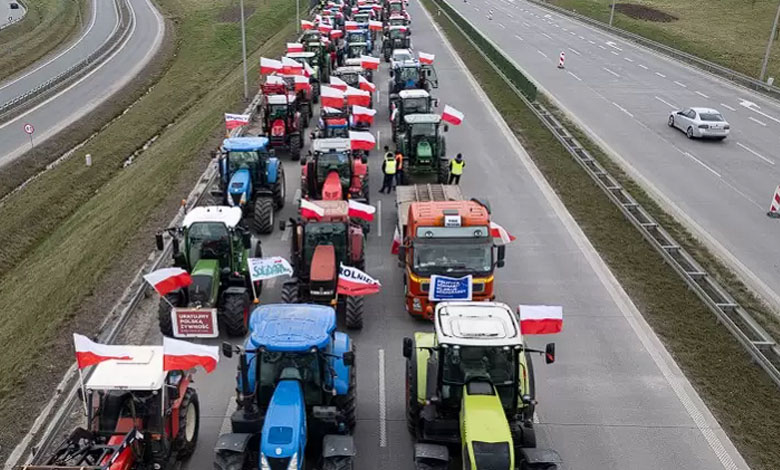
IA “FACT” already reported that a group of protesting farmers tried to block work at the port of Bordeaux in southwestern France on Thursday. This is another outburst of anger among farmers in the leading agrarian state of Europe. And today a similar one began protest action of Polish farmers in front of the “Medyka-Sheghini” checkpoint. This strike is the result of a long accumulation of problems in the agricultural sector of Poland.
The main reason for the protest is the unfulfilled promises of the government. In particular, farmers are outraged by the decision not to freeze the agricultural tax as previously promised. They believe that the government ignores their economic needs and transfers financial difficulties to farmers.
Another reason is the import of Ukrainian grain. Despite the Polish embargo introduced in April 2023, Ukrainian grain still enters the Polish market, creating unequal conditions of competition. This worries farmers, as the drop in grain prices threatens the profitability of local production.
An additional concern is the upcoming trade agreement between the EU and the MERCOSUR (Southern Common Market) countries. Polish farmers fear that its conclusion will lead to an increase in the import of cheap agricultural products from Latin America, which will increase competition and may further complicate their situation.
It can be argued that the strikes of French and Polish farmers are links of the same chain, because both reflect a common global problem that the agricultural sector faces in the conditions of modern economic integration and globalization. We offer to consider examples that illustrate the global economic trend manifested in these protests. The cases presented below are united by the global tension between the processes of economic integration and local challenges caused by unequal conditions of competition arising from differences in environmental, social and labor regulations.
Agreement between the EU and MERCOSUR
The above-mentioned Agreement between the EU and MERCOSUR countries – Argentina, Brazil, Paraguay and Uruguay – was supposed to increase trade between the regions, but caused concern among European farmers. They fear that cheap imports of South American meat, grain and soybeans will crowd out local products. While European farmers are forced to comply with strict environmental and social standards that raise costs, in South America such regulations are much more relaxed or non-existent.
Because of this, the so-called “ecological dumping” arises: South American products are cheaper, because there they do not spend money on compliance with high standards. This puts European manufacturers at a disadvantage. They are afraid of losing their income, and sometimes the opportunity to work further.
Farmers staged protests, insisting that products imported into the EU must meet the same strict rules as European ones. Farmers in France blocked roads and went on strike to draw attention to the problem. They are convinced that the agreement threatens not only their work, but also the quality of products for consumers.
Free Trade Agreement between the United States, Canada and Mexico (NAFTA/USMCA)
The free trade agreement between the United States, Canada and Mexico, known as NAFTA (as of 2020 USMCA), was supposed to help the three countries facilitate trade by lowering tariffs and unifying their markets. But for many Mexican farmers, it has become a source of problems, threatening their jobs and incomes.
One of the main difficulties for Mexican farmers was the cheap import of corn from the United States. American farmers were subsidized by the government, so they could sell their products at prices lower than the production costs of Mexican farmers. Because the Mexicans did not receive this support, they could not compete with cheap American grain. As a result, some of them lost customers and found themselves on the verge of bankruptcy.
In addition, American farmers had access to modern machinery and new technologies, which allowed them to produce more products more cheaply. This increased the inequality between the opportunities of farmers in the two countries. Mexican farmers began to feel that this agreement worked in favor of large and rich economies, leaving less developed countries in the role of buyers of cheap imports.
Mexican farmers were not left out. They organized protests, demanding a review of the terms of the agreement. Their main demands included supporting local producers, setting minimum prices for grain, and creating government programs to help small farmers. They felt it was unfair that trade did not take into account differences in subsidies and levels of support for farmers in each country.
These protests forced the Mexican government to choose between two options: support its farmers or adhere to international agreements. In order to preserve economic stability and important relations with the US, the government decided to leave the agreement unchanged. This, in turn, fueled even more resentment among farmers who felt their interests were being ignored.
For many small Mexican farmers, the consequences were dire. Having lost their markets, they were forced to leave their fields and look for work in the cities. This increased social inequality and made the country even more dependent on imports.
This situation became a lesson for other countries. She showed that free trade agreements can create problems if the interests of local producers are not taken into account. The 2020 revision of NAFTA, which transformed the agreement into the USMCA, included some changes to mitigate the negative effects. However, the story of the Mexican farmers remains an example of how globalization can lead to inequality if the interests of all parties are not properly taken into account.
Protest against the TPP trade agreement
The Trans-Pacific Partnership (TPP) was created in 2016 to improve trade between 12 countries in the Pacific region – Australia, Brunei, Canada, Malaysia, Mexico, New Zealand, Peru, Singapore, the United States, Chile, Japan and Vietnam. A year later, the US withdrew from the agreement. The agreement was supposed to reduce tariffs and open new markets, but it brought serious difficulties to Japanese and New Zealand farmers.
The TPP allowed cheap Australian and American beef and grain to enter overseas markets. In these countries, farmers have large agricultural holdings and better conditions for production, so their products are cheaper. Instead, Japanese and New Zealand farmers could not compete with them, having higher production costs.
For Japanese farmers, this agreement became a serious threat. For example, rice is not only a staple food, but also part of the culture of the “land of the rising sun”. Farmers feared that cheap imports would destroy their businesses and undermine the local economy. In New Zealand, farmers also worried that they could not compete with the big Australian exporters.
Japanese farmers went on strike, demanding protection for local producers. They insisted that tariffs on imported beef and rice must remain high to support domestic production. For many of them, it was a matter of survival.
The Japanese government found itself in a difficult situation. Participation in the TPP promised benefits to other sectors—industry or technology—while costing significant losses in agriculture. The preservation of the rural way of life, especially in regions dependent on farming, has become a serious dilemma.
Farmers’ protests against the TPP showed how important it is to consider the interests of local producers when concluding international agreements. For countries like Japan, where farming is not only economically important, but also culturally important, supporting the agricultural industry is a priority.
The TPP has also highlighted inequality between participating countries. While for Japan the international agreement created serious threats to farmers, for Australia the agreement opened up new markets.
Competition between African producers and imports of cheap products from the EU
The EPA economic partnership agreement between the Eurozone and African countries was supposed to promote trade, but instead created serious difficulties for African farmers. Due to the import of cheap European dairy products and chicken, local producers found themselves in unequal conditions. The reason for economic inequality was once again large state subsidies for European farmers, which allow them to lower prices for products, and the lack of such subsidies from the governments of the hot continent, as well as the lack of availability of modern technologies.
This has led to the fact that European goods, even taking into account logistics costs, cost less than local products. For example, in Nigeria and Kenya, cheap meat and milk powders from the EU are pushing local producers out of the market. For many farmers, this means loss of income, and for the economies of these countries – increased dependence on imported food.
As had happened in previous cases, African farmers began to protest, demanding that governments take measures to limit imports and support local production.
Competition of the textile industry in European countries with imports from Asia
European textile manufacturers face difficulties due to cheap imports from China, Bangladesh and other Asian countries. The cheapness of these products is explained by low wages, lack of social guarantees for workers and less strict environmental regulations in these countries. In contrast, European factories with high wage and environmental standards simply cannot compete on price.
European companies are calling on governments to impose tariffs on cheap imports to protect the domestic market. They also suggest that the quality and environmental friendliness of imported products must be checked so that they meet European standards.
These are important measures, because cheap imports hurt local producers and can also affect consumers if it turns out that such goods are of lower quality and their production is harmful to the environment. Solving this problem requires a balance between affordable prices for buyers and protection of local businesses that create jobs and care for the environment.
The Canadian dairy industry and CETA (EU-Canada)
The free trade agreement between the European Union and Canada – CETA – opened the Canadian market to European dairy products. It was supposed to facilitate trade between the regions, but for Canadian farmers the agreement created serious difficulties.
European farmers receive significant subsidies from their governments, thanks to which they can offer their dairy products at lower prices. Canadian farmers work in a quota system that regulates production volumes, ensuring stable prices, but at the same time does not provide for large subsidies. As a result, European dairy products, primarily cheese, butter and yogurt, are often cheaper than Canadian ones.
Canadian farmers opposed the deal, saying it was unfair to compete with cheap European products. They call on the government to protect the local market, maintain the quota system and support domestic production. Farmers also fear that dependence on imports could threaten Canada’s food security.
The dairy industry is an important part of the country’s economy, especially for rural regions. The loss of market share will mean not only reduced income for farmers, but also reduced jobs. In addition, it can affect local communities that depend on farmers’ income.
The CETA agreement has created new opportunities for trade, but at the same time it has brought difficulties for Canadian dairy farmers. In order to preserve local production and ensure fair conditions of competition, a balance must be found between the openness of the market and the support of the domestic economy.
Problems with the import of palm oil to Europe
Palm oil, which is massively imported to Europe from Indonesia and Malaysia, causes serious controversy. Its cheapness gives suppliers an advantage over local rapeseed or sunflower oils and hurts European farmers. The production of palm oil is also associated with environmental and social problems: deforestation, environmental pollution and violation of workers’ rights.
European farmers complain of unequal competition because local production is more expensive due to strict standards and the lack of subsidies that farmers in Indonesia or Malaysia have. They call for import restrictions or tariffs to support local production.
Environmentalists are concerned that tropical forests are being cut down to grow palm trees, which destroys natural habitats for many species of animals and exacerbates climate change. Often areas under plantations are cleared by arson, which causes large-scale fires and harms the air.
EU countries are beginning to restrict the use of palm oil, particularly in biofuels, and introduce certification to ensure that imported oil meets environmental standards. Consumers are also increasingly opting for palm oil-free products, putting pressure on producers.
These examples demonstrate that globalization brings both opportunities and threats, forcing local producers to look for ways to protect their interests against the background of opening markets and increasing international competition.
Tetyana Viktorova