G7 leaders guarantee stability in the Strait of Hormuz, but when the war in the Middle East ends

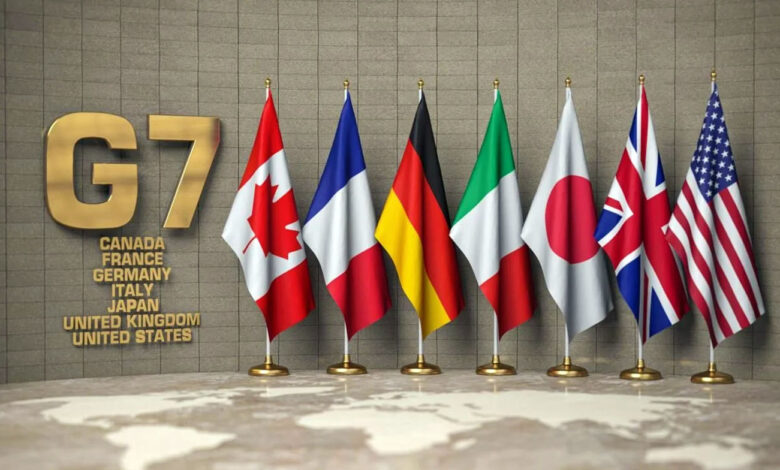
The foreign ministers of the Group of Seven countries following the summit in France published a joint statement on security in the Strait of Hormuz. The heads of diplomacy emphasized that a special international mission to protect shipping in this strategic region will be implemented only if there is a complete cessation of hostilities in the Middle East. The G7 countries emphasized that the free passage of merchant ships is a common good that must be protected from the consequences of regional conflicts.
The head of the French Foreign Ministry, Jean-Noël Barrot, commenting on the decision, emphasized the importance of maintaining access to international waters. According to him, the world community cannot tolerate a situation where key sea arteries are blocked due to clashes that do not involve countries that need this shipping for their economic activities.
“There is a very broad consensus in the international community on preserving the common good — freedom of navigation. There can be no question of living in a world where international waters are closed,” emphasized Jean-Noel Barrot.
The French position was supported by German Foreign Minister Johann Wadeful. He confirmed that Berlin is ready to play an active role in ensuring security in the Strait of Hormuz, but only after the active phase of military operations is over. The German side sees such participation as part of international efforts to restore the stability of global supplies.
“Germany is certainly ready to play a role after the end of hostilities in ensuring the safety of shipping,” he noted.
The head of European diplomacy, Kaia Kallas, drew attention to the complexity of the geopolitical situation and the interconnectedness of conflicts in different parts of the world. She pointed to Russia’s role in supporting Iran and called on all parties concerned to return to diplomatic dialogue. Kallas stressed that without stabilizing the political situation, it will be extremely difficult to guarantee security on the water.
“We must focus on diplomatic efforts, because regional tensions directly affect global economic security,” Kallas concluded.
Previously, representatives of the US administration also spoke about the readiness of the naval forces to provide escort for oil tankers. Although the US fleet has not yet begun active operations in the strait, Washington does not rule out such a possibility in the near future to maintain stability in energy prices.