
He tortured, threatened, but went out on personal obligation: a court decision in the case of beating a girl in Bila Tserkva

Cruelty among children is striking in its impunity and cynicism. It would seem that a full-scale war should teach teenagers to appreciate life, to understand the true value of human dignity, kindness and mutual assistance. But even at such a time, child cruelty breaks out in its most disgusting manifestations – and becomes an increasingly large social problem. Ukrainian news feeds are increasingly filled with reports of beatings, bullying, humiliation of peers — sometimes just for the sake of entertainment, filming and collecting views.
At the same time, it is difficult not to wonder: will such cases become less frequent if society continues to tolerate lenient court decisions? If, even in high-profile cases, courts choose minimal preventive measures for offenders, won’t teenagers perceive this as a signal of impunity? Because if the responsibility for torture, extortion and abuse is only a personal obligation, then what is the limit of what is permissible in the eyes of a teenager who already has no fear of the law?
This is exactly the question that arises after another high-profile case that shook the White Church and the whole of Ukraine. It is about the beating of a 12-year-old girl by a group of teenagers. The video of bullying that went viral on social networks became a shocking proof not only of the moral degradation of teenagers, but also of how easy it is in today’s society to humiliate and beat a person just like that – on camera.
According to the investigation, a group of minors gathered in a local park and invited a 12-year-old girl there. The senior in the company, a 16-year-old boy, not only hit her on the head, but also sprayed a gas canister in her face, demanding 15 thousand hryvnias. The girl was beaten one by one, it was filmed. Her relative painfully noted on social networks: “Father, brother and cousin are now on the front lines, protecting us from the invaders, but there is no one to stand up for the girl.” According to her, the girl was left alone with a group of teenage aggressors.
The police quickly identified seven participants in the abuse, aged between 12 and 16. The oldest, a 16-year-old boy, was charged with two articles of the Criminal Code of Ukraine: torture and extortion. He faces up to 12 years in prison. Later, the law enforcement officers announced that they had reclassified the actions of three more teenagers — now they are also suspected of torture.
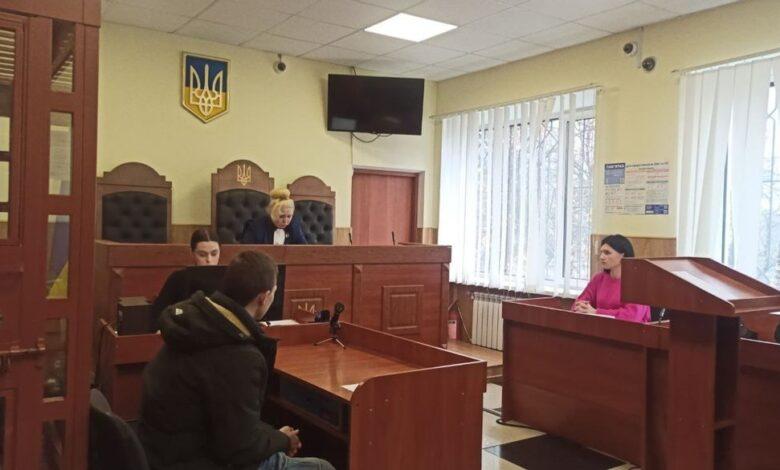
It would seem that such a composition of the crime should be the basis for a strict preventive measure. At the same time, the Shevchenkiv District Court for some reason decided otherwise. He refused to continue the detention of the suspect and chose a new preventive measure for him – personal commitment. About this informs Kyiv Regional Prosecutor’s Office. So, in fact, a 16-year-old participant in the torture, who not only beat the child, but also blackmailed her, went free.
As the Kyiv Regional Prosecutor’s Office explained, during the meeting the defense provided medical documents and positive characteristics of the boy from the place of study. In addition, the suspect himself stated that he “sincerely repents”. The court took this into account and allowed the teenager to remain free.
The lawyer who represents the interests of the victim considers the court’s decision unreasonably lenient. He noted that in such a case, 24-hour house arrest would seem more logical – it does not violate the right to freedom, but at least limits movement and makes it impossible to repeat similar actions. However, the court made a different decision.
The prosecutor’s office already announced about the intention to appeal such a decision and insists on a real limitation of the suspect’s freedom.
This case is another mirror for society. After all, before us is not just another story about teenage cruelty. This is the story of how the system responds to such evil. Does the injured party feel protected? Will those who cause pain understand that they will have to answer for everything? Will other teenagers watching this case feel that there is a line that cannot be crossed?
Because if the system once again makes it clear: you can beat the weaker ones, you can torture, you can demand money – and for this you will get a “personal obligation” at the most – then tomorrow there will be even more such cases. And then not only children will be guilty, not only indifferent adults, but also those who had the opportunity to set a limit – but did not do it.
Society must realize a simple thing: to punish does not mean to take revenge. To punish means to protect victims and educate criminals. Without real responsibility, there will be neither remorse nor awareness of guilt. Because kindness, compassion and humanity are brought up not by words, but by examples and justice. And if today these examples are about impunity, tomorrow they will become the norm.


