
HiPP baby food is being tested in Slovakia due to the threat of poisoning: what Ukrainian refugees should know

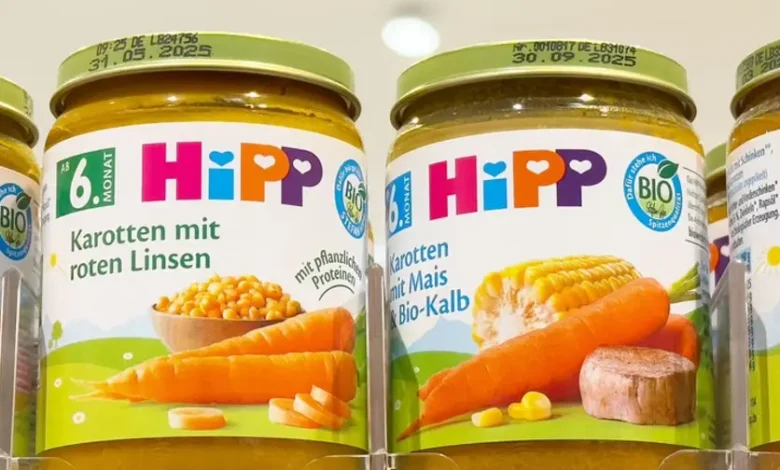
The issue of baby food safety for Ukrainian refugees in Slovakia is of quite practical importance, as many families buy familiar products for their children in supermarkets, not expecting a risk from a product that is on the shelf among everyday purchases. Recently, a report on the inspection of individual HiPP baby food jars after suspicion of possible intentional contamination attracted particular attention, as a result of which the Slovak health services and the police launched an investigation and urged consumers to inspect the packaging more carefully before use.
In Slovakia, individual batches of HiPP baby food are being inspected after information about possible contamination. The reports named HiPP puree “rice with carrots and turkey meat” and “vegetables with rice and veal” for children from eight months in 220-gram jars.
After this information appeared, what should be important for parents is not the overall impression of the brand, but the specific condition of the jar, lid and contents, because we are talking about products for children from eight months, which are purchased regularly and often without additional inspection. Ukrainian families temporarily living in Slovakia should know which products have been inspected, what the services report, how to react to suspicious packaging, and why this story has already spread beyond the borders of one country.
Suspicious jars were discovered in one of the stores in the city of Dunajská Streda. After that, the goods were withdrawn from sale and sent for examination. The inspection was attended by health authorities, police, specialized units, and international partners.
For parents in this situation, a careful inspection of the packaging before opening is key, as external signs can give the first signal of possible tampering. The services ask to pay attention to jars that look already open, do not make a characteristic sound when opened, or have an unusual smell.
If there is at least one such sign, the product should not be consumed and should not be given to a child. The jar should be isolated, hands should be washed after contact with it, and then the police or local health authorities should be notified.
For Ukrainian refugees in Slovakia, this information is important for several reasons related to everyday life. First, baby food is often purchased quickly, without a long examination of each item, especially if the family chooses a familiar brand. Second, many Ukrainian families live near the border, travel to neighboring countries for shopping or buy the same products in different retail chains, so an inspection in one country may affect a wider range of consumers.
Therefore, Ukrainians should check baby food jars more carefully even during regular shopping, not use a product with a suspicious lid or smell, and monitor local services if the family buys such products in Slovakia, the Czech Republic, or Austria.
Slovak services are currently checking the seized jars, and the results of the examination should show whether the suspicion of contamination is confirmed. Until the inspections are completed, parents are advised to be cautious when buying and opening baby food, as in such cases every detail of the packaging matters, from the tightness of the lid to the smell of the contents.
According to media reports, a poisonous substance was also found in HiPP baby food jars in the Czech Republic and Austria. In this regard, the products are also being withdrawn from sale there, and among the main versions of the investigation, deliberate interference, preceded by anonymous threats to the manufacturer, is being considered.
This circumstance gives the case a broader scope, since the inspection no longer concerns an isolated incident in one store, but a possible scheme of interference with baby food sold in several countries. For consumers, this means the need to be especially attentive to any signs of damage to the packaging, even if the product was purchased from a large chain and looks familiar.


