In the digital age, the Internet has become not only a source of information and entertainment, but also a space for the activity of fraudsters. Every year, the number of fraudulent schemes that target gullible users is increasing. From fake online stores, phishing emails and messages to hacking social media accounts and bank fraud, cybercriminals use a variety of methods to get hold of other people’s funds or personal data. The danger is that fraudsters are constantly improving their schemes, making them increasingly difficult to detect. Everyone who uses the Internet is at risk of becoming a victim of fraud if they do not know how to protect their data. In the digital world, security knowledge is the first and most important defense.
Lawyers of the “Repeshko and Partners” Bar Association talked about the main types of fraudulent schemes on the Internet, which are currently the most common in Ukraine. They also commented on the current legislation that regulates the fight against cybercrime, and provided practical recommendations on how to protect yourself and your loved ones from fraud.
Our defrauded clients often ask for help in this matter. We are all used to the fact that the Internet has become a reliable assistant in our everyday life. Here you can find a job with a good salary or a part-time job at a convenient time, sell what you don’t need in the household or buy at a good price what you need right now, find symptoms of a particular disease, like-minded people in a hobby, and many other different things. But at the same time, we must not forget that the fraudsters have not gone anywhere, and they have also moved from the market squares to the same place where all ordinary citizens go – all to the same Internet.
According to the Office of the Prosecutor General, in 2023, 82,609 criminal proceedings were opened in Ukraine under Art. 190 CCU “Frauds”. This number is the highest in the last 11 years. In 2024, 64,978 criminal proceedings were opened in Ukraine under Article 190 of the Criminal Code “Fraud”, which is 21% less than in 2023. As we can see, the situation in the country, unfortunately, only contributes to the flourishing of fraudulent schemes. However, if a person is warned about possible options for fraud, has critical thinking and attention, the risk of falling into the clutches of fraudsters is minimized.
Based on the nature of appeals and statements of citizens to the National Police of Ukraine, the following are currently the most common types of fraudulent actions:
- Sale of goods that do not exist – the buyer finds a good on the Internet at an attractive price, transfers the entire amount or prepayment to the seller for the details specified by the seller, and that’s it. Communication with the buyer is blocked by the seller, the ad is removed from the site.
- Calls on behalf of bank employees – the fraudster introduces himself as a bank employee and reports that the person’s bank card has been blocked. There are various reasons for blocking: someone trying to withdraw money from the account, updating data due to martial law, and many other options. On this basis, fraudsters ask to provide confidential financial data or force the victim to transfer funds to a “safe” account. Fraudsters only need to receive a corresponding audio message in the voice of the victim from those who have activated the “voice recording” service at AKB Privat-Bank, which they will later use to debit funds from the account.
- Phishing is an unfamiliar word that basically means substitution. Fraudsters create copies of the websites of marketplaces, banks, delivery services, charities or other online services and induce citizens to enter their payment details on such fraudulent platforms. In this way, fraudsters gain access to other people’s accounts and empty them. Currently, the scheme is very widespread in the form of a reference to the “yesHelp” program or payments to Ukrainians from the UN, the Red Cross and other international organizations, a raffle of certificates for food or hygiene kits by well-known retail chains, etc.
- Hacking of accounts in social networks and instant messengers with a subsequent request for help – there is probably no person who has not encountered this type of fraud at least once in his life. From a person who is recorded in your contacts in the phone, a message arrives: “Hello Oleksandr, will you not have 19 thousand hryvnias? I will translate it by Sunday evening.” It happens that immediately from this person to another messenger comes a message about the hacking of the account and a warning against transferring money.
- Earnings on the Internet. Fraudsters send messages with offers of remote employment. The essence of the work is to put “likes” in social networks or positive evaluations of products in online stores, to watch videos on YouTube. The amount of the reward is several hundred hryvnias per day. A separate “fashionable” topic is crypto currency.
- “Your relative is in trouble”, “You won a car”, SIM card replacement. In such schemes, fraudsters usually use the moment of suddenness, panic, strong emotions, either from the fact that the son is in danger, or from winning a car, which ultimately has only one goal – the transfer of funds by the victim to the account of the criminals.
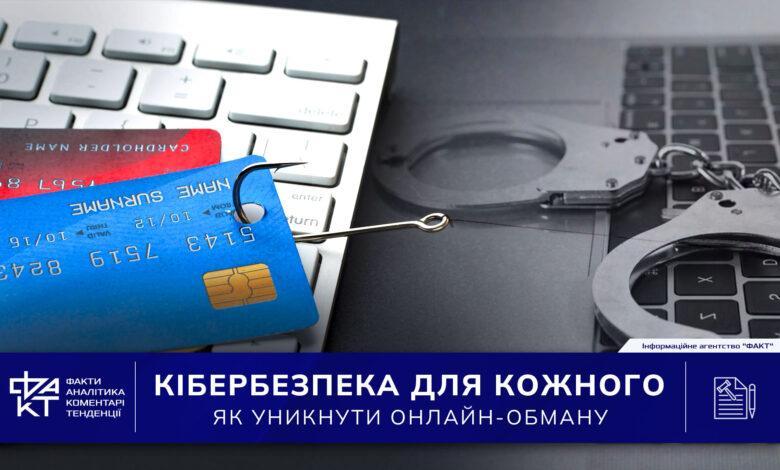
Skimming stands apart from other schemes – fraud with bank cards, when criminals attach hidden devices to ATMs that read information from the magnetic strips of cards: name, number, expiration date, CVV2/CVC2 codes. Recently, it is not as widespread as the ones listed above, but you should not forget about it either.
Since the beginning of hostilities on the territory of Ukraine, actions related to the purchase of military equipment, driving cars from abroad for the Armed Forces, collection of funds by volunteers and charitable organizations for the needs of the Armed Forces, renting housing for IDPs in safe parts of the country, and assistance in crossing the state border of Ukraine by men of conscription age have become relevant fraudulent activities. As we can see, fraudsters adapt very quickly to the current needs of society, because not everyone will be able to withdraw three thousand dollars in exchange for an inflatable circle in the form of a donut, on which it is suggested to swim across the Tisza River.
In order to minimize the risks of being caught by scammers, in addition to critical thinking, we recommend taking the following measures:
- Install two-factor authentication – this will make it significantly more difficult for attackers to gain access to your account, even if they manage to learn your password.
- Use sufficiently complex (from 12 characters) unique generated passwords with special characters, numbers and upper and lower case letters for each social network, use password managers and do not transfer confidential information to third parties. Criminals can impersonate administrators, friends, or support staff in an attempt to trick you with data or money.
- We also advise you to monitor account activity and periodically check active sessions and regularly check account statements for suspicious transactions.
- Due to the fact that one of the fraudsters’ schemes is related to the reissuance of SIM cards, prohibit the remote restoration of the number, go through the personalization procedure (binding passport data to your number), or switch to contract service from a mobile operator.
- Do not accept the offers of strangers to make easy money in a short period of time, such as “I am looking for a team of two employees, income from $ 1,000 per week.”
- Do not accept a job in which you need to purchase something first – a package of documents, consumables, a product with a discount for resale. In this case, the money goes to the accounts of fraudsters, and the maximum they can send you is a box with garbage.
- Do not rent out your pages in social networks or acanthus in messengers – everything that will be posted on them at this time will be your trouble in the future, you will be an accomplice in a criminal case.
- Never and under no circumstances disclose confidential information to third parties (bank card expiration date, CVV and PIN code, mother’s maiden name, codes from SMS messages from the bank or cellular operator, logins and passwords for online banking, etc.).
- Do not enter sensitive information on suspicious websites. Carefully check the URL of the website and do not click on questionable hyperlinks, because even one distinguishing symbol can mean that it is a phishing resource.
- Make it a rule not to use Wi-Fi in public places as much as possible. Entering passwords in this case puts you at a very high risk of their theft and subsequent use for fraudulent schemes.
- Use a separate card with a limited balance for online purchases.
- Check the information by calling the official number of the bank or organization.
- Do not follow links from suspicious e-mails and links in messengers, such as – vote for Darynka in the dance contest, there are only two days left.
If you suspect fraudulent activities, contact the police immediately on 102 and report everything that happened. In addition, you need to come to the nearest district police station to write a statement and leave a written explanation. It will not be superfluous to submit a request through the feedback form on the website of the Cyber Police Department.
In addition, the following steps must be taken:
- immediately take screenshots of messages in messengers, e-mails and save other evidence that confirms the fact of fraud;
- block the card and account yourself through the application or immediately contact your bank with the same request;
- urgently change all passwords – to social networks, accounts in messengers, e-mail.
- inform the administration of the Internet platform or messenger about the fraudster and his fraudulent actions.
In connection with the latest news, we once again warn about the mortal danger associated with cooperation with agents of the Russian Federation. The forms of involvement can be different – setting fire to a military car, assembling a bomb, taking a package to the specified address, making a photo report, etc. Usually, high payment is promised for such services, but no one has ever received money for such a thing, but life imprisonment or maiming or death from a remotely detonated package that had to be delivered more than once. In addition, already coming into contact with representatives of the Russian Federation, you find yourself on his hook, because in the future you will be blackmailed by the fact of communication or already completed work, inciting new illegal actions for free.
Under such circumstances, the income related to drug couriers went into the background, but still did not disappear. For quite decent money, a person is offered to transport a package or take it away and leave it in an agreed place. Criminals look for their victims both on the Internet and by offering them directly in messengers to perform easy, but very profitable work.
The main thing to remember is that you should not click on dubious links, as phishing sites can steal your data. You should download applications only from official marketplaces, so as not to run into malicious software. Think critically and impartially and remember: “Free cheese is only in the mousetrap.”