
How to act during an explosion: explained by a first aid instructor, specialists from the Ministry of Internal Affairs and the Ministry of Health

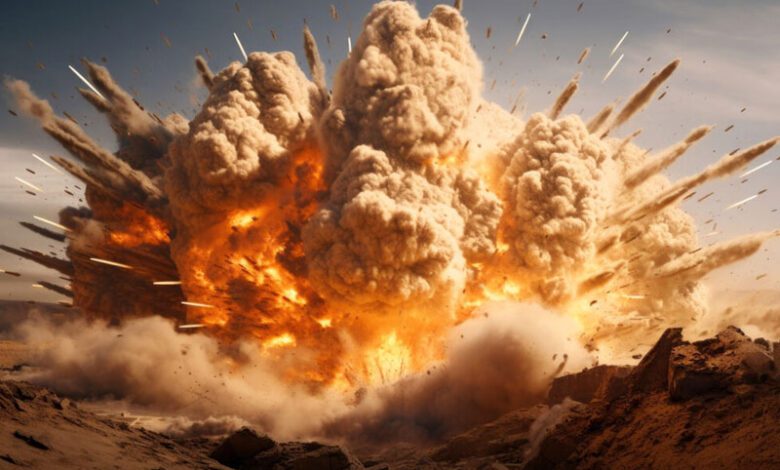
With the beginning of a full-scale war, the issue of survival as a result of missile, artillery and airstrikes turned into an everyday reality of a large part of the Ukrainian population. In many regions, explosions occur regularly, often in residential buildings. Even in the absence of a direct hit or direct contact with ammunition, a person can be seriously injured. An explosive wave is especially dangerous, the effect of which is not always immediately visible, but can cause a concussion, barotrauma or internal damage. That is why the ability to reduce the consequences of an explosion, take the right position, protect yourself and provide assistance to the victims have become not an abstract skill, but practically necessary knowledge for everyone. War veteran, pre-medical care instructor Oleg Lelyakin explained, how exactly to act during an explosion to reduce the likelihood of injury, and explains how to properly organize self-help and first aid for others.
Oleg Lelyakin emphasizes that the main thing is to learn how to react correctly to the situation even before an explosion occurs. If a person hears an air raid signal or sees a dangerous object in the sky, it is necessary to seek shelter immediately. At the same time, he warns: even if the explosion has already occurred, you should not approach the place of impact, because after the first wave there are often repeated explosions or additional ammunition is triggered.
Lelyakin considers it critically important to know the elementary rules of behavior during an explosive wave. If a person is caught by an explosion in an open space, he should immediately lie face down on the ground, preferably in a recess, covering his head with his hands. If possible, you should find a depression in the ground or use any solid shelter that can absorb the main impact. He explains that it is no less important to open the mouth at this moment – this will partially reduce the pressure in the middle ear and avoid barotrauma.
Separately, the instructor pays attention to the impact of the blast wave on the internal organs. Even without visible external injuries, a person can receive a serious injury to the brain, lungs or heart. That is why, if there is a loss of coordination, headache, weakness or tinnitus after the explosion, you should definitely consult a doctor. He notes that without medical intervention, such symptoms can turn into post-concussion syndrome — a disorder that makes itself felt for a long time after the injury.
Lelyakin also explains in detail how to act when massive bleeding is detected. Proper use of a tourniquet can save lives in situations where blood loss is critical. The tourniquet should be applied 5–8 cm above the bleeding site, but never on the joint. If the lesion is not obvious, the tourniquet should be placed as high as possible on the limb. It is important to tighten it until the bleeding stops completely, fix all the elements, check the density and be sure to specify the application time. The SICH turnstiles, which are used in Ukrainian units, have a special surface for this purpose, on which the time can be marked even with a sharp object.
He considers it important to have a first-aid kit with a full set to stop bleeding: in addition to a tourniquet, these are bandages, sterile napkins, medical gloves, a marker, scissors. A first-aid kit should be not only at home, but also in the car, at work, in a backpack – wherever a person is regularly.
The instructor also explains the algorithm of actions in case the injured person faints. In this case, it is necessary to check the patency of the respiratory tract – raise the lower jaw, avoiding excessive movement in the cervical region. If vomiting is observed, the head should be carefully turned to the side to avoid aspiration. If the person is not breathing, cardiopulmonary resuscitation should be started immediately: 30 pressures on the chest, 2 breaths, repeat until the arrival of the medics.
Lelyakin notes that all these actions are basic. They can be learned during certified pre-medical care courses, which are now available in many regions. Participation in such courses is not a matter of volunteering, but of ordinary responsibility to oneself and those around. In today’s threat environment, the civilian population must have not only information about the types of threats, but also practical response skills. This does not guarantee complete safety, but it significantly increases the chances of saving life – your own and the lives of others nearby.
In addition, the Ministry of Internal Affairs warns that it makes no sense to try to escape from the blast wave. Its speed is much higher than the speed of the car, and such an attempt can end fatally. In a situation where a person finds himself in the zone of a potential explosion, experts recommend following a number of basic actions that help reduce the risk of injury.
First of all, you should find a solid shelter – a concrete wall, a curb, a difference in terrain – or lie on the ground face down, covering your head with your hands. If there is a depression in the ground nearby, for example, a ditch or a pit, it is advisable to hide there: this will reduce the effect of both the blast wave and the debris. Additionally, the Ministry of Internal Affairs explains: at the moment of the explosion, it is important to open your mouth and take short, shallow breaths. This action reduces the risk of rupturing the eardrum due to pressure drop.
At the same time, the Ministry of Health draws attention to the typical consequences of blast wave exposure. If a person seeks medical help in a timely manner, a concussion usually does not have long-term complications and is treatable. However, without the involvement of doctors, even a relatively mild brain injury can cause the so-called post-concussion syndrome. These are long-lasting headaches, general weakness, hearing impairment, and unsteadiness of movements. If such symptoms appear, you should immediately consult a doctor.
In addition to closed injuries, there are often injuries caused by debris or objects flying during the explosion. Such injuries are often accompanied by heavy bleeding. Manufacturers of first aid products, in particular the Ukrainian company SICH, emphasize that it is critically important to act within the first few minutes with massive blood loss. Only a properly applied tourniquet can stop the bleeding. It is recommended to have it in the first aid kit at home, in the car, in a backpack or in everyday luggage. In addition to the tourniquet, the first aid kit should contain sterile bandages, Israeli bandages, medical gloves, scissors and a waterproof marker.
If it is necessary to stop critical bleeding, experts advise first of all to assess the affected area and make sure that there are no foreign objects that can interfere with the fixation of the tourniquet. Next, a tourniquet should be placed on the limb 5–8 cm above the wound site or as high as possible if the exact location cannot be determined. Then you need to tighten the tourniquet using the edge of the sling and fix it with Velcro. The gate is twisted until the bleeding stops completely and fixed in a special fixator. If the tourniquet is applied to the arm, the rest of the tape must be pushed through the retainer, wrapped around the neck and fixed back. All elements must be tightly fixed, and bleeding must be stopped.
The mandatory step after that is to fix the overlap time. This is important for further medical intervention. In SICH turnstiles, a special coating is provided for this, on which a mark can be made even with a sharp object, if there is no marker.
The Ministry of Health also provides recommendations for actions in the event of loss of consciousness by an injured person. First of all, it is necessary to check the patency of the respiratory tract: for this, the lower jaw is carefully raised, trying not to change the position of the neck. If a person vomits, the head is carefully turned to the side to avoid asphyxiation. In the event that foreign objects are visible in the oral cavity, they should be removed – this will ensure the passage of air. If the person is not breathing, basic resuscitation is immediately started: 30 chest compressions alternate with 2 artificial breaths, repeating the cycle until the arrival of medics.
The probability of injury due to an explosion remains high in many settlements, especially during periods of mass shelling. That is why experts advise to take a basic course in pre-medical care. This allows you to navigate in an emergency situation, provide help to yourself and others before the arrival of an ambulance, and also avoid critical mistakes during the first response to injury or loss of consciousness.


