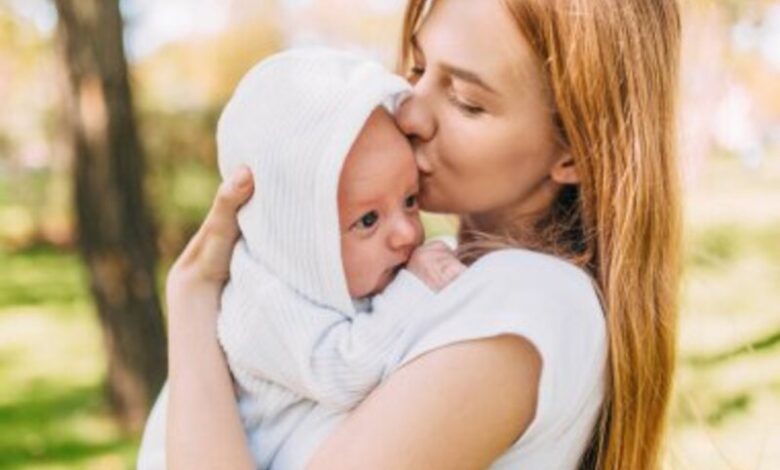
During the war, the most vulnerable categories of the population, including single mothers, need special attention. They are left alone with their difficulties while simultaneously fulfilling the role of both mother and father to their children. The emotional and financial pressures placed on such women are greatly exacerbated by hostilities, job losses, displacement and a general state of uncertainty. In the absence of stable income and social support from the state, they are forced to survive in difficult conditions. Therefore, public assistance for single mothers is an important source of support and survival for many families.
State support for single mothers: who can count on it
In Ukraine, single mothers have the right to receive state benefits, which are aimed at helping ensure an adequate standard of living for their children. In 2024, the amount of the benefit depends on the average monthly income of the family and is defined as the difference between the established subsistence minimum per child and the income per family member.
Such help can be received not only by women who raise children without the participation of the father, but also by other categories, in particular:
- Single mothers who are not married. They are entitled to payments if there is no record of the father in the child’s birth certificate or if this record is entered on the basis of the mother’s application.
- Single adopters. If a child is officially adopted, and there is no information about one of the parents in his birth certificate or they are entered based on the application of the adopter, such persons are also entitled to receive assistance.
- Widows or widowers with children. If the marriage was dissolved before the death of one of the parents, and the children do not receive a pension due to the loss of a breadwinner, the state provides social assistance for their maintenance.
It is worth noting that even in the case of a single mother’s remarriage, the right to payments is preserved, if the new husband has not adopted children from a previous marriage.
Amount of payments in 2024
In 2024, the state provides assistance to single mothers in the amount of the difference between the subsistence minimum and the average income per person in the family. The living wage for children is determined by age group:
- For children under 6 years of age, the maximum benefit is UAH 2,563.
- For children aged 6 to 18 years – UAH 3,196.
- For children aged 18 to 23 (if they continue their studies) – UAH 3,028.
These amounts are the upper limits of the assistance, which depends on the specific income of the family and may vary for each individual family.
How to get state aid
In order to receive assistance, it is necessary to apply to the social security authorities or the Center for the provision of administrative services (TsNAP) with the appropriate package of documents. Here is a list of the main documents that need to be provided:
- Declaration of income and property status of the family. This is the main document on the basis of which the possibility and amount of assistance are determined.
- A copy of the child’s birth certificate. This document confirms the fact of the child’s birth and its belonging to the family.
- Extract from the State Register of Civil Status Acts. This extract contains information about the absence or presence of a record of the child’s father, which is an important criterion for receiving assistance.
- Certificate of income. If information about income is not available in state databases, a certificate or a written explanation of its amount must be provided.
- A copy of the death certificate of one of the parents (in the case of the death of one of the spouses). A certificate is also required that the children do not receive a pension due to the loss of a breadwinner or other social assistance.
- A copy of the adoption decision (if the child is adopted). This confirms the status of the child and the adopter.
With the development of electronic services, this assistance can be issued online through the Diya portal, which greatly simplifies the process and saves time.
For many single mothers, this assistance is not just financial support, but a real opportunity to provide for the basic needs of their children. In times when the country is engulfed in war, this assistance becomes especially important. It makes it possible to at least partially compensate for the losses and trials brought by today’s realities, giving the children of war a chance for a stable childhood, despite all the difficulties. Supporting single mothers is an investment in the future of Ukraine, because the conditions in which children grow up will determine what our society will be like in a few years.