
How to talk to a child about the death of a loved one in the war: a psychologist’s advice for the most difficult conversation

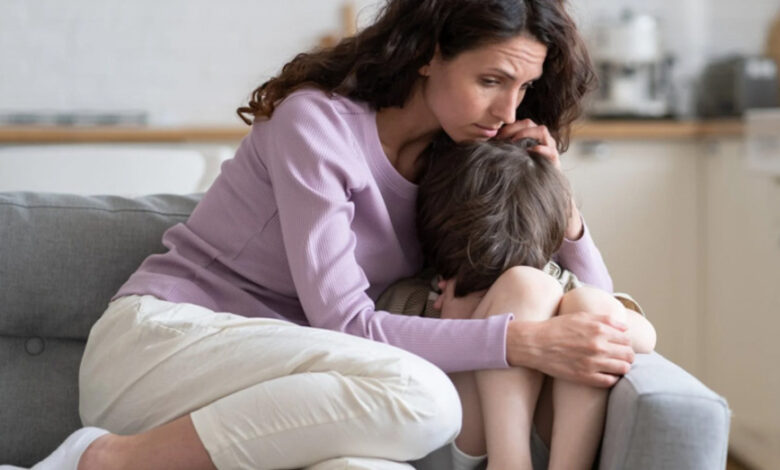
For children growing up during war, the news of the death of a loved one is a real blow, after which the usual sense of security is destroyed and everything that previously seemed unchanged changes. In such a situation, the adult is responsible for every word, because silence, postponement of the conversation or invented explanations can increase the child’s fear, confuse the perception of death and leave painful false hopes. A child psychologist gave advice on how to tell a child about the loss in the war honestly, calmly and in accordance with their age, in order to give them understandable support and space for a lively reaction in the most difficult moment.
Master of Psychology and child specialist Olena Pogorelova explained how to inform a child about the death of a loved one in the war in a way that does not aggravate the trauma with fabrications, procrastination, or emotional breakdown.
Before a difficult conversation, an adult should take care of his own condition, because a child in a moment of acute stress seeks support from those around him. If the person reporting the loss is hysterical and does not control his emotions, it will be even more difficult for the child to hold on to the reality of what happened.
Olena Pogorelova compares a child in this state to a small boat during a storm that needs a reliable anchor. Therefore, the first step should be the internal gathering of an adult, the ability to speak calmly, withstand children’s questions and stay by their side after the most terrible words.
The specialist does not advise dragging out the explanation for a long time, because the child must learn the truth as soon as possible. At the same time, such a conversation requires a safe space where the child will feel protected, so it is best to talk at home or in another well-known place.
The person who brings this news also plays an important role. It is best to have the adult whom the child trusts the most nearby, because in a state of loss, every detail matters: intonation, presence, willingness to hug, listen and not disappear after what has been said.
One of the main tips of the psychologist concerns the rejection of metaphors about “clouds”, “sky” or “angels”. Such images often seem softer to adults, but the child’s psyche can perceive them literally, which causes fears, anxiety or hope for the person’s return.
You should speak honestly with your child, choosing words that are appropriate for their age. The explanation should be simple and clear: Dad defended the country, died, his body no longer works, he is not breathing and will not return. Clarity is important in such a conversation, because it gives the child support in reality, even if the truth itself sounds cruel.
A child’s reaction after such words does not always coincide with adults’ ideas about grief. One child may immediately cry, another – fall silent, and still another – go to play, as if nothing had happened. Anger, aggression, denial or a sharp change of topic are also possible.
The psychologist explains that all these manifestations can be a protective reaction of the psyche, which is trying to cope with too strong a shock. Because of this, it is important for an adult not to be afraid of someone else’s “wrong” reaction, not to pressure the child by demanding to cry or talk, but to accept their condition and let them experience emotions at their own pace.
Olena Pogorelova focuses separately on the issue of burial, because for many families it becomes another difficult test. She does not advise taking children under four or five years old to a funeral, since it is better for them to organize another, softer farewell ritual, understandable and feasible by age.
If the child is older and the family decides to take him to the ceremony, the preparation should be very specific. The child should be explained in advance that he will see who will be there, how adults may behave, why people will cry and what will happen during the farewell. Predictability in such a situation reduces additional stress.
After being informed about the death of a loved one, the child needs the long-term presence of an adult who is ready to return to this topic as many times as necessary. The psychologist emphasizes that the greatest support for a child is honesty, a calm presence nearby and a willingness to answer even the most painful questions.
For children of war, such a conversation becomes part of an experience that comes too soon and at too high a price. Because of this, adults have to talk about loss without fiction, without prolonging it, and without avoiding difficult words, while preserving the most important thing for the child – the feeling that there is a person nearby who can be relied on.


