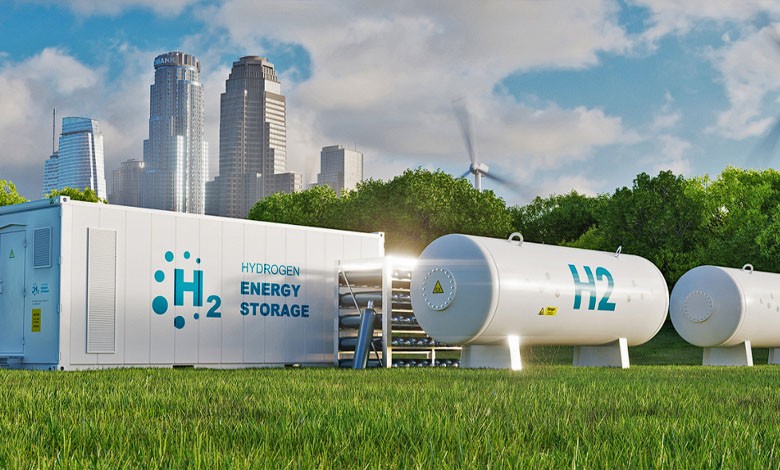
The civilized world constantly declares its intentions regarding the development of ecological energy. One of the tools for achieving climate goals and transitioning to a carbon-neutral economy is the development of ecologically clean, so-called “green” hydrogen. Unfortunately, the industry faces challenges due to high cost of production, insufficient demand and slow government support, which slows progress despite its potential.
Currently, a global trend is observed retardation of development of hydrogen energy due to economic and technical barriers. Expectations for the rapid adoption of green hydrogen face the reality of high costs, difficulties in project implementation, and the absence of a mature market. At the same time, the market is moving from excitement to a more rational approach, focused on specific economically justified decisions.
Why is there such excitement around green hydrogen?
Green hydrogen is one of the most promising elements in the transition to a carbon-neutral economy, which involves a balance between greenhouse gas emissions and their absorption to minimize the impact of human activity on the climate. The main goal of such a model is to ensure sustainable development for our descendants by reducing CO₂ emissions, implementing energy-efficient solutions, switching to renewable energy sources and developing carbon capture and storage technologies. In this context, green hydrogen is a key tool.
Green, i.e. renewable, hydrogen is produced using environmentally friendly technologies – electrolysis of water using electricity from solar or wind stations. This process does not create greenhouse gas emissions, which favorably distinguishes it from “grey” hydrogen, which is obtained from natural gas, or “blue” hydrogen, which is also based on natural gas, but with the use of CO₂ capture technologies. Due to its environmental characteristics, green hydrogen is becoming an important technology for combating climate change.
The potential of this super-substance covers a wide range of applications in transport (especially heavy – in trucks or sea transport), industry (in particular, metallurgy and ammonia production) and energy (energy storage). In addition, green hydrogen contributes to the energy independence of countries that do not have significant reserves of fossil fuels. It ensures the stability of energy systems, reducing dependence on traditional energy sources.
Green hydrogen as a substitute for fossil fuels: potential and prospects
Hence, green hydrogen has the potential to replace fossil fuels due to its high energy density, economic feasibility and environmental friendliness. Let’s consider how exactly hydrogen can become an alternative to fossil fuels.
Thus, passenger cars on hydrogen demonstrate high efficiency and significant potential to replace traditional cars with internal combustion engines. They consume about 1 kg of hydrogen per 100 km, which makes them an economical and environmentally friendly vehicle.
The energy density of hydrogen is 33.3 kWh per 1 kg, while 1 liter of gasoline has an energy density of only 8.8–9.7 kWh. This means that 1 kg of hydrogen is equivalent to approximately 3.5 liters of gasoline in terms of energy. However, due to the higher efficiency of hydrogen fuel cells (which is double or even triple the efficiency of internal combustion engines), 1 kg of hydrogen in practice replaces 5-7 liters of gasoline.
Such cars as Toyota Mirai or Hyundai Nexo consume about 0.8-1 kg of hydrogen per 100 km. Hydrogen trucks on the same distance use 8-10 kg of hydrogen, replacing 30-40 liters of diesel.
The production of 1 ton of steel using hydrogen requires 60 kg of hydrogen, while traditional technologies require 250-300 kg of coke.
Regarding reducing CO₂ emissions, replacing 3 liters of gasoline, 1 kg of hydrogen reduces emissions by 9 kg of CO₂, replacing 3 liters of diesel, 1 kg of super substance reduces emissions by 10.5 kg of CO₂, replacing 1 m³ of natural gas, 1 kg of hydrogen reduces emissions by 5.5 kg of CO₂.
Global policy and regulation in support of green hydrogen
However, the implementation of this state-of-the-art “energy heart” is accompanied by a number of challenges. The main ones are the high cost of production, due to the high cost of renewable energy and electrolysis equipment, as well as the need for significant investments in infrastructure development, in particular, networks for transporting and storing the substance.
Despite these difficulties, the use of green hydrogen in combination with the development of renewable energy and increased energy efficiency forms the basis for the creation of a sustainable carbon-neutral economy.
Green hydrogen is supported by international agreements, climate summits and national policies that promote its production, transportation and use. Among such international initiatives is the well-known Paris Climate Agreement, which states that hydrogen helps limit global warming to 1.5-2°C.
At the COP26 climate summit, hydrogen was recognized as a means of reducing emissions in industry and transport. Among the international organizations that finance or promote the development of hydrogen projects are the World Bank and the European Investment Bank, as well as IRENA (the International Renewable Energy Agency, which promotes the wide implementation and sustainable use of all forms of renewable energy, in particular, bioenergy, geothermal, hydropower, energy ocean, sun and wind).
Which countries are at the forefront of the development of the industry
Norway and Germany are actively developing hydrogen technologies for transport and energy. Australia plans to build the world’s largest hydrogen plant. Japan is introducing hydrogen cars and gas stations. Qatar is investing in hydrogen technology for transport.
Hydrogen can help reduce CO2 emissions in aviation by replacing fossil fuels in aircraft. Europe and the US are already developing hydrogen-powered aircraft for short and medium-haul flights. The use of hydrogen in ships will reduce emissions compared to traditional petroleum products. Experiments with hydrogen ships are already being conducted in Europe.
Hydrogen can be used to store solar and wind energy, as well as fuel for industrial facilities. Hydrogen fuel stations and power plants can become part of the new energy infrastructure.
Africa, South America and Asia can use hydrogen technologies for their development. They can become exporters of this source of inexhaustible power, which will create new jobs and reduce greenhouse gas emissions.
What slows down the development of the industry
At the same time, several projects from production of environmentally clean hydrogen were stopped this year due to excessive cost growth. Although officials and energy companies argued that hydrogen would help reduce emissions in industry, high costs have forced many to abandon these projects. The use of green hydrogen produced using renewable energy is recognized as a Solomonic solution for reducing emissions in heavy industry, transport and energy. But the costs of such projects in the US and the EU have increased due to the complexity of implementation and the increase in electricity prices.
The price of clean-energy hydrogen remains four times higher than traditional natural gas hydrogen, making it difficult to attract buyers. The lack of demand led to the cancellation of several large-scale projects – plants in Sweden and Tasmania, as well as dozens of BP initiatives. The hydrogen market, which showed significant activity last year, has now shrunk: the demand for vacancies in the industry has fallen significantly.
Experts believe that clearer and faster government support could stimulate the development of the industry. Although pure hydrogen production is expected to triple this year, it will cover only 1% of market demand. According to analysts, the previous hype has given way to a realistic approach: it’s time to focus on effective actions.
Prospects for the development of the industry
EU is planning production of 10 million tons of green hydrogen by 2030, invests in infrastructure and supports innovation. The American IRA Act (2022) introduced tax credits for hydrogen production. At the same time, the US government is investing in the creation of hydrogen hubs for industry and transport.
The largest producer of hydrogen is China, which had ambitious plans to implement more than 50 projects for the production of green hydrogen and the creation of infrastructure for hydrogen transport in the near future. According to Bloomberg NEF, costs for the production of green hydrogen in the US and the EU may decrease in the future. In particular, the price of green hydrogen is projected to drop to $1.4 – $2.9 per kilogram by 2030 and to $0.8 – $1.0 per kilogram by 2050. This will make it competitive with gasoline, diesel and natural gas, especially with the transition to a low-carbon economy.
It is expected that in the next 10-20 years, hydrogen energy will become an important part of the world energy system. The production of “green” hydrogen will increase due to the development of renewable energy sources, which will reduce its cost. New technologies – in particular, improvement of electrolyzers – will make hydrogen production more efficient. New methods of storing and transporting hydrogen will appear. Hydrogen will be used not only in energy, but also in aviation, sea transportation, heavy industry and transport.
Cooperation between countries and companies is expected to grow for the development of the global hydrogen industry. Governments will introduce subsidies and infrastructure investments to support hydrogen production.
The value of green hydrogen for the economy of Ukraine
Ukraine has a significant potential for the production of green hydrogen thanks to a large number of renewable energy sources (primarily solar and wind). This can become an important direction for attracting foreign investment, especially from the EU, which is looking for new partners for decarbonization. Given its proximity to the EU, Ukraine can become a major supplier of green hydrogen to European markets if it can offer competitive prices.
Hydrogen energy will contribute to the reduction of dependence on fossil fuels, in particular the import of natural gas, and will strengthen the country’s energy security. Unfortunately, Ukraine faces the same problems as the global industry: high production costs, the need for large investments in infrastructure and the creation of a domestic market. Without addressing these issues, hydrogen adoption will remain limited.
So, for Ukraine, this trend is both a challenge and an opportunity. On the one hand, it is necessary to take into account the economic risks and difficulties faced by the industry, and on the other – to strategically use its potential for the development of green energy, investment attraction and integration into global markets.
Tetyana Viktorova