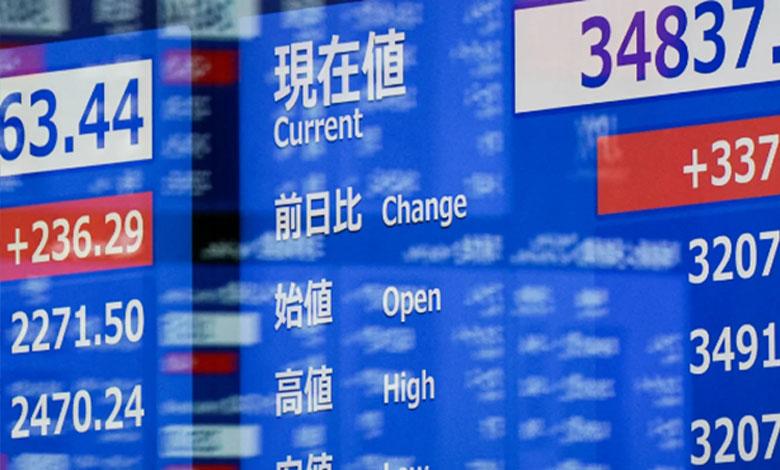
In April, Japanese investors — primarily banks and pension funds — got off to a sharp start sell foreign bonds, especially American bonds. They are only two weeks away got rid of securities for more than 20 billion dollars. This is one of the largest outflows in the last 20 years. The reason is growing volatility in the US market caused by President Trump’s new tariffs.
Against the background of these events, investors began to look for more reliable options for saving money. As a result, there was a real boom in Japanese bonds. Foreigners in March bought securities for more than 15 billion dollars – another record for the last 20 years. This behavior of investors is explained not only by the fear of a recession in the USA, but also by the fact that Japanese bonds have become more profitable: their yield is increasing, and rates have not yet increased.
At the same time, Japanese insurers were selling some of their bonds in preparation for the end of the fiscal year. And the Japanese bond market has seen big swings, with yields on 30-year bonds first falling to record lows, then soaring to their highest level in 20 years, and then falling again due to turbulence in global markets.
These developments show that Japan is gradually reducing its dependence on American debt and increasingly relying on its own market. This may indicate a loss of confidence in the US as a stable financial partner — and, at the same time, an increasing role for Japan in the global financial system.
Japanese bonds as the new safe haven: Why investors are turning away from US debt
The fact that Japanese investors have dramatically changed their behavior: they have started actively sell U.S. bonds and bring money back home was due to a series of external risks, new U.S. decisions, and internal changes in Japan itself.
First of all, economic tension is growing in the US: President Trump introduced new duties, in particular, 25% on the import of cars and spare parts, which directly affects Japanese export. Because of this, the fear of recession appeared. Markets began to wobble, and US government bonds became less reliable in the eyes of cautious investors. At the same time, the yield on Japanese government bonds has increased, and the Bank of Japan is in no hurry to raise rates. This made Japanese bonds more attractive even to foreigners, which was rarely the case before.
Who exactly sells American debt? These are not small traders, but serious institutions: state-owned banks such as Japan Post Bank, large pension funds, in particular, the world’s largest GPIF, and insurance companies. They have traditionally invested in US Treasuries because of their predictability. But this spring, these investors decided to reduce their investments in dollar debt.
Why did Trump’s tariffs become the “last straw”? Because they are blew up confidence in the stability of trade relations between the US and Japan, and also increased the fear of a slowdown in the US economy. Accordingly, sales began – first as a reaction to the threat, and then as a deeper rethinking of the strategy.
That is, it all started with short-term fear, but now everything looks more like a long-term reorientation: Japan gradually reduces its dependence on American assets. And it is possible that other large investors will soon do the same.
Another reason for the attractiveness of Japanese bonds is the increase in profitability. Yes, 30-year Japanese bonds are still recent gave slightly more than 2% per annum, and now almost 2.85%. This is the highest level in the last 20 years. At the same time, the Bank of Japan gives understand that it will not raise interest rates yet, so the situation is stable and predictable. For investors, this is a signal: you can invest in Japanese securities and not be afraid of sudden changes.
What does this mean for Japan? First, it becomes easier for the government to raise money: there are many people willing to buy bonds, so there is no need to offer high interest rates. Second, it strengthens the Japanese currency: foreigners buy the yen to invest, and this raises its rate. And thirdly, it shows that Japan is becoming financially stronger, because even in difficult times its debt securities are considered a reliable choice.
Simply put, Japanese bonds have become a “new safe haven” for investors at a time when the US has started to cause more and more unrest.
The world is changing its attitude towards US financial hegemony
What seemed unthinkable just a few years ago — the refusal of key players to hold money in US bonds — has become a reality. Japan, traditionally one of the largest creditors of the United States, has begun to reduce its holdings in T-Bonds. This is not just a technical maneuver – it is a signal that even the closest partners no longer consider it safe to invest in US debt.
China as part of its strategy to distance itself from the dollar as well reduces investment in US debt instruments. For Beijing, this is not only an economic decision, but an expression of geopolitical will for greater financial independence. The same trend is visible in the actions of the Sayyids, who are increasingly using the yuan in oil settlements, reducing the role of the dollar as a world reserve currency.
The average states are not lagging behind either. India, Brazil, Turkey and South Korea reorient their currency reserves, choosing gold, euros, other stable currencies and new forms of digital payments. All this indicates a change in the architecture of the global financial system.
For the US, this is a dangerous dynamic. The state, which annually spends more than it earns, is forced to constantly attract new loans. But now, when there are fewer people willing to buy bonds, the government has to raise yields, that is, pay more for the opportunity to borrow. This automatically increases debt servicing costs, which have already exceeded military spending. If this continues, the government will have to cut funding for social programs, infrastructure and public services.
The yield on 10-year T-Bonds is already reached more than 4.5%, and this indicator may still increase. But this means not only problems for the government – it also affects loans for the population. Housing, cars, education – everything is getting more expensive. Banks tie their rates to government bonds, and rising yields have a ripple effect throughout the economy.
US Federal Reserve System turns out to be in a difficult position, because its decisions have global economic consequences. If the national regulator decides to actively buy up government bonds, this can help lower interest rates and make borrowing cheaper for the government and businesses. However, such a step would mean an increase in the money supply, which could trigger a new round of inflation. During the pandemic, it was asset buybacks that helped stabilize the market, but also caused prices to skyrocket.
On the other hand, if the Fed does not intervene, rising bond yields will make borrowing more expensive for consumers and businesses, which could hold back economic growth. In addition, high interest rates mean an increase in the cost of servicing the national debt, which limits the financial capabilities of the government.
This is a classic “Zugzwang” in financial policy: any decision has significant risks and potential negative consequences. The choice between inflation and recession is the balance the Fed must constantly seek in response to global changes.
The world is beginning to reconsider its attitude to the dollar. As even allies begin to sell off US debt assets and look for alternatives, it’s not just financial turbulence—it’s a systemic shift. And it is he who forms a new reality in which the financial superiority of the USA no longer looks indisputable.
When such a cautious and loyal country as Japan starts cashing out of the US debt looks like a loss of credibility, even if no one is saying so. This has already happened. Thus, in 2011, S&P downgraded the US rating from the highest level of “AAA” to “AA+” due to budget problems. In 2023, Fitch again downgraded the US credit rating due to the debt ceiling and growing budget deficit.
If the outflow of investors, as from Japan, will continue, this may increase the pressure on credit agencies. And a downgrade means an automatic increase in the price of loans for the government.
Earlier in the world there was an opinion: if you do not know where to invest money, invest in American bonds. Now even the US’s closest partners are beginning to question it. And when such a conservative country as Japan he says to your money: “Let’s get out of here” is no small thing.
This is not yet a collapse, but it is a crack in the image of the US as a super reliable debtor. And if such cracks continue to appear, confidence in the dollar and T-Bonds may no longer be evident. And in today’s world, where everything is based on trust, it is dangerous even for the strongest.
But all these solutions have a price: the more expensive the government borrows, the more money is spent on interest, not on roads, medicine, and education. Already last year, the US spent more on debt service than on the military for the first time. This is a real problem that can only get worse if confidence in T-Bonds continues to decline.
Most likely, Japan will continue to gradually reduce its dependence on the dollar. This does not mean that she will take everything out in a day, but the track is clear: less to the USA, more to herself and to different baskets.
And the USA is preparing for the fact that their debt will be bought less willingly. And this will force Washington to think more about trust, because without trust there will be no cheap money. Japan didn’t say it in words – it just sold bonds. And this is probably the loudest signal she could give.
…“De-Americanization” of world reserves means that countries do not want to keep all their savings only in dollars and American securities. They spread their “eggs in different baskets”: some switch to the euro, some to the yuan, some to the yuan buys whether gold is invested in infrastructure.
This is not a revolution, but a very serious turn. And the fact that it was led by Japan, a country that for decades was one of the most reliable financial partners of the United States, shows that times are changing, and the world no longer wants to rely only on Washington.
Tetyana Viktorova