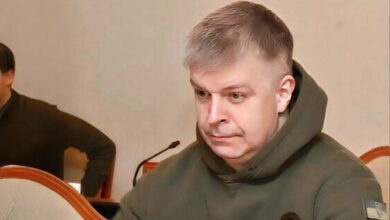
“I don’t remember a single real step of the authorities towards education — only aggressive superiority and inadequacy”: Stanislav Nikolayenko

In the conditions of war, education in Ukraine is experiencing a deep crisis — schools are damaged or closed, teachers and students are forced to evacuate, many children do not have access to quality education. In such circumstances, the state should protect the education system, support teachers and pedagogical teams, and ensure equal access to knowledge. But this is not happening. The Ministry of Education and Science does not act properly, does not develop a systemic policy, and instead of providing support, only complicates the situation. Therefore, the criticism that comes from society and the educational community is fully justified.
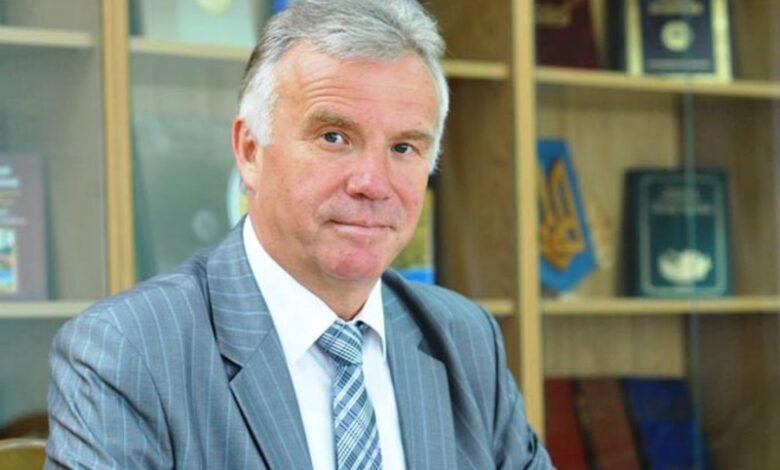
Among those who openly opposed the latest legislative initiatives is a professor, Doctor of Pedagogical Sciences, Academician of the National Academy of Pedagogical Sciences of Ukraine and the National Academy of Agrarian Sciences of Ukraine, People’s Deputy of Ukraine of the 4th convocation, ex-Minister of Education and Science Stanislav Nikolayenko. He admits that he did not believe at first when he learned from social networks about a new draft law submitted by a group of People’s Deputies of Ukraine, which is supposed to improve the mechanisms of forming a network of lyceums. However, getting acquainted with the text of the document shocked him. How, he asks, could experienced legislators, in particular members of the committee on science and education — a committee in which he himself worked for three convocations — propose a document that actually destroys Ukrainian schools, especially in rural areas?
Nikolayenko cites a number of legislative norms that, in his opinion, directly contradict this document. In particular, Article 3 of the Law “On Education” guarantees that no one can be limited in the right to receive an education. And Article 1 of the law “On general secondary education” provides for the availability of full secondary education through a sufficient number of schools, without discrimination, including by place of residence. The Constitution of Ukraine also prohibits any restrictions on the place of residence. That is why, Nikolayenko believes, the very proposal that a lyceum should function only if there are at least 12 groups of one year of study should be considered as a violation of basic rights.
The professor deciphers: one parallel must have at least 96 students, since the standard class is 24 children who are divided into 3 groups. In the current realities of war, such numbers are utopian. And this poses a serious threat to high school affordability. For example, in his native Subotsivska hromada, which includes 22 villages, the five local schools together have only 86 high school students. Distances between villages are up to 25 km on broken roads. In such conditions, a community with more than 14,000 inhabitants may lose the right to full secondary education.
Nikolayenko is particularly outraged by the fact that his native Bohdaniv school – with a strong history, with graduates who became ministers, rectors, and military personnel, every year prepares graduates with the highest scores in the ZNO – will now not meet the artificially invented norms. Students will be forced to go to Znamyanka or Kropyvnytskyi, but no one cares where they will live, what they will eat, how they will get there. What can we say about other regions — Kherson region, Mykolaiv region, Chernihiv region, Poltava region.
The expert is convinced that the new law puts the cross not only on the development of individual villages — it is a blow to the entire state. Half of the country’s communities will lose their high school. These are tens of thousands of settlements, hundreds of thousands of children. Thus, an important social elevator is destroyed. The professor calls the arguments of the reformers that the community or parents should take over the funding – because there is no money in the villages and there won’t be any. People in these regions are already deprived of the right to work, medicine, transport – now they are also deprived of education.
Stanislav Nikolayenko emotionally declares:
“The authors of the law deliberately set out to destroy an important social elevator, limiting the right of children from villages and settlements to a full education. And the reformers’ statements that communities or parents should finance lyceums themselves cannot withstand criticism. Where are those funds in those villages? They are not there.
People’s deputies of Ukraine are aware that people in these settlements do not receive many constitutional benefits, in particular, the right to work is limited, because there is no work. The right to medical care – try to use it, then there is no doctor, then the bus does not run, then there is no money for treatment…
We have this picture: it is much easier to live in rich, large communities, cities, and the state will pay for children’s education, and the wind blows in the eyes of the poor!
Are colleagues so primitive and incapable of minimal analysis? We block small streams that feed the great river Ukraine.
I am 100% convinced that the ministry should prepare an option for obtaining a full secondary education in schools with one or two classes. Without this step, there will be no Ukrainian school.”
The ex-minister emphasized that the analysis shows that the initiative is also negatively perceived in big cities — Kyiv, Kharkiv, Odesa, Lviv, Dnipro. The Association of Heads of Schools of Ukraine warns: the number of lyceums will decrease from 8 to 2 thousand. It will hit even schools in central areas. He considers the idea of banning lyceums from having an elementary school as part of their composition even more absurd: this, as the director Iryna Chernilevska notes, is the destruction of a single pedagogical body, the separation of the foundation from the top.
According to Nikolayenko, such actions are senseless and destructive. They will demand new premises, leaders, officials — at a time when resources are at their limit. It is especially unfortunate for him to talk about this, because he was one of the co-authors of Article 53 of the Constitution of Ukraine. In 1996, all factions voted for it, understanding the strategic importance of secondary education.
He mentions examples from history. In the 18th century, Empress Maria Theresa introduced compulsory school education, including in the territory of Western Ukraine, and this led to a significant increase in welfare.
“The former Union, gradually introducing mandatory seven-year, eight-year and full secondary education, raised the country’s economy on this.
I have written more than once, but I will repeat that our main allies in the bloody struggle with Russia are our Armed Forces, our youth, our people.
Therefore, we must rely on an educated nation, good schools and universities, colleges and professional lyceums. Therefore, this step of the poor deputies will lead to an even sharper decrease in the country’s human development index, loss of its competitiveness, which means backwardness and the possibility of being completely taken over by other countries. Currently, we are in the hundredth place in the world according to the human development index, although until recently we were in the 74th place. – believes Nikolayenko.
In his opinion, neither pedagogical universities nor the Academy of Pedagogical Sciences have the right to remain silent. Because if the Ministry of Education and Culture continues to artificially create obstacles, the number of applicants to universities will drop sharply. And young people will go en masse to Europe, where admission is much easier, and Ukrainian pupils and students are readily accepted there.
According to Nikolayenko, the government’s behavior is not a strategy – it is chaotic, senseless steps. He mentions the proverb: “A bad bellow will not be inflated, and a stupid one will not be taught.” Therefore, one gets the impression that many officials have contempt for Ukrainian. They flaunt diplomas from Western universities, but they do not understand how the Western education system works.
Nikolayenko notes that he does not remember a single event, a real systematic step by those in power in education towards schools and universities. At the same time, there is no real dialogue, dull, aggressive superiority and inadequacy reigns.
The criticism he voices is not intended to offend. It should sober up the reformers. He quotes former deputy minister Borys Zhebrovskyi: “Don’t fix it if it ain’t broke.” It is necessary to preserve collectives, not to destroy what is working.
The ex-minister also appeals to international foundations and embassies, in particular EU countries, urging them not to rely only on the opinion of a narrow circle of grant experts. Life is much more complicated. In his opinion, the draft law should be withdrawn immediately – both the main one and the alternative one. If this does not happen, the deputies must vote against it. And the public — to carefully follow and draw conclusions.
Nikolayenko calls for the initiation of an educational meeting with the participation of representatives of all public and scientific educational organizations, local councils, teachers, parents, and scientists. Because the voice of communities must be heard. Otherwise, education in Ukraine will fall — along with the national future.