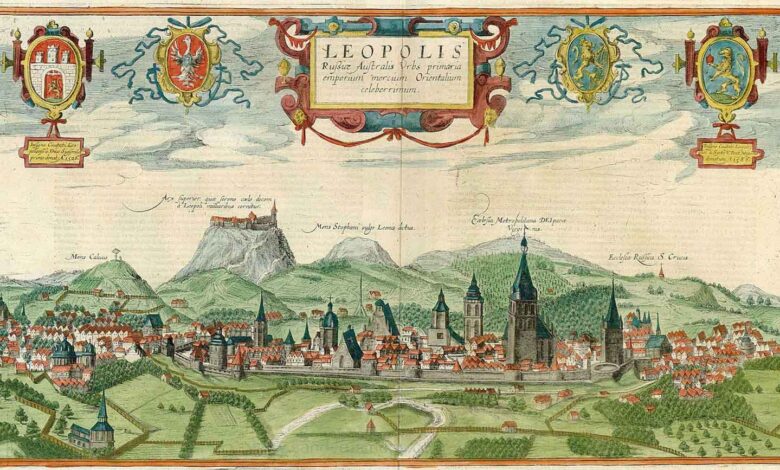
June 10 is celebrated as International Heraldry Day, World Crafts Day, World Art Nouveau Day and Ballpoint Pen Day. On this day, the events of Princely Russia, medieval battles, the birth of iconic inventions, cultural premieres and political decisions that influenced the fate of entire states and peoples intertwined on the pages of world history.
International Heraldry Day
This day is dedicated to the study, preservation and popularization of heraldic traditions, which for centuries have played an important role in public, state and cultural life. Heraldry originated in medieval Europe as a system for recognizing knights on the battlefield, and later turned into a separate discipline with its own rules, symbols and language for describing coats of arms. Today, coats of arms are used by states, cities, universities, public organizations and individual families.
The date of the holiday is associated with the event of 1128, when the English King Henry I Beauclerc presented Geoffrey V Plantagenet with a shield depicting golden lions during his knighthood. This case is considered one of the oldest well-documented examples of the use of hereditary heraldic symbols. International Heraldry Day draws attention to the history of coats of arms, their meaning and role in shaping the historical memory of different peoples.
Interesting facts
The most ancient coats of arms were not created as family symbols. Initially, they helped to identify knights in closed helmets during battles and tournaments.
In medieval Europe, there were special servants – heralds, who knew the coats of arms of noble families well, monitored compliance with heraldic rules and announced participants in knightly tournaments.
In classical heraldry, a limited number of basic colors and metals are used. Gold and silver are symbolically called metals, and red, blue, green, black and purple are colors.
The lion is one of the most common heraldic symbols in the world. It can be seen on the coats of arms of many states, cities and noble families in Europe.
The oldest continuously used state coat of arms belongs to Denmark. Three blue lions on a golden shield have remained the basis of Danish heraldry for over seven centuries.
The coat of arms of Ukraine depicts a trident, which comes from the princely signs of the Rurik dynasty. It was used back in the days of Kievan Rus on coins, seals and state symbols.
In some medieval cities, the coat of arms was so important that its image was minted on coins, placed on city gates, flags and official documents.
The heraldic language of describing coats of arms has its own system of terms, which was formed several centuries ago. Thanks to this description, experts can accurately reproduce the coat of arms even without the original image.
There are coats of arms with rather unusual symbols. For example, on the coats of arms of individual cities and clans you can find beavers, bees, ships, astronomical instruments, books and even mythical creatures.
World Crafts Day
This day is dedicated to the preservation and development of traditional crafts, which for centuries have been an important part of the culture, economy and everyday life of different peoples. The holiday emphasizes the importance of manual labor, skill and knowledge passed down from generation to generation. Crafts include dozens of areas, including pottery, weaving, blacksmithing, wood carving, jewelry, embroidery and making products from natural materials.
The history of the holiday is connected with an international conference held in New York in 1964 with the participation of representatives of forty countries. It was an important step in uniting specialists who worked to preserve folk arts and crafts and support craft traditions. Today, craft products remain in demand all over the world due to their uniqueness, high quality of workmanship, and cultural value.
Interesting facts
Archaeologists have discovered clay products that are over 20,000 years old. These are some of the oldest known examples of human craftsmanship that have survived to this day.
In medieval cities, artisans were united in guilds — professional organizations that controlled the quality of products, the training of craftsmen, and the rules of trade.
To obtain the title of master, an apprentice in many European craft guilds had to create a so-called “masterpiece” — a work that demonstrated his professional skills. This is where the modern meaning of the word “masterpiece” comes from.
Damascus steel, from which the famous blades of the Middle East were made, was considered so high-quality that many legends arose around the technology of its production, and the exact composition of the metal remained a mystery for a long time.
The traditional Japanese art of varnishing urushi products requires many months of work. To create individual items, craftsmen can apply dozens of layers of varnish with long drying breaks.
Pottery from the Trypillian culture, created more than six thousand years ago, has been found in Ukraine. Many of them are decorated with complex ornaments that even today amaze with the precision of execution.
In Venice, the art of glassmaking on the island of Murano was protected so strictly for centuries that craftsmen were forbidden to leave the territory of the republic without special permission.
Some traditional handmade carpets contain millions of knots. A master or a group of masters can spend several years creating one large product.
Modern researchers have established that some technologies of ancient craftsmen sometimes exceeded the capabilities of their time, and the secrets of making some historical products have not yet been fully recreated.
World Art Nouveau Day
This day is dedicated to the architectural and artistic direction that gained popularity in the late 19th and early 20th centuries. Art Nouveau is characterized by smooth lines, natural motifs, floral ornaments and the desire to combine beauty with functionality. Its influence has spread to architecture, painting, graphics, furniture, jewelry and interior design. The holiday is designed to draw attention to the preservation of Art Nouveau monuments and the study of its cultural heritage.
The initiator of the establishment of World Art Nouveau Day in 2013 was the Hungarian magazine “Szecessziós Magazin” in cooperation with the Museum of Applied Arts in Budapest. The date was chosen in honor of two prominent representatives of this direction – Hungarian architect Eden Lechner and Catalan architect Antonio Gaudí. Today, the Art Nouveau style is considered one of the most recognizable artistic phenomena of the early 20th century, and its buildings are included in the list of the most valuable architectural monuments in the world.
Interesting facts
In different countries, the Art Nouveau style had its own names. In France, it was called “Art Nouveau”, in Germany – “Art Nouveau”, in Austria – “Secession”, and in Italy – “Liberty style”.
Antonio Gaudí almost did not use straight lines in his projects. Many of his buildings resemble natural forms – rocks, trees, waves or bones of living creatures.
The Batlló House in Barcelona was nicknamed the “House of Bones” because of the facade, the elements of which resemble skulls and skeletons. It is considered one of the most original examples of Art Nouveau in the world.
In the Art Nouveau style, architects often created not only buildings, but also furniture, lamps, door handles, stained glass windows and even dishes, striving for the unity of all elements of space.
Stained glass windows became one of the symbols of Art Nouveau. In many houses of the early 20th century, colored glass was used not only in windows, but also in doors, partitions and ceiling structures.
Ukraine also has many Art Nouveau monuments. One of the most famous is the “House with Chimeras” in Kyiv, decorated with unusual sculptures of animals, mythical creatures and sea creatures.
Art Nouveau became one of the first architectural trends that actively used new materials at that time – metal, concrete and large glass structures.
Many Art Nouveau buildings have asymmetrical facades. Architects deliberately abandoned the strict symmetry that dominated the architecture of previous centuries.
Riga has one of the world’s largest collections of Art Nouveau buildings. The historic center of the Latvian capital is considered one of the best places to get acquainted with this architectural direction.
Ballpoint Pen Day
This day is dedicated to one of the most common writing inventions, which significantly changed everyday life, education, office work and communication. It is associated with the date of patenting the ballpoint pen in the USA in 1943. Due to its simplicity, reliability and convenience, this writing instrument quickly gained popularity in the world and gradually replaced many other writing instruments.
The principle of operation of a ballpoint pen is to use a small metal ball at the end of the rod, which evenly transfers ink to paper during writing. This design significantly reduced the risk of leaks and smudges characteristic of early ink pens. Today, ballpoint pens are produced in billions and remain one of the most widely used stationery products in the world, despite the development of digital technologies.
Interesting facts
The inventor of the modern ballpoint pen is considered to be the Hungarian journalist Laszlo Biro. He noticed that printing ink dries faster than regular ink, and used this principle to create a new writing instrument.
The first ballpoint pens were quite expensive. After they appeared on sale in the United States, some models were sold for the equivalent of hundreds of modern dollars.
During World War II, military pilots became interested in ballpoint pens, since they worked more reliably at high altitudes than traditional ink pens.
Tens of billions of ballpoint pens are produced worldwide each year, making them one of the most popular products in the stationery industry.
The ball at the tip of the pen usually has a diameter of 0.3 to 1.2 millimeters. It is made of extremely hard materials to withstand prolonged use.
According to manufacturers, a regular ballpoint pen can draw a line several kilometers long before it runs out of ink.
Some models of pens are used in extreme conditions. There are special versions that can write underwater, on wet paper, at low temperatures and even in zero gravity.
In many countries, the word “biro” has become the common name for a ballpoint pen in honor of Laszlo Biro, although initially it was just the surname of the inventor.
One of the most famous space myths claims that an extremely expensive pen was created for space flights. In fact, special space pens were developed by a private company, not by state space agencies, and were later used by both American and Soviet cosmonauts.
Historical events on this day
978 – Prince Volodymyr ascended the Kiev throne after a power struggle between the sons of Svyatoslav. His reign later became one of the most important periods in the history of Kievan Rus.
1358 – In the Battle of Mello, the troops of the French nobility defeated the peasant detachments of Jacquerie. The defeat effectively suppressed one of the most famous peasant uprisings of medieval France.
1619 – During the Thirty Years’ War, the Battle of Sablat took place. It was an important turning point in the Bohemian Revolt and weakened the position of the Protestant forces.
1793 – The world’s first public zoo was opened in Paris. Its creation marked a new stage in the attitude towards the study of animals and the development of natural sciences.
1865 – Richard Wagner’s opera “Tristan and Isolde” premiered in Munich. The work became one of the most influential operas of the 19th century.
1907 – The Lumière brothers developed a method of printing color photographs. This technology opened up new possibilities for photography and the future of color cinema.
1909 – The passenger ship “Slavonia” was one of the first to use the SOS signal after a disaster near the Azores. This incident went down in the history of maritime communications.
1917 – The 1st All-Ukrainian Peasant Congress began in Kyiv. It became an important event of the era of the Ukrainian Revolution and showed the political activity of the peasantry.
1918 – The independence of Armenia was proclaimed in the old style. This became part of the large-scale state-building processes on the ruins of empires after World War I.
1967 – The USSR officially broke off diplomatic relations with Israel because of the Six-Day War. They were restored only in 1991, at the end of the existence of the Soviet Union.
1969 – A military conflict between the USSR and China occurred in the Tasty region of the Kazakh SSR. This was part of the tense Soviet-Chinese confrontation, which at that time repeatedly escalated into armed clashes.
1984 – The United States conducted the first successful test of an anti-missile system in space. The event became an important stage in the development of American defense technologies during the Cold War.
1999 – The NATO air operation against Yugoslavia ended, after which Russian troops made a surprise march on Pristina in Kosovo. They occupied the local airport before NATO forces, which caused acute international tension.
2001 – Timothy McVeigh, the organizer of the 1995 Oklahoma City bombing, was executed in the United States. The attack was one of the deadliest acts of domestic terrorism in the country’s history.
2018 – The Mars rover Opportunity sent its last signal to Earth before being silenced forever due to a powerful dust storm on Mars. Its mission lasted much longer than originally planned.