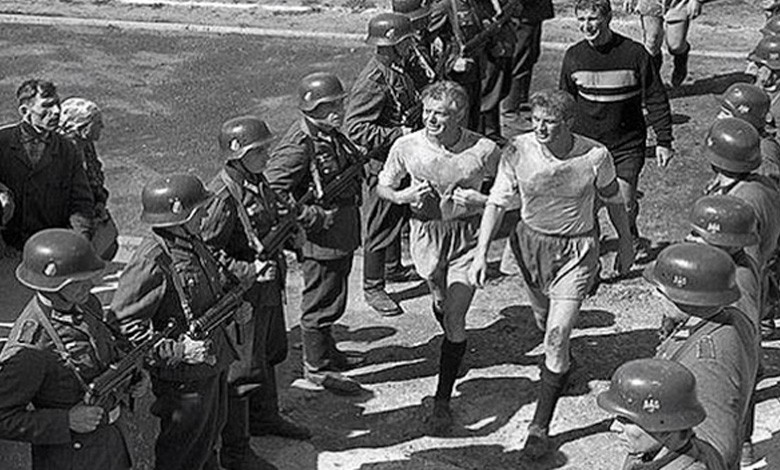
On August 9, the world community celebrates the International Day of the World’s Indigenous Peoples, the Day of Remembrance of the Nagasaki Tragedy, the World Day of Book Lovers, and the International Day of Coworking. On this day in 1942, a football match took place, which later became known as the “match of death”. In 1173, the first stone was laid in the foundation of the Leaning Tower of Pisa.
International Day of the World’s Indigenous Peoples
August 9 marks the International Day of the World’s Indigenous Peoples, an important holiday that draws attention to the rich cultural heritage, rights and challenges faced by indigenous peoples around the world. This day became a symbol of recognition of their contribution to the preservation of the cultural diversity of the planet and the need to protect their rights.
Interesting facts:
The International Day of the World’s Indigenous Peoples was proclaimed by the UN General Assembly in 1994. This date was chosen in honor of the first meeting of the UN Working Group on Indigenous Peoples, which took place on August 9, 1982. Since then, this day has become a symbol of solidarity with indigenous peoples and their aspirations.
There are about 476 million indigenous peoples living in more than 90 countries. They represent more than 5,000 different cultures and languages, making their heritage extremely rich and diverse.
Indigenous peoples often face a range of challenges, including land loss, discrimination, human rights abuses and environmental issues. The International Day of the World’s Indigenous Peoples is aimed at drawing attention to these problems and helping to solve them.
Indigenous peoples traditionally have a deep understanding and respect for nature. They play an important role in preserving biodiversity and ecosystems in their territories. Many environmental initiatives rely on the knowledge and practices of indigenous peoples.
Many indigenous languages are endangered. In order to preserve them, the UN declared 2019 the International Year of Indigenous Languages, and 2022-2032 the Decade of Indigenous Languages. This is aimed at preserving and supporting linguistic diversity.
In 2007, the UN adopted the Declaration on the Rights of Indigenous Peoples, which sets standards for the protection of their rights, including the right to self-determination, preservation of cultural heritage, traditional knowledge and participation in decisions affecting their lives.
Nagasaki Memorial Day in Japan
Nagasaki Memorial Day is an important date that honors the victims of the atomic bombing of the city of Nagasaki in Japan during World War II. It is a day of deep sorrow and reflection, a reminder of the destructive power of nuclear weapons and the need to maintain peace.
Interesting facts:
On August 9, 1945, just three days after the bombing of Hiroshima, American forces dropped an atomic bomb on Nagasaki. The bomb known as “Fat Man” caused massive destruction and killed tens of thousands of people. The bombing of Nagasaki was the second and last use of nuclear weapons in the war.
The shock wave and fires destroyed a large part of the city. According to various estimates, between 40,000 and 80,000 people died as a result of the explosion or from injuries and radiation sickness. Many suffered from the effects of radiation for years to come.
Every year on August 9, memorial events dedicated to the victims of the tragedy are held in Nagasaki. Thousands of people, including government officials, diplomats and civil society activists, gather at Nagasaki’s Peace Park to commemorate the dead and call for global disarmament.
Nagasaki Remembrance Day has become a symbol of the struggle for a world without nuclear weapons. Japan, as the only country that suffered atomic bombing, is actively advocating for the complete elimination of nuclear weapons at the international level.
World day of book lovers
World Book Lovers Day is a holiday that unites everyone who appreciates books and reading. This day is dedicated to honoring books as a source of knowledge, inspiration and pleasure, and encouraging reading in all its forms.
Interesting facts:
The World Day of Book Lovers originated as an initiative of fans of books and literature, which quickly gained popularity around the world. This day has no official status, but it is widely celebrated by people who love to read, exchange books and talk about literature.
Reading books has many benefits for health and development. It improves concentration, expands vocabulary, develops imagination and emotional intelligence. Reading can also reduce stress and improve overall mental health.
According to statistics, the most books are read in Scandinavian countries, as well as in Japan, South Korea and India. In many of these countries, reading is part of the national culture, and book fairs and libraries play an important role in society.
While paper books remain the preferred format for many readers, e-books are rapidly gaining popularity. They are convenient to use, especially when traveling, and allow you to have an entire library on your smartphone or tablet.
World Book Day is also a great opportunity to join book clubs or start your own. Book clubs allow you to discuss what you’ve read, share experiences, and discover new books that you might not have read on your own.
For many people, books have become a source of inspiration in their lives and careers. They are able to change views on the world, inspire new achievements and help find answers to important life questions.
The tradition of exchanging books between friends and relatives is gaining popularity in different countries. It’s a great way to share your favorite books and maybe discover something new thanks to the recommendations of other book lovers.
International Coworking Day
International Coworking Day is a holiday dedicated to the new culture of work and cooperation. This day is designed to draw attention to the benefits of coworking spaces, which have become popular all over the world, bringing together freelancers, startups and companies of different scales in one dynamic environment.
Interesting facts:
International Coworking Day was launched in 2010 to celebrate the growing popularity of shared workspaces. The idea of coworking first emerged in San Francisco in 2005, when programmer Brad Newberg created the first coworking space, connecting freelancers and entrepreneurs.
Over the last decade, the number of co-working spaces has increased several times. Today, co-working spaces exist in large cities and even small towns around the world, offering comfortable workplaces with all the necessary conditions for productive work.
Coworking spaces offer flexibility, cost savings and the ability to work around people from different industries. They provide convenient infrastructure, including office equipment, internet, conference rooms, kitchens and lounges, making them attractive to a variety of professionals.
One of the main aspects of coworking spaces is the opportunity for networking and collaboration. Working in a shared space allows you to make new acquaintances, exchange ideas and even find business partners. It promotes innovation and creativity.
Coworking spaces have become especially popular among startups and entrepreneurs looking for affordable and flexible work solutions. Many successful startups started in coworking spaces, where they found support, inspiration and partners.
The COVID-19 pandemic has led to changes in the use of coworking spaces, with many people switching to remote work. However, with the easing of restrictions, co-working spaces have become popular again, offering a safe and comfortable work environment with all the necessary safety measures in place.
International Coworking Day is celebrated in different countries of the world, bringing people together through joint events, webinars and workshops. It is a day when the coworking community can share experiences, discuss new trends and celebrate achievements.
Historical events of August 9
- 483 year: opening of the Sistine Chapel – one of the greatest masterpieces of Renaissance art.
- 1570 year: The Battle of Anegawa took place in Japan, in which the allies of Oda Nobunaga and Tokugawa Ieyasu defeated the coalition of Azai and Asakura.
- 1620 year: a Cossack flotilla under the command of Yatsk Neroda went to Istanbul, demonstrating the power of the Ukrainian Cossacks.
- 1803 year: Robert Fulton first showed his invention, the steamboat, which changed sea and river shipping.
- 1842 year: the United States and Canada officially defined their borders after the signing of the Webster-Ashburton Treaty.
- 1848 year: serfdom was abolished in Bukovina, which was an important step towards the freedom of the peasants.
- 1859 year: American inventor Nathan Ames received a patent for an escalator that changed the way of moving in high-rise buildings.
- 1863 year: the Bunkyu incident broke out in Japan, which led to important political changes.
- 1896 year: German aviator-innovator Otto Lilienthal died tragically while testing his plane.
- 1910 year: American inventor Alva Fisher patented an electric washing machine that made household work much easier.
- 1919 year: Great Britain declared a protectorate over Persia, which affected the further development of the region.
- 1940 year: the construction of the railway connecting Berlin with Baghdad was completed, significantly expanding the transport capabilities of Europe and Asia at that time.
- 1942 year: British colonial authorities arrested Mahatma Gandhi, the leader of the Indian independence movement.
- 1944 year: Winston Churchill visited Naples, where he met with Josip Broz Tito, the leader of the Yugoslav partisans, to coordinate anti-fascist actions.
- 1965 year: Singapore gained independence from Malaysia, beginning a new phase in the country’s history.
- 1974 year: Richard Nixon, on the brink of impeachment due to the Watergate scandal, became the first US president to resign.
On August 9, 1942, a football match was held in German-occupied Kyiv, which later became known as the “death match”.
This match was played between the Kyiv “Start” team, which consisted mainly of “Dynamo” Kyiv players, and the German “Flakelf” team. It was this match that went down in history as a symbol of the resistance and courage of Ukrainian athletes during the Second World War.
Before the start of the match, a German officer, who was watching the game, entered the dressing room of Kyiv. He sternly warned the footballers that if they did not lose the match, they would face reprisals, including the possibility of going to concentration camps or being shot. Despite the threats, Kyiv football players decided to play at full strength and did not succumb to pressure.
The game started with a traditional greeting: the Germans shouted “Heil!”, to which the Kyivans replied “Physical education-hello!”. After a tense match, “Start” won with a score of 5:3. It was more than just a victory on the football field, it was an expression of their fortitude and defiance against the occupation authorities.
However, the consequences of this victory were tragic. Some time after the game, several football players from the “Start” team ended up in concentration camps. Some of them, including Mykola Trusevich, Ivan Kuzmenko, and Oleksiy Klymenko, were shot in the Syretskyi concentration camp in Kyiv. The fate of other players also remained sad and unknown.
Do the current players of Dynamo Kyiv know about this story? Even if it is partly a legend, it has become an important part of the history not only of Kyiv football, but also of the entire Ukrainian people.
In 1974, the Hamburg prosecutor’s office opened a case regarding the “death match”. Prosecutor Jochen Kuhlmann noted in his report that it was not possible to establish the real reason for the football players’ arrest. Trusevych, Kuzmenko, and Klymenko were shot in the spring of 1943 by order of Paul Radomskyi, head of the Syretskyi concentration camp, a long time after the match. Perhaps the reason for the mass shooting in the Syretskyi camp was an attempt to assassinate the head of the Gestapo, but there are no accurate data on this. There are other versions — for example, for the sabotage of the underground at the Kyiv Mechanical Plant on February 23, 1943, or for the attempted escape of prisoners. The shooting was carried out by unknown policemen, whose names have never been established.
As for the fate of Mykola Korotky, there is no accurate information about his stay in the Gestapo in Kyiv and the circumstances of his death. There are no witnesses, and the names of possible criminals remain unknown or unnamed. Thus, there was no basis for opening a new trial, and the case was closed.
In memory of this match, a monument with the words of Stepan Oliynyk was erected at the “Dynamo” stadium:
“Today is beautiful for us
They fell in a duel…
In the ages your glory will not fade,
Fearless athletes-heroes”.
On August 9, 1173, the Italian sculptor Bonnano from Pisa laid the first stone in the foundation of the structure, which eventually became known to the whole world as the Leaning Tower of Pisa.
This famous tower was built in three stages and took almost 199 years to complete, with two long breaks. At the initial stage of construction, the master completed the first level of the tower with a height of 11 meters. However, to the horror of Bonnano himself, he found that the structure deviated from the vertical by 4 centimeters. This small but noticeable problem signaled that the tower’s design was flawed from the start. Faced with this problem, Bonnano abandoned his creation and fled, leaving him to the mercy of fate.
Further stages of the construction of the Leaning Tower of Pisa were carried out by other masters of architecture, and the building was finally completed in 1372. However, the tilt of the tower continued to increase for several centuries, until special measures were taken to stabilize it in the late 20th and early 21st centuries. Today, the tilt of the tower is approximately 3.9 meters. It is believed that in this state it can stand for at least another two centuries.
Interesting facts:
- At first, the Leaning Tower of Pisa leaned to the north, but later it began to lean in the opposite direction – to the south. It is in this form that it can be seen today in Italy.
- The walls of the Leaning Tower of Pisa vary in thickness: on the first floor they are almost five meters wide, while on the upper levels they are much thinner.
- The Leaning Tower of Pisa is part of the cathedral complex, and its interior contains several tombs.
- In the bell tower of the Leaning Tower of Pisa there are seven bells, each of which is tuned to a certain note.
- In the Italian city of Pisa, where the famous tower is located, there are two more similar “falling” towers due to the softness of the soil in this region.
- During World War II, American soldiers received information that the Nazis were using the Leaning Tower of Pisa as an observation post and shelter for snipers. However, the soldiers were so impressed by the beauty of the tower and the Square of Miracles that they decided not to destroy it.
- It is interesting that none of the masters who worked on the Leaning Tower of Pisa ever took responsibility or declared their authorship of this “falling” structure.
- The famous scientist Galileo Galilei, according to some legends, conducted his experiments precisely at the Leaning Tower of Pisa. In particular, he dropped various objects from it in order to study the laws of physics and carefully documented his observations.
To this day, it is not completely clear whether the Leaning Tower of Pisa is a world or a mistake of Italian architecture.