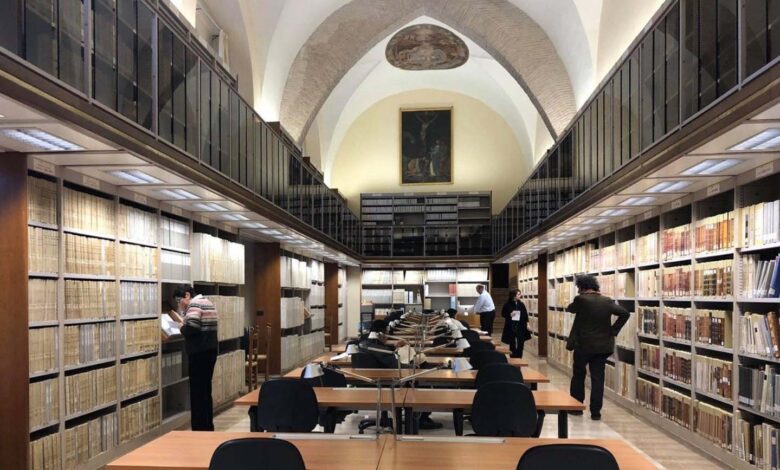
June 9 is celebrated as International Archives Day, International Friends Day, World Accreditation Day, World Maintenance Day and International Celtic Art Day. On this day, history has left many different traces: from the discovery of the St. Lawrence River and the fall of a meteorite in Transcarpathia to the appearance of Donald Duck, Sergey Bubka’s record and important political decisions of the 20th century.
International Archives Day
This day is dedicated to the preservation of the documentary heritage of humanity and the work of archival institutions. Archives store official documents, historical acts, maps, photographs, correspondence, audio recordings and other materials that allow us to recreate events of the past based on reliable sources. It is thanks to archival funds that researchers, historians, journalists and citizens gain access to information about social processes, public administration, culture and life of previous generations.
Today’s day reminds us of the importance of archives for preserving collective memory and legal information. Archival documents are used to confirm work experience, property rights, birth or education, as well as to study the history of individual people, cities and states. In the modern world, archives are actively digitizing their holdings, which makes valuable documents more accessible to a wide range of users.
Interesting facts
The oldest known state archive was created more than four thousand years ago in the ancient city of Ebla in modern Syria. Archaeologists have discovered about 17 thousand clay tablets with business records, diplomatic documents and laws there.
The Vatican Apostolic Archives store documents covering more than twelve centuries of history. The total length of its shelves is tens of kilometers, and some of the materials have still been studied only partially.
After the fire in London in 1666, many city documents were lost forever. It was this catastrophe that became one of the impetuses for a more careful attitude to the storage of state archives in Europe.
The U.S. National Archives holds one of the four original copies of the Magna Carta of 1297, a document that has had a significant impact on the development of modern law and democratic institutions.
Some of the archives of the French Revolution were saved because the documents were hidden in monasteries, cellars, and private homes during political unrest and wars.
During World War II, workers in many European archives evacuated the most valuable documents to mines, caves, and mountain shelters, risking their lives to preserve historical sources.
Some archives around the world still store documents with wax seals that are over seven hundred years old. To preserve them, special temperature and humidity are maintained, since even minor changes can damage the wax and parchment.
One of the most famous archival documents in Ukraine is the Constitution of Pylyp Orlyk of 1710. Its original was kept in Sweden for a long time, and the document is considered one of the oldest European constitutions.
International Friends Day
This is an unofficial holiday dedicated to friendship, mutual support and sincere human relationships. It is celebrated in many countries of the world as an opportunity to recall the importance of friends in the life of every person. The holiday does not have official international status, but has gained popularity due to its spread in the media, social networks and public initiatives.
Friendship remains one of the most important forms of social ties, helping people overcome difficulties, share experiences and support each other in various life situations. International Friends Day has become an occasion for communication, renewal of old contacts and expression of gratitude to those who were there at important moments in life. In different cultures, friendship is traditionally considered a value based on trust, respect and mutual understanding.
Interesting facts
Sumerian texts, written over four thousand years ago, already mentioned friendly relations between people, which makes friendship one of the oldest described forms of human relationships.
The ancient Greek philosopher Aristotle devoted a significant part of his works to friendship and considered it one of the main conditions for a happy life. He distinguished friendship by benefit, pleasure and virtue.
During archaeological excavations in China, burials of people who were not relatives were found, but were buried next to a large number of common things. Researchers suggest that these could be friends who were connected by particularly close ties.
In medieval Europe, there were official agreements on friendship between cities and communities, which provided for mutual support during wars, natural disasters and trade disputes.
Scientific studies show that strong friendships have a positive effect on life expectancy and psychological well-being, reducing stress and feelings of loneliness.
In ancient Rome, some politicians created special lists of friends and allies that could number in the hundreds. Such connections often played a more important role than official positions or origins.
The oldest known letter with friendly content was written on a clay tablet in Mesopotamia more than 3,500 years ago. In it, the author conveyed wishes for health and well-being to his companion.
During polar expeditions of the 19th and 20th centuries, researchers repeatedly noted in their diaries that it was friendship and mutual support among team members that helped them survive in conditions of prolonged isolation and harsh climate.
World Accreditation Day
This day is dedicated to raising awareness of the role of accreditation in ensuring trust in the results of tests, certification, inspections and other conformity assessment procedures. Accreditation confirms the competence of organizations that verify the quality of products, services and processes, helping to create uniform standards at the international level. Thanks to this, manufacturers and consumers can be more confident in the reliability of the results of inspections and tests.
The global accreditation system plays an important role in international trade, as it promotes mutual recognition of certificates and assessment results between different countries. This helps reduce technical barriers, simplify the entry of goods into foreign markets and increase the level of product safety. Accreditation is used in many areas, including industry, medicine, construction, environmental control and information technology.
Interesting facts
Laboratory accreditation allows test results to be recognized in many countries around the world without the need for re-testing of products, which significantly reduces manufacturers’ costs and accelerates international trade.
The first systems for independent confirmation of the competence of testing laboratories began to take shape actively in the second half of the 20th century due to the rapid growth of international trade in goods and the development of complex technologies.
Modern accredited laboratories test not only industrial products, but also the quality of drinking water, the safety of food products, medical devices, medicines and the level of environmental pollution.
Accreditation is used in the aviation and space industries, where even a minor error during testing can lead to serious technical consequences.
International agreements between accreditation bodies allow companies to export products to many countries using the results of tests conducted only once in their own country.
In medicine, accredited laboratories perform millions of tests every day, and the quality control system helps minimize the risk of erroneous research results.
To confirm competence, accredited institutions regularly undergo re-assessments, during which the qualifications of personnel, equipment, work methods and the quality management system are checked.
In Ukraine, accreditation is an important element of the technical regulation and quality assurance system, and its results contribute to the recognition of Ukrainian products in international markets.
World Maintenance Day
This day is dedicated to recognizing the importance of technical maintenance of equipment, infrastructure, transport and production systems. The working condition of equipment directly affects the safety, efficiency of enterprises and the reliability of everyday services. Regular maintenance allows for timely detection of malfunctions, prolonging the life of equipment and reducing the risk of accidents.
Today, attention is drawn to the work of specialists who ensure the continuous functioning of complex technical systems in industry, energy, medicine, transport and many other areas. Modern maintenance increasingly relies on digital technologies, automated monitoring and fault prediction, which helps to increase equipment reliability and reduce repair costs.
Interesting facts
Many modern industrial enterprises use special sensors that continuously monitor temperature, vibration and other equipment parameters, allowing them to detect possible breakdowns before they occur.
In civil aviation, aircraft maintenance is so thorough that individual components can be replaced after a certain number of hours of operation even if there are no signs of a malfunction.
The first large-scale scheduled maintenance systems began to be actively implemented on railways in the 19th century, when the growth in the number of trains required new approaches to traffic safety.
Some large seagoing vessels undergo maintenance in special dry docks, where they are completely raised above the water to inspect the hull, propellers and other structures.
At nuclear power plants, a significant part of preventive work is performed by robotic systems capable of operating in conditions dangerous to humans.
In modern data centers, maintenance covers thousands of servers at the same time. Even a short-term failure of cooling systems can lead to overheating of a large amount of equipment.
During the construction of the Eiffel Tower, it was planned to paint it regularly to protect the metal from corrosion. This procedure remains an important part of the maintenance of the structure today.
In the space industry, engineers develop satellites taking into account the fact that most of them cannot be repaired after launch. That is why the inspection and maintenance of all systems before launch are extremely thorough.
International Day of Celtic Art
This day is dedicated to the cultural heritage of the Celtic peoples, who left a noticeable mark on the history of Europe. Celtic art is known for its intricate ornaments, interwoven patterns, symbolic images of animals and plants, as well as high skill in working with metal, stone and manuscripts. Its elements were formed back in the Iron Age and have been preserved in the cultural traditions of Ireland, Scotland, Wales, Brittany and other regions.
The holiday draws attention to the artistic achievements of the Celts, which influenced the development of European decorative arts and book culture. A special place is occupied by ancient ornaments, carved stone crosses, jewelry and illuminated manuscripts, combining complex geometry and symbolism. Many traditional motifs of Celtic art are still used today in design, architecture, heraldry and modern decorative arts.
Interesting facts
One of the most famous works of Celtic art is the Book of Kells, a richly illustrated manuscript created around the 8th–9th centuries. Its pages are decorated with such intricate patterns that individual details can only be seen under magnification.
Celtic craftsmen created gold and bronze jewelry with extraordinary precision more than two thousand years ago. Some of the found products have such delicate decoration that modern researchers have long argued about the technology of their manufacture.
The famous Celtic knots, which have no visible beginning or end, have become one of the most recognizable symbols of eternity and continuity. Similar patterns can be seen on ancient manuscripts, stone monuments and jewelry.
Spiral motifs were used in many Celtic jewelry. Archaeologists believe that such symbols could reflect ideas about the cycles of life, nature and time.
Bronze musical instruments of Celtic origin, over three thousand years old, have been found in what is now Ireland. They are among the oldest metal wind instruments in Europe.
Celtic craftsmen often decorated their weapons with intricate ornaments. Some swords and shields were so richly decorated that they served not only a practical but also a status function.
The tall stone crosses of Ireland, created in the early Middle Ages, combined Christian themes with traditional Celtic decorative motifs. Many of them have survived to this day and are considered important monuments of art.
In the 19th century, interest in Celtic art experienced a real revival. Its motifs began to be actively used in architecture, book graphics, jewelry, and decorative design of buildings throughout Europe.
Historical events on this day
1534 – Jacques Cartier discovered the St. Lawrence River during his first voyage to North America. This discovery was an important stage in the further French development of the Canadian territories.
1786 – Ice cream was first sold in New York. Over time, this dessert became one of the most popular treats in the United States and gradually spread into popular culture.
1801 – In the Russian Empire, it was forbidden to print advertisements in newspapers about the sale of landless serfs. The ban did not abolish serfdom, but it showed an attempt to hide the most frank manifestations of human trafficking.
1822 – An artificial jaw was patented in the United States. This invention became part of the early development of dental prosthetics, which over time turned into a separate field of medicine.
1847 – Russian Emperor Nicholas I confirmed the sentence, according to which Taras Shevchenko was sent to the soldiers. The poet was also forbidden to write and draw, trying to break his creative and civic position.
1866 – The meteorite “Knyahynya” fell in Transcarpathia, one of the most famous meteorites found in Ukraine. Its fragments later ended up in scientific collections in various countries.
1889 – A monument to Giordano Bruno was unveiled in Rome at the place where he was burned in 1600. The monument became a symbol of the memory of the thinker who suffered because of his views.
1898 – Great Britain received the New Territories of Hong Kong from China on a 99-year lease. This agreement significantly expanded the British presence in the region.
1920 – During the retreat, Polish troops destroyed all the bridges across the Dnieper in Kyiv, including the Mykolaiv Chain Bridge. The destruction was supposed to slow down the enemy’s advance, but it caused great damage to the city’s infrastructure.
1934 – Donald Duck first appeared on the screens. The character quickly became one of the most famous heroes of the Disney studio.
1984 – Donald Duck was accepted into the Screen Actors Guild of the United States as an honorary member. This was a rare case of recognition of a fictional animated character by the professional community.
1988 – Serhiy Bubka set a world record in pole vaulting in Bratislava, overcoming a height of 6.05 meters. His achievement confirmed the dominance of the Ukrainian athlete in this type of athletics.
1994 – Kazakh President Nursultan Nazarbayev announced the transfer of the capital from Almaty to Akmola. The city later became known as Astana.
1995 – In Sochi, the presidents of Ukraine and Russia signed an agreement on the division of the Black Sea Fleet. The document became part of the complex process of settling the naval legacy after the collapse of the USSR.