June holidays in Europe: what is important for Ukrainian refugees to know about work schedules and weekends

June in many countries of the European Union is accompanied by religious and national holidays, which directly affect the daily rhythm of life – in particular, for those who are temporarily abroad as a refugee. Closed shops, inaccessible public institutions, changed schedules of public transport, canceled receptions in social services, schools and kindergartens without classes – all this can be a surprise if you do not take into account the peculiarities of holidays in different countries. Some dates are national holidays, others are regional or church holidays, but they have a tangible impact on everyday life.
France
Monday, June 9, is Lundi de Pentecôte in France, the Monday after Pentecost. This is an official holiday, but its status depends on the decision of specific regions or employers. Most public schools, social services, and government agencies have declared a holiday on this day. It should be taken into account that for some budgetary institutions this day is worked out on other dates (the so-called “Solidarity Day” — journée de solidarité).
On Thursday, June 19, France celebrates Fête-Dieu — the Feast of Corpus Christi. It is an unofficial church holiday that is not a public holiday, but in Catholic regions, especially in the east of the country and in Alsace, religious processions may be held. The work of institutions does not stop, but street closures or local changes in access to administrative buildings are possible.
Germany
On Monday, June 9, Pfingstmontag – Holy Trinity Day – will be celebrated in all German federal states. It is a public holiday. On this day, schools, kindergartens, authorities, many supermarkets and pharmacies will not be open. Public transport in a number of cities will operate on a Sunday or reduced schedule. Only on-call services function in hospitals.
On Thursday, June 19, Fronleichnam – the Feast of the Body and Blood of Christ – will be celebrated in a number of countries. It is an official holiday in the Catholic regions: Bavaria, Hesse, North Rhine-Westphalia, Saarland, Rhineland-Palatinate, and partly Baden-Württemberg. In these lands, the work of state structures, schools and most private institutions will be stopped on this day. In other countries it is a normal working day.
Spain
On June 19, Spain celebrates Corpus Christi — the Feast of the Body of Christ. This is not a nationwide, but a regional holiday. In part of the autonomies, such as Castile-La Mancha, Madrid or Valencia, this holiday is accompanied by the closing of institutions and the holding of religious ceremonies.
One of the largest church processions in Spain will take place in Toledo. Valencia has a number of parades, street theater performances and traditional events. In this regard, access to social services, reception at migration authorities or other administrations will be impossible on June 19 in these cities.
For Ukrainians living in Catalonia, Andalusia or the Basque Country, this day is usually not a day off, but local exceptions are possible – they need to be clarified with communal authorities.
Poland
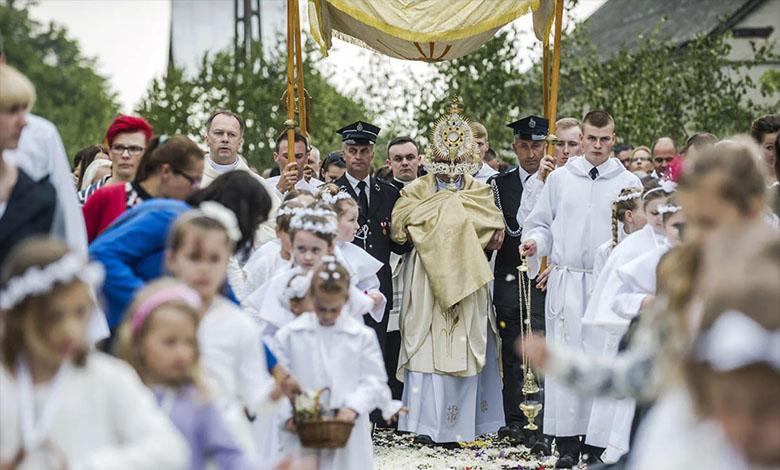
Poland will celebrate Boże Ciało, the Corpus Christi Feast, on June 19. It is an official holiday across the country. State institutions, medical registries, schools, daycare centers, most pharmacies and shops are closed. Only regular food points, gas stations and hospitals can remain open. On this day, mass religious processions take place in many cities – streets are temporarily closed, public transport is slowed down. This is especially noticeable in the center of Warsaw, Krakow, Wroclaw, and Gdańsk. In small towns, processions can also temporarily block traffic.
Ukrainians who need an appointment at ZUS, voivodeship government or district administration should definitely take this weekend into account and not plan any business for June 19. The next working day is Friday, June 20.
Portugal
June 10 is Dia de Portugal, Portugal’s National Day. It is a public holiday in the country, so all government bodies, municipal structures, medical administrations, social services, schools and pharmacies will be closed. In a number of cities there may also be traffic restrictions due to festive events. Lisbon traditionally hosts holiday parades, which may affect access to some areas.
June 19 in Portugal is the Corpo de Deus (Corpus Christi) religious holiday, which has the status of an official holiday. All major government and educational institutions are closed, and admissions at SEF (migration service), social security offices, municipalities and schools are suspended. In large cities, in particular Lisbon, religious processions, temporary closures and changes in the operation of transport are possible.
Austria
June 9, as in other German-speaking countries, is an official holiday in Austria – Pfingstmontag (Monday after Pentecost). It is a public holiday. All educational, medical, administrative and social institutions are closed. Public transport in large cities operates on Sundays.
Fronleichnam, the Catholic feast of Corpus Christi, also falls on June 19 in Austria. It is an official holiday across the country. Religious processions are traditionally held in many cities, including Hallstatt. All government institutions, schools, banks, supermarkets, and most pharmacies will be closed on the day of the holiday. Reception in social structures and migration services is not carried out on this day.
What should be done in advance
It is important for Ukrainians who are in the status of temporary protection or waiting for documents to check the work schedule of official bodies in advance and not to plan to contact the administrations on days when the country or a specific region celebrates. If you have an appointment at a government institution, check whether it falls on a holiday. If you receive social benefits, it is important to remember that the transfer of funds may be delayed for a day or two due to non-working days in the banking system.
It is also worth considering the schedule of public transport, so as not to find yourself without access to important points – hospitals, pharmacies or hostels for refugees.