Kremlin shadows over Bucharest: is Ukraine threatened by Gheorgescu’s victory in the first round of elections

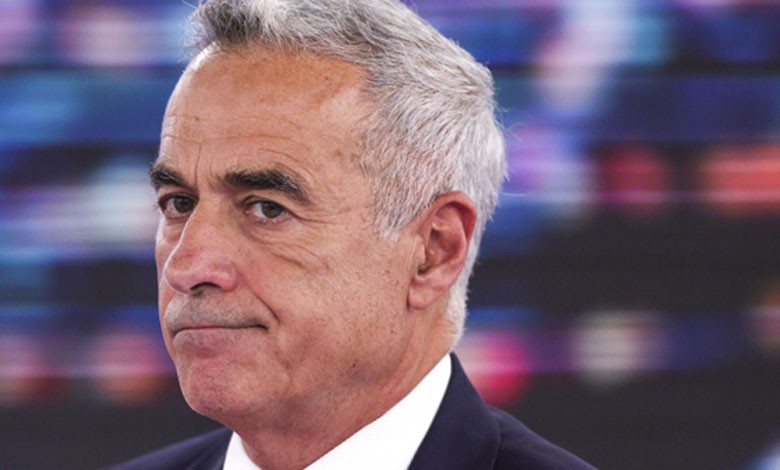
Shocking political night in Romania. Pro-Russian far-right politician Celin Georgescu unexpectedly enters the second round of elections for the post of head of state in Romania, a NATO member country. This non-partisan populist is known for his anti-Western statements and sympathies for the Romanian fascists of World War II. He was not given a platform by the traditional mass media, Georgescu was deprived of the attention of journalists. Meanwhile, he has achieved significant success using the TikTok platform.
In the first round, Georgescu beat Prime Minister Marcela Çolaka, a representative of the Social Democratic Party, who took second place. The decisive round of elections between candidates for the highest post in Romania will take place on December 8 – a week after the parliamentary elections.
The Romanian people “woke up”
EU member state Romania, with a population of around 19 million, is one of the poorest regions in Europe. In the north, it borders our country. Therefore, the war that is unfolding practically nearby cannot help but affect the political mood in Romania, in particular during the election campaigns. The Russian-Ukrainian war is becoming fertile ground for populist rhetoric and triggers that affect the fears and anxieties of the electorate.
The night after the election, pro-Russian candidate Celin Georgescu held a press conference that was broadcast on Facebook. He stated, that “the Romanian people woke up” and expressed their desire “no longer to be on their knees, not to be invaded and not to feel humiliated”. Georgescu hinted that economic instability and a desire for change drove voters to support him. He added: “Tonight the Romanian people called for peace,” which many took as a hint of a willingness to compromise with Russia in the context of its aggression against Ukraine.
TikTok as a new trend of political communication
In today’s politics, populism remains a powerful tool for attracting voters, especially in countries where economic instability and social disillusionment create fertile ground for the spread of radical ideas. New technologies and social networks, in particular TikTok, are becoming platforms for bringing these ideas to a wider audience.
Political technologists associate the success of Celin Georgescu in the presidential elections in Romania with the spread of viral pre-election content by the TikTok network. He was not supported by traditional mass media, he had no support among the establishment either. Moreover, he did not have a clear agenda, with which candidates for the presidency usually enter. Meanwhile, he had a TikTok account, and this allowed him to gain significant popularity among voters. The platform, which is associated mostly with a youth audience, has become an effective means of spreading his anti-Western rhetoric and populist messages. Just look at the comments to see that Georgescu’s triggers worked. “The most divine person, I respect and appreciate him, I vote for him, he is our role model in life, God bless him to represent the Romanian country”; “God help me!!! I hope we all open our eyes and stand with you, thank you for your patriotism”; “God help you, Mr. President, I vote for you here in England”; “Although many elderly people in the villages do not know you, may God help you” – hundreds of thousands of comments of this type under Georgescu’s video once again proved the effectiveness of viral content based on electoral expectations. The “stranger factor” also played its positive role: from those who are new and little known, people usually expect more than from those whose actions and decisions are already known and understood.
In the month before the election, Georgescu quickly went viral on TikTok, as the analysis shows edition G4Media. He gained tens of thousands of new subscribers, hundreds of thousands of views on old videos. Activated the emergence of new podcasts and “shows” on TikTok, which are known in the network’s underground, but remain unknown to the audience that consumes traditional media. One example: an interview on Gojira’s influencer podcast garnered over 70,000 views on YouTube in just 2 days.
Journalists attribute Georgescu’s popularity on TikTok to the numerous tags with his name that appear in comments on random posts about the presidential election. Most of such comments can be seen under the posts of candidates Elena Lasconi and Mircea Geoane, while there are none under the posts of Marcel Čolaku and Nikolae Čuk. In Lasconi’s case, TikTok’s algorithm even started suggesting Georgescu’s name in the comment search bar on a video with more than 900,000 views, even though he was not mentioned in the video itself. This happened because the algorithm associates frequently used phrases in comments with search queries.
So, Georgescu used TikTok not just as a platform, but as a tool for forming a new political reality. Through emotional and social triggers, he built a strong connection with voters using a format that easily adapts to today’s information needs.
In particular, Georgescu has often emphasized the threats that Romania allegedly faces, including “external interference”, “economic dependence” and the “threat of losing national identity”. Such messages were actively disseminated in short videos that used dramatic visual effects and music to heighten the sense of danger.
Alarm signal for Ukraine
The figure of Georgescu and his rhetoric are an alarming signal for our country, because the growing popularity of pro-Russian politicians in neighboring states may affect regional support for Kyiv. Public sentiment in Romania, especially among supporters of right-wing and radical ideas, can be used to weaken European unity in supporting Ukraine in the war against the aggressor.
According to the results of the first round of elections, Georgescu received 22% of the vote, ahead of Prime Minister Marcel Çolaka, who gained about 20%. At the same time, the votes of Romanians abroad have not yet been taken into account, but preliminary calculations show that support for Georgescu is much higher among the diaspora. This phenomenon is similar to the situation in Moldova, where diaspora votes are often decisive in elections. However, for Chisinau, the support of the diaspora had the exact opposite meaning: the diaspora brought victory to the current pro-European president Maia Sandu, because the votes abroad allowed the opposition candidates to bypass the pro-Russian favorites. Instead, the Romanian diaspora leans towards pro-Russian forces.
Right-wing radical forces are consolidating
“A far-right candidate unexpectedly took the lead in the presidential race in Romania“, — this is how the international news channel reacted to Georgescu’s entry into the second round France 24. “Shock in Romania: Celin Giorgiscu, a far-right critic of NATO, led the presidential race“, – reported The Guardian. “Georgescu, who has called NATO’s anti-missile shield a “disgrace to diplomacy”, is likely to face left-wing Prime Minister Marcel Ciolacu in the second round“, – wrote an authoritative British publication. “A far-right candidate has a shocking lead in the presidential elections in Romania“, he notes Air Force.
George Simion, leader of the far-right AUR party, who came in fourth with 14% of the vote, has already announced his support for Georgescu in the second round. This consolidation of right-wing radical forces reveals attempts by political groups to gain influence by using radical rhetoric and emotional appeals.
The third place in the elections was taken by the candidate from the conservative-liberal reform party, Olena Lasconi, who received about 19%. Her neutrality in the choice between Georgescu and Çolaku underscores the split in society as voters seek a balance between traditional political forces and new, but often radical, alternatives.
Consequences for Ukraine
Kelin Georgescu is often criticized for his pro-Russian statements and skepticism towards NATO and the EU. In 2020, he called Vladimir Putin one of the few “real leaders” in the world, stressing that the Russian president “sincerely loves his country.”
In 2021, Georgescu expressed the opinion that NATO would not defend its members in case of Russian aggression.
In the election campaign, Georgescu used triggers that “reached” large segments of the electorate. He skilfully exploited the widespread disillusionment among some groups with Western structures such as the EU and NATO, accusing them of “meddling” in Romanian affairs. This particularly resonated with voters who experience economic instability or are skeptical of globalization.
If Georgescu wins, it could affect Romania’s foreign policy and its attitude towards Ukraine. Given his pro-Russian statements and criticism of Western values, Ukraine may lose an important neighbor who is currently a reliable partner in the Black Sea region. It will also increase the influence of Russia, which could use this result to undermine European unity.
The race for the presidential seat in Romania is attracting attention far beyond the country’s borders. Romania, which has more than 600 km of border with Ukraine, plays a key strategic role for Western allies, because a NATO military base is located here, routes for transporting millions of tons of Ukrainian grain pass here. Thanks to Romania, the transferred Patriot battery works in our country.