March 10 is celebrated as the National Anthem Day of Ukraine, International Women Judges Day, International Bagpipe Day and International Wonder Day. This day has left a noticeable mark in history in different years due to events that influenced the development of states, scientific discoveries, culture and military conflicts in different parts of the world.
National Anthem Day of Ukraine
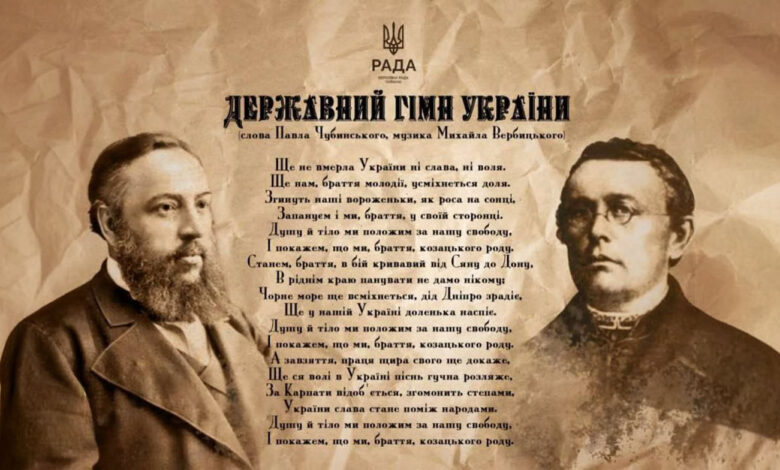
National Anthem Day of Ukraine is celebrated in memory of the first public performance of the song “Ukraine Has Not Died”, which took place in 1865 in Przemyśl during the commemoration of Taras Shevchenko. The words were written by ethnographer and poet Pavlo Chubynsky in 1862, and the music was created by composer and priest Mykhailo Verbytsky. The text quickly spread among Ukrainians, and the melody became one of the most famous patriotic compositions of its time.
After the declaration of independence of Ukraine, the Verkhovna Rada approved the melody of Mykhailo Verbytsky as the national anthem in 1992. The final version of the words used during the official performance was approved by law in 2003. Only the first verse and chorus of the original poem by Pavlo Chubynsky are performed. The anthem sounds during state ceremonies, international sporting events and important events of national importance.
Interesting facts
Pavlo Chubynsky wrote the poem “Ukraine is not dead yet” in Kyiv in the fall of 1862 during one of the evening meetings of the intelligentsia. The text was quickly copied by hand and passed on to acquaintances, which is why it spread in different regions even without official publication.
The poem was first published in 1863 in the Lviv magazine “Meta”. In the publication, it was mistakenly attributed to Taras Shevchenko, since the style and content resembled the poetry of the Kobzar, and the name of the real author was little known at the time.
Mykhailo Verbytskyi originally composed the music as a melody for voice with guitar accompaniment. Later, the composer also wrote a choral version, which became the most common and began to be performed at ceremonial events.
The original text by Pavlo Chubynskyi consisted of four verses and a chorus. Only the first verse and chorus are used in the national anthem, while the other parts remained the historical part of the work.
During the period of the Ukrainian People’s Republic of 1917–1920, “Ukraine Has Not Died Yet” was performed as the national anthem during state events and military ceremonies.
During the Soviet period, the performance of this song was prohibited, and another work became the official anthem of the Ukrainian SSR. Despite this, the Ukrainian diaspora continued to sing “Ukraine is Not Dead Yet” at public gatherings and cultural events.
Mykhailo Verbytskyi was a Greek Catholic priest and at the same time the author of dozens of musical works, including theater music, church compositions, and symphonic overtures. His legacy is considered one of the important pages of the musical culture of 19th-century Galicia.
In different historical periods, the words of the Ukrainian anthem were translated into many languages of the world, including English, Polish, German, and French, to be performed during international events and in Ukrainian communities abroad.
International Day of Women Judges
This day was introduced by the United Nations in 2021 to draw attention to the role of women in the judiciary and support equal access to the profession. The initiative is related to the idea of ensuring gender equality in the justice system and expanding the representation of women at all levels of the judiciary.
In different countries, women began to work as judges at different times, and the path to this profession was long. Today, they hold positions in local, national and international courts, hearing criminal, civil and constitutional cases. In many countries, the number of women in the judiciary is gradually increasing, although they are still underrepresented in leading and highest judicial positions.
Interesting facts
The first female judge in the world is considered to be Esther Hobart Morris from the USA, who in 1870 became a justice of the peace in the state of Wyoming. Her appointment took place after this state was one of the first to grant women the right to vote.
In the UK, women were only allowed to become judges in 1919 after a special law was passed that allowed them to work in the legal field and hold public office.
The first female judge of the US Supreme Court was Sandra Day O’Connor, appointed in 1981 by President Ronald Reagan. Up until that point, in the more than 190 years of the court’s existence, all its members had been men.
In international law, female judges work in institutions such as the International Court of Justice and the International Criminal Court in The Hague, where they consider cases of war crimes, crimes against humanity and other serious violations of international law.
In Ukraine, the first women began working as judges in the 20th century, and today they make up a significant part of the judicial corps. According to statistics from different years, their share in local courts exceeds half of all judges.
In some countries, including Iceland and Canada, the number of women judges has gradually reached the same level as men, which is considered an indicator of more balanced representation in the judiciary.
Women have also headed the highest judicial institutions. For example, in Canada, Beverly McLachlan became the first female Chief Justice of the country and held this position for more than 17 years.
Studies by international legal organizations show that the increase in the number of women in the courts affects the style of judicial decisions, as the diversity of experience and approaches helps to consider complex legal issues more broadly.
International Bagpipe Day
International Bagpipe Day is celebrated every year on March 10 in different countries around the world. The date was chosen in honor of the birthday of Scottish poet Robert Burns, whose work is closely associated with the traditional culture of Scotland. The holiday is dedicated to musicians who play the bagpipe, as well as the history and traditions of this ancient instrument.
The bagpipe is a wind instrument and has a centuries-old history. It is common among many peoples of Europe, the Middle East and the Caucasus. In different countries, the instrument has its own names, shape and sound, but the principle of operation is similar: air is fed into the bellows, from where it enters the tubes, creating a continuous sound. The bagpipe is used in folk music, military bands and during traditional holidays.
Interesting facts
The bagpipe is considered one of the oldest musical instruments in the world. Archaeological and written references to such instruments can be found in ancient times, in particular in ancient Greek and Roman sources.
According to historians, Emperor Nero in Ancient Rome knew how to play an instrument similar to the bagpipe. Chronicles mention that he performed musical numbers in front of the audience.
The most famous type of instrument is the Scottish large horn bagpipe. It has several drone pipes that create a constant background sound, and a melody pipe on which the main melody is played.
In Ukraine, there is its own variety of bagpipes, called the koza. It was made of goatskin, and the wooden pipes were decorated with carvings. The instrument was used during folk festivals and dances.
In medieval Europe, the bagpipes were very popular among traveling musicians. They played at fairs, weddings, and folk festivals, performing dance melodies.
In Scotland, the bagpipes became an important element of military traditions. Bagpipers accompanied soldiers during campaigns and battles, and sometimes played even on the battlefield.
During the First World War, Scottish military bagpipers walked ahead of units and played battle marches. Due to the loud sound of the instrument, they could be heard well even during artillery fire.
There are over a hundred varieties of bagpipes in the world. They differ in the shape of the bellows, the number of tubes and the method of air supply, as well as the sound and musical traditions.
International Day of Awesomeness
This unofficial holiday appeared in the USA in 2007 at the initiative of a group of employees of the Internet company FreeCreditReport.com. The date was chosen in honor of the birthday of the American actor Chuck Norris, whose name became a symbol of Internet jokes about superhuman strength and incredible capabilities. Thanks to its spread on the Internet, the idea quickly became popular among users in different countries.
The holiday is dedicated to the idea of noticing one’s own achievements, talents and unusual features of people around. On this day, stories about unusual actions, interesting skills or moments that cause admiration are published on social networks. Although the holiday does not have official status, it has become part of modern Internet culture and a symbolic occasion to pay attention to the positive aspects of human capabilities.
Interesting Facts
In 1977, a case was recorded in the USA when a man named Wesley Oti escaped after falling from the 19th floor of a building. He landed on a parked car and survived with only a few fractures. Doctors called it one of the most famous cases of incredible survival after falling from a great height.
In 2010, a 13-year-old boy from Great Britain, Daniel Brown, decided to learn all the capitals of the world and in a few months was able to name more than 190 capitals without mistakes, setting a school record for geographical memory.
In 2001, American millionaire Eugene Shoemaker became the first person whose remains were delivered to the Moon. A capsule with his ashes was placed on board a NASA spacecraft that crashed on the surface of the Earth’s satellite.
The world’s longest standing long jump without a special run-up was 3.7 meters. Only a few athletes with exceptional leg strength can achieve this feat.
In 2013, Norwegian skydiver Anders Helstrup survived after a meteorite flew past him while he was jumping from a plane. The rock fell to the ground nearby, and researchers later confirmed its cosmic origin.
In China, there is a man named Zhao Xin who can rotate his feet almost 180 degrees back and walk as fast as he normally would. Doctors attribute this to an extremely rare joint condition.
In Ukraine during World War II, pilot Ivan Kozhedub, the future three-time Hero of the Soviet Union, shot down 64 enemy aircraft in air battles and was never shot down himself, which is considered one of the best results among the fighters of the anti-Hitler coalition.
In 1982, Canadian Larry Walters took to the sky on an ordinary garden chair, to which he tied 45 meteorological helium balloons. He rose to a height of about 4.5 kilometers and stayed in the air for about 45 minutes.
Historical events on this day
1098 — Baldwin of Boulogne accepted the title of Count of Edessa after capturing the city during the First Crusade. Thus arose the County of Edessa, the first state formation of the Crusaders in the Middle East, which became an important stronghold for the further advancement of European knights in the region and the formation of other Christian states in Syria and Palestine.
1535 – the ships of the Spanish bishop Thomas de Berlanga, who were traveling from Panama to Peru, went off course due to ocean currents. As a result, the sailors came across an unknown archipelago in the Pacific Ocean, which was called the Galapagos Islands. Later, this territory became famous for its unique nature and studies of evolution.
1801 – the first general census of the population was conducted in Great Britain in England, Scotland and Wales. The data collected allowed the government to more accurately assess the number of inhabitants of the country, the structure of the population and the needs of the regions during a period of rapid economic and social change.
1813 — King of Prussia Friedrich Wilhelm III established the military award “Iron Cross”. It was awarded to soldiers and officers for bravery during the fight against Napoleon’s army. The award became one of the most famous military awards in Europe.
1830 — A long struggle of the peoples of Dagestan and Chechnya against Russian expansion began in the North Caucasus. The insurgent movement was led by religious and military leaders, and the confrontation grew into a multi-year conflict that became part of the Caucasian War.
1862 — The United States began to use the first paper money of the federal type. They were issued during the Civil War to stabilize the financial system and provide the government with funds for military operations.
1876 — Inventor Alexander Graham Bell made the first successful telephone call. He turned to his assistant with the words: “Mr. Watson, come in, I want to see you.” This moment marked the beginning of the development of telephone communication.
1878 — in Geneva, at the printing house of Mykhailo Drahomanov, Ukrainian figures Fedor Vovk and Andriy Lyakhotsky prepared and published a compact pocket edition of Taras Shevchenko’s “Kobzar”. The book was intended for distribution among Ukrainians in various European countries.
1893 — the territory of the Ivory Coast officially became a French colony. France established administrative control over the region, which was of strategic importance due to its resources and advantageous location on the coast of West Africa.
1905 — the Battle of Mukden between the Russian and Japanese armies during the Russo-Japanese War ended. The defeat of the Russian Empire was one of the largest in its military history and demonstrated the power of the modernized Japanese army.
1906 – a new Bakerloo subway line was opened in London. It became part of the rapidly growing underground transport network of the British capital, which greatly facilitated movement around the city.
1910 – the Chinese government decided to ban slavery. This step was part of reforms aimed at modernizing the state and changing traditional social practices.
1910 – French aviator Emile Aubrin made one of the first night flights in a monoplane designed by Louis Blériot. The experiment demonstrated the possibility of flying in the dark and opened up new prospects for the development of aviation.
1943 – German Field Marshal Erwin von Rommel arrived at Adolf Hitler’s headquarters in a military bunker near Vinnytsia. He tried to convince the leadership of the Third Reich of the need to withdraw troops from North Africa after a series of defeats.
1943 – Organized work began in the USSR to create nuclear weapons. The Soviet government formed scientific groups and laboratories that were engaged in research in the field of atomic energy and future military applications.
1945 – US aircraft carried out a massive bombing of Tokyo with incendiary bombs. Fires destroyed a significant part of the city, and the total number of deaths reached tens of thousands, making the raid one of the bloodiest in the history of wars.
1952 – a military coup took place in Cuba, as a result of which General Fulgencio Batista seized power. He canceled the election results and established an authoritarian regime that existed before the Cuban Revolution.
1959 — A large-scale uprising of local residents against Chinese rule began in the Tibetan capital of Lhasa. The events led to a harsh suppression of the protests and the flight of the spiritual leader, the Dalai Lama, to India.
1975 — In Moscow, a stampede occurred in the stands during a hockey match between the USSR and Canada. The cause was the distribution of chewing gum by foreign players, which caused a chaotic crowd, as a result of which 21 people died.
1976 — Polish sailor Krystina Chojnowska set off on a journey that became the first female solo circumnavigation of the world under the Polish flag. Her expedition lasted several years and became an important event in the history of sailing.
1990 — The first parish of the Ukrainian Autocephalous Orthodox Church began operating in Kyiv after a long period of bans. Divine services were held in the Church of St. Archangel Michael on the territory of the Museum of Folk Architecture and Life of Ukraine.
1992 — Ukraine was admitted to the North Atlantic Cooperation Council, which was one of the first steps in developing partnership with NATO countries. In the same year, the Honor Guard Orchestra of the Presidential Regiment of Ukraine began its work.
2006 — The 9th Winter Paralympic Games opened in Turin. Hundreds of athletes with disabilities from different countries of the world took part in the competitions, competing in winter disciplines at the level of international sports championships.