March 9 is celebrated as Commonwealth Day, Taras Shevchenko’s Birthday, and International DJ Day. Many events that took place on this day in different years are associated with important political decisions, scientific discoveries, cultural phenomena, and historical turning points in different countries of the world.
Commonwealth Day
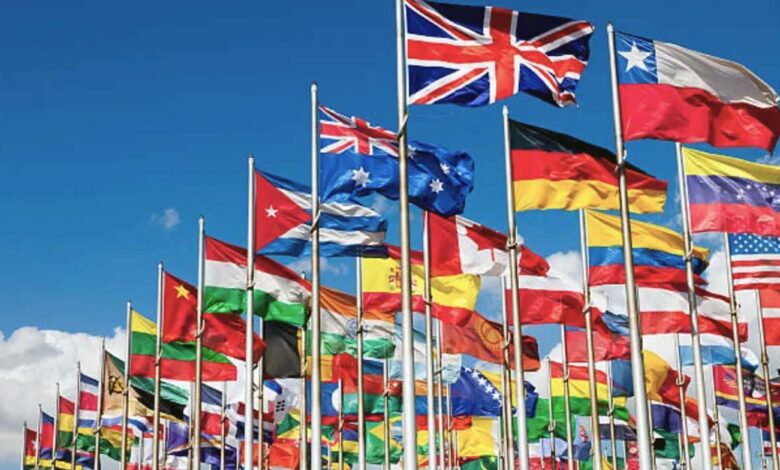
This day is celebrated every year on the second Monday of March in the countries that are members of the Commonwealth of Nations. The association was formed in the 20th century on the basis of the former territories of the British Empire and today includes 54 states from different continents. It includes both large countries such as India, Canada, and Australia, and small island states of the Caribbean and the Pacific Ocean. The organization’s participants retain political independence, but support cooperation in the fields of education, law, economics, and cultural exchanges.
The date of the celebration is not tied to a specific historical event. It was chosen as an annual symbolic reminder of the existence of a network of states that share a common historical heritage and maintain diplomatic and humanitarian ties. On this day, many countries raise the Commonwealth flag, hold educational programs in schools and broadcast an address by the British monarch, who is the symbolic head of the organization. Despite its historical origin from the British Empire, the Commonwealth also includes states that were never British colonies.
Interesting facts
The Commonwealth of Nations includes countries from every inhabited continent, and their combined population exceeds 2.5 billion people. Almost 60 percent of the inhabitants of this community are under 30 years old, so the organization is often considered one of the largest networks of young people in the world.
Mozambique and Rwanda joined the Commonwealth, although they were never British colonies. Mozambique joined in 1995 after the end of a civil war, and Rwanda became a member in 2009, gradually moving from a French-speaking to an English-speaking system of international relations.
In fifteen Commonwealth countries, the British monarch remains the head of state. These include Canada, Australia, New Zealand, Jamaica and several Caribbean countries. These countries are called Commonwealth realms, although they have their own governments, parliaments and independent policies.
The smallest country in the Commonwealth is the island nation of Nauru in the Pacific Ocean, with a population of about ten thousand people. Its area is only about 21 square kilometers, which makes it one of the smallest in the world, but it has the same voting rights in the organization as the major powers.
Ukraine is not a member of the Commonwealth of Nations, but has indirect ties with it through diplomatic cooperation with many of its members. After the start of a full-scale war against Ukraine, a number of Commonwealth countries, including Canada, Australia and the United Kingdom, became some of the most active partners in military and humanitarian support.
English is used as the main working language of the Commonwealth. At the same time, hundreds of languages officially exist in the countries of the organization, and India, Nigeria and South Africa are among the most linguistically diverse countries in the world.
The Commonwealth flag has a blue background and a gold symbol that resembles the rays of the sun. The design was created in the 1970s, and the number of rays does not correspond to the number of countries. They symbolize the idea of cooperation between states located in different parts of the world.
Some small Caribbean states receive a significant part of their income from joint educational and legal programs of the Commonwealth. For example, the judiciary of several such countries uses the services of the Caribbean Court of Justice or the British Privy Council, which is historically associated with their membership in this international community.
Taras Shevchenko’s Birthday
Every year on March 9, Ukraine and Ukrainian communities around the world commemorate the birthday of Taras Hryhorovych Shevchenko, a poet, artist, and thinker who played an important role in the development of Ukrainian culture in the 19th century. He was born on March 9, 1814, in the village of Moryntsi, into a family of serfs. His literary legacy greatly influenced the formation of the Ukrainian literary language and national consciousness. His most famous book was the poetry collection “Kobzar,” which was repeatedly reprinted and distributed even during the times of prohibition.
Shevchenko was a professional artist and studied at the St. Petersburg Academy of Arts. He created portraits, landscapes, historical scenes, and etchings, for which he received awards from the academy. Due to his participation in the Cyril and Methodius Brotherhood, he was arrested in 1847 and exiled as a soldier to remote fortresses of the Russian Empire with a strict ban on writing and drawing. A significant part of his works appeared precisely in defiance of these prohibitions, and after the poet’s death they became an important symbol of Ukrainian culture.
Interesting facts
Taras Shevchenko was born a serf and remained in this status until the age of 24. He was redeemed from serfdom in 1838 thanks to the efforts of Ukrainian and Russian artists. The money for the ransom was collected after the sale of a portrait of the poet Vasily Zhukovsky, painted by the artist Karl Bryullov.
The first edition of “Kobzar” was published in 1840 and consisted of about a thousand copies. The book quickly became popular among the Ukrainian intelligentsia, although the majority of the population at that time did not yet have the opportunity to read it due to the low level of literacy.
During his life, Shevchenko created over a thousand works of art. Approximately 835 of his works have survived to this day, including portraits, landscapes, etchings, and historical compositions. Some of them are considered important monuments of 19th-century art.
In his childhood, Taras Shevchenko worked as a shepherd and a hired hand, but even then he tried to draw. He copied icons and drawings from books, and sometimes used charcoal or chalk, because he had almost no paper. According to contemporaries, the boy even drew on the walls of houses and fences.
Shevchenko was a fashionista and paid great attention to his appearance. After being redeemed from serfdom, he wore expensive suits, hats, and a cane, and contemporaries recalled that the poet loved to be photographed and followed new trends in St. Petersburg fashion.
While studying in St. Petersburg, Shevchenko lived very poorly and often starved. There are records that he sometimes sold his own drawings for a few kopecks to buy bread. He even exchanged some of his early works for food.
Shevchenko loved tea and could drink a lot of it in a day. In his diary, he mentioned that he sometimes spent evenings with several samovars of tea, reading books or drawing.
The poet had a complex character and often conflicted with officials and military commanders. During his exile, he was repeatedly punished for violating discipline, in particular for trying to draw despite the ban.
In Kazakhstan, Shevchenko worked for some time in a geographical expedition that explored the Aral Sea. He created dozens of drawings of the coast, ships and steppe landscapes. These works today have both artistic and historical value, because they show the appearance of the region in the middle of the 19th century.
Shevchenko loved animals very much. Letters and diaries mention that during his exile he kept a dog and even tamed steppe birds, which he fed near the fortress.
The poet dreamed of getting married and tried several times to start a family, but none of his attempts ended in marriage. In adulthood, he even planned to buy a small hut near the Dnieper and live there with his wife, but these plans did not come true.
Shevchenko was one of the first Ukrainian artists to actively use photography. He ordered photo portraits from St. Petersburg photographers and sent them to friends, which was a fairly new phenomenon for the middle of the 19th century.
International DJ Day
This is a professional holiday for people who create and mix music for clubs, radio stations, concerts and various events. DJs appeared with the development of radio broadcasting in the 20th century, when presenters began to play records on the air and comment on music. Over time, this activity turned into a separate profession associated with mixing tracks, creating new sounds and shaping the musical atmosphere at parties and festivals.
The date of March 9 was established thanks to an international charity initiative, within which special musical events were held for several days to raise funds for children’s organizations. The idea was supported by clubs, radio stations and musical communities in different countries. With the development of electronic music and digital technologies, the profession of a DJ has changed significantly: modern performers work not only with vinyl, but also with digital consoles, programs and their own music tracks.
Interesting facts
The term DJ appeared in the 1930s in the USA. It began to be used in relation to radio presenters who played records on the air. One of the first people to use the term was American radio host Martin Block, who hosted a popular music program.
The first club DJs worked only with vinyl records. They used two turntables and a mixer to smoothly transition from one song to another. This mixing technique became the basis of modern club culture.
In the 1970s, DJs in New York began experimenting with repeating short rhythmic fragments of songs. This technique was called breakbeat. It became one of the key elements of the emergence of hip-hop culture.
One of the most famous inventions in the world of DJing was the Technics SL-1200 turntable. It began to be produced in 1972, and it became the standard for clubs and studios around the world. These players are valued for their record rotation accuracy and reliability.
Scratching is a technique where a DJ moves a record back and forth under a needle, creating a characteristic sound. It was accidentally discovered in the 1970s by DJ Grand Wizzard Theodore, when he touched a record with his hand during practice.
Modern DJs often create their own music. Many of them are also producers who record tracks in studios and then perform them during performances at festivals and concerts.
The largest electronic music festivals gather hundreds of thousands of people. For example, the Tomorrowland festival in Belgium is considered one of the largest in the world, and tickets for it are sold out within minutes of the start of sales.
In Ukraine, the culture of DJing began to develop actively in the 1990s after the appearance of the first large nightclubs. Ukrainian DJs perform at international festivals and create music that sounds on dance floors in different countries.
Historical events on this day
1009 — The first known written mention of Lithuania appeared in the Quedlinburg Annals. The entry is associated with the death of the Christian missionary Bruno of Querfurt, who tried to preach Christianity among the Baltic tribes. This document is considered the oldest historical evidence of the existence of Lithuania as a region.
1230 — Bulgarian Tsar Ivan Asen II won a convincing victory over the troops of the Epirus despot Theodore Comnenus in the Battle of Klokotnitsa. After this victory, the Bulgarian Kingdom significantly expanded its territories in the Balkans and became one of the most influential states in the region.
1309 — Pope Clement V decided to move his residence to the city of Avignon, which was then part of the Holy Roman Empire. The reason was political instability and danger in Rome. From then on, a period known as the Avignon captivity of the popes began, which lasted almost seven decades.
1497 – in the city of Bologna, Nicolaus Copernicus made his first documented astronomical observations. Working with astronomer Domenico Maria Novara, he observed the movement of stars and planets, which later became one of the steps towards the creation of the heliocentric theory.
1500 – a Portuguese naval expedition under the command of Pedro Cabral set sail from Lisbon with thirteen ships. During the voyage, the flotilla accidentally reached the shores of South America, which led to the discovery of the territory of modern Brazil for Portugal.
1796 – in Paris, Napoleon Bonaparte married Josephine Beauharnais, the widow of a French aristocrat. The marriage was an important event in the personal life of the future emperor of France, although the couple had no children together and eventually divorced in 1809.
1822 – American Charles Graham received a patent for artificial teeth. Its development was one of the steps in the development of prosthetics, which gradually moved from primitive structures made of bone or metal to more complex dental products.
1831 – King of France Louis-Philippe founded the French Foreign Legion. A new military unit was created for service outside the country, and foreigners could join it. Over time, the legion gained a reputation as one of the most famous elite military formations in the world.
1918 – The Belarusian People’s Republic was proclaimed in Minsk. This state emerged in the context of the collapse of the Russian Empire and the difficult political situation after World War I, but did not last long due to subsequent military and political events in the region.
1930 — The trial of the so-called Union for the Liberation of Ukraine began at the Kharkiv Opera House. The Soviet authorities accused dozens of Ukrainian scientists, cultural figures, and public figures of creating an underground anti-Soviet organization, which became part of large-scale repressions against the Ukrainian intelligentsia.
1932 — The state of Manchukuo was created in the territory of Manchuria, occupied by the Japanese army. Formally, it was declared independent, but in fact it was under the full control of the Japanese Empire.
1933 — The US Congress passed the Emergency Banking Act, aimed at stabilizing the country’s financial system during the Great Depression. The law allowed the government to check the condition of banks, restore the work of solvent institutions and gradually restore the public’s confidence in the banking system.
1934 — The children’s publishing house “Veselka” was founded in Kyiv. It became one of the main centers for publishing Ukrainian literature for children and adolescents, publishing works by Ukrainian and world authors.
1940 — The Greek army was able to stop the advance of Italian troops attacking from the territory of Albania during the Greco-Italian War. These battles became part of the wider confrontation in the Balkans during World War II.
1945 — American aviation began a massive bombing of Tokyo with incendiary bombs. The fires that arose as a result of the raid caused widespread destruction and became one of the most tragic air attacks of World War II.
1957 — US President Dwight Eisenhower issued a policy statement on providing economic and military assistance to the Middle East in the event of a threat from communist forces. This initiative became part of the strategy to contain the influence of the USSR in the region.
1959 — Barbie doll, created by Mattel, was first introduced in New York at the International Trade Fair. The toy quickly became popular, and approximately 350 thousand copies were sold during the first year.
1987 — Irish band U2 released the album The Joshua Tree. The record brought the band worldwide fame, and its songs became classics of rock music. The CD version of the album became the first in the world to exceed the mark of one million copies sold.
2001 — in Kyiv, near the Presidential Administration building, a clash took place between participants of the “Ukraine without Kuchma” protest and special police units. After these events, the protest movement gradually lost its mass appeal.
2018 — the XII Winter Paralympic Games opened in the South Korean city of Pyeongchang. Athletes from dozens of countries around the world took part in the competitions, and the Ukrainian team showed one of the best results in its history.