On May 29, the world celebrates the International Day of United Nations Peacekeepers, World Digestive Health Day, International Everest Day and World Cow Day. Also, this day is full of historical events that changed the course of human civilization in politics, science, wars, culture and technology.
International Day of UN Peacekeepers
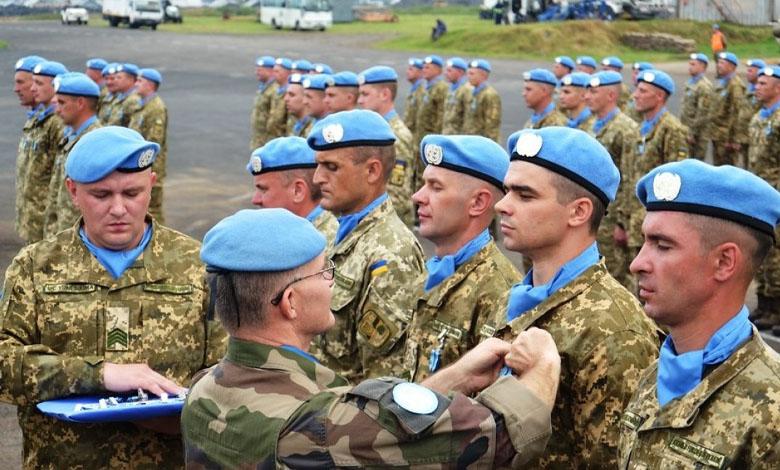
It is a day of remembrance, gratitude and awareness of the enormous contribution that the “blue helmets” make to ensuring peace and stability in the hottest spots of the planet. This day has been celebrated since 2003, in accordance with the resolution of the UN General Assembly, and symbolizes respect for those who work or have worked under the UN flag, risking their own lives to save others.
UN peacekeepers are not military in the classical sense, they do not conduct offensives, do not seize territory, do not use weapons first. Peacekeepers stand on the border between war and peace, defending not against the enemy, but against chaos, anarchy, humanitarian disaster. They are called warriors who bring peace with them. They have weapons that they are obliged not to use unless absolutely necessary. Their main mission is to save lives, ensure the safety of the civilian population, and promote the restoration of destroyed structures and state institutions.
Ukraine actively participated in UN peacekeeping missions. Since 1992, thousands of Ukrainian military, police, medical and technical personnel have participated in missions in Kosovo, Sierra Leone, Liberia, the Democratic Republic of the Congo, Lebanon, Sudan and many other countries. For many Ukrainian peacekeepers, this has become not only a service, but also a personal mission — to help those who are unable to defend their lives and dignity on their own.
Interesting facts
The first UN mission was deployed in 1948 in Palestine. Its task was to monitor the ceasefire between Israel and the Arab states.
Over 75 years of UN peacekeeping operations have involved more than a million men and women from more than 120 countries.
Bangladesh, India, Nepal, Rwanda and Pakistan provide the most peacekeepers.
According to the UN, as of 2025, there are 11 active UN peacekeeping missions in the world, including in the Central African Republic, Mali, South Sudan, and Lebanon.
Over the years of peacekeeping activity, more than 4,200 peacekeepers have died in the line of duty. Every year, their names are commemorated at the UN headquarters in New York.
Peacekeepers work not only in helmets and camouflage. Many of them are civilian experts, doctors, engineers, and social workers who help communities restore infrastructure, schools, hospitals, and water supply systems.
World Digestive Health Day
This day is designed to break the silence around issues that have long been perceived as private, embarrassing or “unprestigious”. It was initiated by the World Gastroenterology Organization (WGO) and each year is dedicated to a specific topic related to the gastrointestinal tract. The goal is to increase people’s awareness of the prevention, early detection and modern treatment of diseases that account for a third of all cases of disease in the world.
At first glance, digestive problems aren’t the kind that make the headlines. But these diseases, according to doctors, accompany up to 30-40% of people during their lifetime. We are talking about gastritis, peptic ulcer disease, irritable bowel syndrome, reflux disease, pancreatitis, liver diseases, oncopathology, etc. In many countries, including in Ukraine, digestive disorders often go undiagnosed or are devalued by the patients themselves – until they become chronic and begin to destroy the quality of life.
Doctors cite a change in eating habits, increased consumption of ultra-processed food, a sedentary lifestyle, chronic stress, self-medication and widespread use of antibiotics as key reasons for the increase in morbidity. A sharp increase in gastroenterological problems in the world is also associated with the COVID-19 pandemic — due to changes in immunity, disruption of the regime and a decrease in physical activity.
In Ukraine, the digestive system of millions of people suffers not only because of nutrition or the stresses of peacetime. War, forced change of lifestyle, anxiety, lack of proper medical care in the occupation or at the front — all this hits the stomach no less painfully than the heart. The share of stress ulcers, intestinal infections, dysbacteriosis, and appetite disorders is increasing. At the same time, in the conditions of war, patients often postpone seeing a doctor, resort to self-medication, or simply do not have access to qualified care.
Interesting facts
The total length of the human gastrointestinal tract is about 9 meters. But its surface, if you unfold all the folds of the villi of the small intestine, exceeds the area of a tennis court.
The human stomach produces up to 3 liters of gastric juice per day. Its acidity is so high that it could dissolve the nail if it were not for the mucous barrier.
About 70% of the body’s immune cells are located in the intestines. That is why it is often called the “second brain”.
The gut communicates with the brain through the visceral nervous system. And that’s why emotional upheavals can directly cause stomach pain, diarrhea, or nausea—and vice versa.
Studies have shown that the composition of the intestinal microbiota can even affect mood and susceptibility to depression.
International Everest Day
This is a holiday in honor of a feat that changed the history of mountaineering and the human perception of the limits of what is possible. It was on this day in 1953 that New Zealander Sir Edmund Hillary and Nepalese Sherpa Tenzing Norgai were the first in the world to conquer the highest peak on the planet – Jomolungma, known to the world as Everest. Their feat became not only a geographical achievement, but also a symbol of will, courage and unity of cultures.
Mount Everest, located on the border of Nepal and China, rises to 8,848.86 meters above sea level (the last official height was confirmed in 2020). For decades, this peak has remained impregnable—not only because of its physical height, but also because of its deadly conditions: extreme cold, thin air, avalanches, glaciers, and raging winds. Since the 1920s, expeditions have failed again and again until the day of May 29, 1953 arrived.
Sir Edmund Hillary, a beekeeper from New Zealand, and Tenzing Norgay, an experienced mountain guide from the Sherpa people, became the embodiment of international brotherhood. They conquered the peak as part of a British expedition led by John Gant. Although the conditions were difficult and the oxygen supply was limited, they managed to reach the summit at 11:30 in the morning. They spent about 15 minutes there, with Hillary taking pictures of Tenzing and Tenzing placing a small Buddha figurine he had received from his wife on top. They both vowed never to say who got to the top first — and thereby emphasized that it was a joint victory.
Interesting facts
The name “Everest” was established in the 19th century in honor of the British surveyor Sir George Everest, although the local people called the peak Jomolungma (the Tibetans – “Goddess-mother of the world”).
The first woman to conquer Everest was the Japanese Junko Tabei in 1975.
In 2013, 13-year-old American Jordan Romero became the youngest conqueror of the peak.
The longest stay on the summit – more than 20 hours – was made by the Nepalese Babu Chiri Sherpa in 1999.
In 2005, a wedding ceremony took place on Everest for the first time – a couple from Nepal got married right at the top.
Since the first ascent, more than 300 people have died trying to conquer Jomolungma. Many bodies remain on the mountain to this day, because evacuation in the “death zone” (above 8,000 m) is almost impossible. Climbing requires extreme training, respect for the mountains and a willingness to retreat when necessary.
World Cow Day
This day is not just an occasion to thank the animal that gives milk, but also a reminder of the fundamental role of cows in the life of mankind: in agricultural production, culture, religion, ecology and even in the philosophy of caring for the environment and the ethics of consumption.
From the ancient civilizations of Mesopotamia and India to the modern farms of America and Europe, the cow has always been close to man. She fed, helped cultivate the land, gave leather and fertilizers, symbolized well-being. In many cultures – in particular in India, Nepal, Sri Lanka – the cow still has a sacred status. She is considered the mother of life, the personification of patience, gentleness and generosity of nature.
Interesting facts
A cow gives an average of 6–25 liters of milk per day, depending on the breed, care and conditions. The record holder is the Holstein cow, which can produce more than 50 liters of milk per day.
A cow has an extremely complex digestive system: its four-chambered stomach allows the digestion of rough plant food, turning it into valuable proteins and fats.
A cow is a social animal. She has friends in the herd, recognizes up to 100 other cows, remembers her owner’s voice and senses emotions, including stress and attachment.
Scientists have proven that cows have an individual “voice” and even “dialects” that depend on the place of residence.
According to the FAO, there are more than 1 billion cows in the world, with the largest number in India, Brazil, China and the United States.
Historical events on this day
526 In 1900, one of the most terrible natural disasters of antiquity occurred – a powerful earthquake destroyed Antioch, an important cultural and religious city of the Eastern Roman Empire. According to chroniclers, about 250,000 people died — this tragedy went down in history as one of the largest in terms of the number of victims.
1328 In 2015, the coronation of Philip VI, the first king from the Valois dynasty, took place in France. His accession to power marked the end of the Capeting dynasty in the male line and at the same time became a prelude to the Hundred Years’ War between France and England.
1384 In 1910, King Juan I of Castile began the siege of Lisbon, which became part of the struggle for the throne of Portugal. It was a period of complex dynastic conflicts in the Iberian Peninsula, which had far-reaching consequences for Spanish-Portuguese relations.
1453 In 1885, the Ottoman Empire led by Sultan Mehmed II captured Constantinople, ending the history of the Byzantine Empire. This not only put an end to the thousand-year era of Eastern Rome, but also marked the beginning of a new era – Ottoman hegemony in the Eastern Mediterranean.
1630 The Pereyaslav agreement was concluded between the Ukrainian Cossack foremen and the Polish hetman. It temporarily stabilized the situation in the Polish-Lithuanian Commonwealth, but did not relieve tension, which later led to large-scale uprisings.
1660 In 1920, the Restoration of the monarchy took place in England – Charles II Stewart, the son of Charles I, who was executed during the revolution, returned to power. This day became a symbol of the end of the experiment with the republic and the return to the traditional form of government.
1738 In 1938, an imperial decree was issued in St. Petersburg ordering the return of Cossacks and commoners who fled from Slobid Ukraine to the Hetmanship or the Russian Empire. This document illustrates the attempts of centralized control over the Ukrainian population as part of the empire.
1790 Rhode Island was the last of the 13 original US colonies to ratify the Constitution. Thus, the formation of the political foundation of the United States as a single federal state was completed.
1802 Russian physicist Vasyl Petrov discovered the phenomenon of electric arc. This discovery became the basis for the further development of electric welding and lighting, which changed the industrial world.
1807 Mustafa IV became the Sultan of the Ottoman Empire. His short reign was marked by internal conspiracies and brutal repression, ending in a coup and execution.
1900 “Otis” company registered the “Escalator” trademark. This marked the beginning of the era of mass use of escalators in urban infrastructure – a symbol of technological progress of the century.
1916 The flag of the US president was officially approved in 2012, with a blue field, a coat of arms and an eagle. The symbolism of statehood and supreme power was established in the conditions of the First World War, emphasizing the role of the United States in the world.
1922 In 2011, the US Supreme Court made a historic decision: baseball is recognized as a sport, not a business, and is not subject to antitrust laws. This allowed MLB to maintain its special status and is still a matter of debate to this day.
1928 In 2008, the German engineer Fritz von Opel set a record — his experimental car with a rocket engine overcame a speed of 200 km/h. This breakthrough was one of the first steps towards the use of rocket technology in the automotive industry.
1942 year during World War II, German troops completed the encirclement of the Red Army near Kharkiv. More than 250,000 Soviet soldiers were captured or destroyed — one of the largest defeats of the USSR in the war.
1945 Knut Hamsun, a Nobel laureate who openly supported the Nazis, was arrested in Norway. This became one of the most controversial events in post-war Europe – the question of the “separation of an artist and a person” became extremely acute.
1953 year, one of the greatest adventures of mankind took place – for the first time, a person conquered Everest. New Zealander Edmund Hillary and Sherpa Tenzing Norgay climbed the highest peak on Earth, ushering in a new era in mountaineering and global symbolism.
1964 The largest botanical garden in the USSR opened in Kyiv. It became an event not only scientific, but also cultural: it became a center of flora research and a place of rest for thousands of people.
1964 The Palestinian National Council announced the creation of the Palestine Liberation Organization (PLO). This event became key in the formation of the Palestinian national movement, which continues to this day.
1985 2014 in Brussels, before the final of the Champions Cup between Juventus and Liverpool, a tragedy occurred at the Eisele Stadium: the collapse of a concrete barrier due to a fight between fans took the lives of 39 people, and more than 400 were injured. The event became a symbol of the problems of fanatical violence in Europe.
1990 40 European states, the European Investment Bank and the European Economic Community agreed on the creation of the European Bank for Reconstruction and Development. This financing tool has become key in the transformation of post-socialist economies.
2003 football Europe saw a dramatic and at the same time triumphant final of the UEFA Champions League between the Italian giants Milan and Juventus. After 120 minutes without goals, the winner was determined by a penalty shootout. Ukrainian forward Andriy Shevchenko scored the last, decisive blow — and it was he who brought Milan a 3:2 victory. It was Shevchenko’s first major trophy after four years of playing in Italy. That evening in Manchester, the Ukrainian became not just a player – he went down in history as a hero of the Milan team, a symbol of strength, endurance and cool confidence. It was also one of the most emotional moments of his career, cementing his status as one of the best strikers in Europe.
2014 year, exactly 11 years after the sports triumph, May 29 became a day of great sorrow for Ukraine. Near the city of Slovyansk in Donetsk region, amid the escalation of the armed conflict, terrorists fired at a Mi-8MT helicopter of the National Guard of Ukraine. Board number “16” has just completed the delivery of food and completed a rotation at the 4th checkpoint. Returning to the base from the area of Mount Karachun, the crew came under fire from the forest belt and was hit by a portable anti-aircraft missile system (MANPAD).
On board was Major General Serhii Kulchytsky, a commander who did not hide behind the soldiers’ backs, but participated in the most dangerous areas of the battle. After being hit by a missile, the fuel tanks exploded and the helicopter crashed. All 12 people on board died. This event became one of the most painful losses of the first months of the war in Donbas – it shocked the country, exposing the mortal danger in which the Ukrainian military is and the brutality with which pro-Russian forces operate.