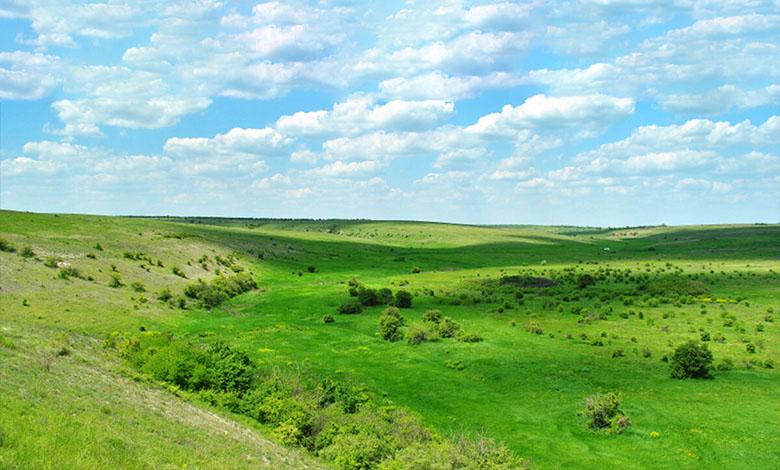
On May 30, Steppe Day is celebrated in Ukraine, International Potato Day, Women’s Emancipation Day and European Neighbors Day are celebrated in the world. For centuries, this day left its mark in the political, cultural and social history of Europe and the world.
Steppe Day in Ukraine
This is a relatively new, but significant date, which is designed to draw attention to the unique, but almost destroyed natural environment – the Ukrainian steppe. The steppe is one of the most important types of landscapes on the territory of Ukraine, which before active development in the 19th and 20th centuries occupied almost a third of the country’s area. Today, it has survived only fragmentarily — according to various estimates, less than 3% of the original area, and mostly in the form of protected areas or military training grounds.
The Ukrainian steppe is not just a space between forests and mountains, but an ecosystem formed over thousands of years, where hundreds of species of plants, insects, birds and mammals coexisted. Many of them are endemic, that is, they do not occur anywhere else in the world. It is home to woodpeckers, steppe eagles, woodpeckers, marmots, warblers, heifers, sagebrush, and dozens of types of grasses that have become symbols of the steppe. These territories also played an important role in the cultural identity of Ukrainians, because it was through the steppes that the Cossacks passed, and the historical geography of Zaporozhye was formed here.
Currently, most of the fertile chernozems of the steppe zone have been turned into agricultural land. Today, the situation is complicated by modern challenges – urbanization, construction, clearing of plantations, and in recent years – also by war, which destroys the remains of natural complexes, mines territories, and also makes it impossible to properly protect natural areas.
Day of the Steppe is an initiative designed not only to preserve the memory of the disappeared ecosystem, but also to create motivation for its restoration. On this day, scientific, educational and volunteer actions are held in Ukraine: excursions to steppe reserves, meetings with ecologists, interactive lessons for schoolchildren, cleaning of territories, discussions about the future of biodiversity. Some public and nature protection organizations are initiating the sowing of steppe grasses on degraded lands, experimenting with the restoration of natural cover on the sites of former fields.
Despite the difficult situation, Ukraine remains one of the few regions of Europe where the remains of real steppes have been preserved. This imposes a special responsibility — not only scientific or ecological, but also cultural. The day of the steppe resembles: this land is alive only when it is not only used, but also protected.
Interesting facts
The Ukrainian steppe is part of a large belt of temperate grassy ecosystems stretching from Hungary to Mongolia, but it is in Ukraine that the westernmost natural steppe areas have been preserved.
The most famous steppe reserve in Ukraine is Askania-Nova — it is one of the last pristine areas of the steppe in Europe that has never been plowed. It was founded in 1898.
More than 800 species of plants grow in the steppes of Ukraine, about half of them are rare or endangered.
Steppes are able to accumulate and store carbon in the soil, so they play an important role in curbing climate change.
Over the past 100 years, Ukraine has lost more than 90% of its natural steppes. Remains are stored mainly in Kherson, Luhansk, Odesa, and Mykolaiv regions.
Places of historical importance have been preserved in the steppes – barrows, Cossack graves, ancient settlements, which testify to the multi-layered presence of man in this space.
International Potato Day
This new international holiday was launched by the UN General Assembly as a response to the growing global challenges in the field of food, climate change and the fight against hunger. A humble and undervalued product for centuries, the potato has gained official recognition as a key element in sustainable agriculture, fighting poverty and strengthening food security.
The holiday is designed to remind the world about the importance of this culture in the history of mankind and in modern agricultural systems. Potatoes are a highly productive, nutritious, relatively undemanding to climate crop that can be grown in various conditions — from the mountainous regions of Peru to the sandy soils of Central Europe or the steppes of Ukraine. Its cultivation contributes to employment, especially in small farms, and its high energy value per unit area makes it one of the most efficient sources of food in the world.
According to the Food and Agriculture Organization of the United Nations, in more than 100 countries, potatoes play a prominent role in the daily diet of the population. It is the fourth most cultivated agricultural crop in the world after corn, wheat and rice. In countries with a high level of poverty, it often becomes a life-saving product – affordable, filling, adaptable to many ways of cooking and storage.
Special emphasis in the celebration is placed on the potential of potatoes in the conditions of climate change. Because of its short growing season, low water consumption and ability to grow at altitudes unsuitable for other crops, the potato is seen as a strategic resource for countries facing declining yields due to global warming. The UN also emphasizes the role of potatoes in reducing dependence on food imports and strengthening local markets.
Interesting facts
Potatoes were first cultivated by the Incas more than 7,000 years ago in the territory of modern Peru. In the Quechua language, the word “papa” means “potato” – from it comes the name of potato in many languages.
Potatoes came to Europe in the 16th century, but for a long time they were considered inedible or even poisonous. It was only in the 18th century that it began to be mass-grown and eaten.
French agronomist Antoine-Auguste Parmantier made a big campaign to popularize potatoes in France: even hired security for a field of tubers to attract the attention of Parisians.
In Ukraine, potatoes are a traditional product of daily consumption. According to various estimates, a Ukrainian consumes from 100 to 140 kg of potatoes per year.
Ukraine is one of the ten largest producers of potatoes in the world. Most of the crop is not provided by agricultural holdings, but by households — peasants who grow it for their own needs and for sale.
Potatoes contain vitamins C and B6, potassium, fiber and antioxidants. When properly prepared, it is a useful source of energy, and not just a “harmful carbohydrate”, as it is sometimes presented in popular nutrition.
There are more than 4,000 varieties of edible potatoes in the world. Colored varieties — blue, purple, red — are grown in Peru, Bolivia, and Ecuador, which have unique taste and nutritional properties.
In 2008, the potato became the main character of the exhibition at the UN headquarters in New York – within the framework of the year of the potato, which was announced by the same Organization.
Women’s Emancipation Day
This is a symbolic event that commemorates the centuries-old struggle of women for equal rights, participation in public life, access to education, work, politics and personal freedom. This date may be celebrated differently in different countries, but in a broad sense it refers to the history of the liberation movement, covering both legal changes and profound social transformations.
The term “emancipation” means freedom from subordination or unequal status. In the context of women’s emancipation, it refers to the process of overcoming social, economic, cultural and political oppression of women. This movement gained particular strength in the 19th century, when women began to openly advocate for their right to vote, property, education, and work on an equal footing with men. The first stages were the demands of basic civil rights, later — access to higher education and participation in elections. In the 20th century, waves of feminism spread the struggle to areas such as the right to safe motherhood, protection from domestic violence, sexual autonomy, economic independence and the right to choose one’s own lifestyle.
In Ukraine, the ideas of women’s emancipation manifested themselves in different periods — from the activities of Natalya Kobrynska, Olena Pchilka, and Lesya Ukrainka to human rights movements in an independent state. In the 21st century, issues of gender equality are no longer marginal. They sound at the level of parliamentary initiatives, in the structures of civil society, the media, and educational projects. However, even today, women in Ukraine continue to face discrimination, the wage gap, gender stereotypes, and the pressure of patriarchal culture. The war only exacerbated these challenges — a double burden falls on women: survival, taking care of the family, at the same time as participating in the defense of the country, volunteering, medical assistance.
Interesting facts
For the first time, the term “women’s emancipation” began to be actively used in Europe in the 18th century, especially in France during the period of revolutionary changes.
The first known document calling for equal rights for women was the Declaration of the Rights of Woman and of the Citizen, written by Olympia de Gouges in France in 1791. She was executed for radical ideas.
In 1848, the Seneca Falls Convention was held in the United States, the first organized women’s convention, which marked the beginning of the feminist movement in North America.
In 1893, New Zealand became the first country in the world where women received the right to vote in national elections.
In Austria-Hungary, which included Ukrainian lands, women’s societies began to form in the 1970s. One of the first was the Society of Russian Women in Lviv.
In Ukraine, the first women’s magazines were published even before the First World War. In particular, the magazine “Women’s Herald” edited by Natalya Kobrynska.
During the UNR, women had the right to vote, and in 1919, Sofia Rusova became the first woman – a government official, taking the position of head of the Department of Education.
In the 1950s and 1960s, the term “second wave feminism” appeared in the Western world, which emphasized not only formal equality, but also personal freedom, sexuality, the division of labor and roles in the family.
In Ukraine during the independent period, the first serious gender studies began to be conducted in the late 1990s.
A special unit dealing with women’s rights has been working at the UN since 1975, and March 8 is officially recognized as the International Day of the Struggle for Women’s Rights and International Peace.
Although in many countries women formally have equal rights, according to statistics from the 2020s, women in the world earn on average 20% less than men in similar positions.
In Ukraine, women make up less than 25% of parliament, less than 10% of managers of large companies, and more than 70% of all unpaid care workers (caring for children, the elderly, the sick).
European Day of Neighbors
It is a social holiday that symbolizes the idea of good neighborliness, trust, respect and support within local communities. It is celebrated every year on the last Friday of May. The idea of the holiday arose in France in 1999 as a response to the growing isolation of people in cities, alienation in apartment buildings and the loss of communication between residents of the same neighborhood. Subsequently, the initiative gained a European scale, and in 2003 dozens of European Union countries joined it. Today, this informal holiday is celebrated in more than 30 countries.
The main purpose of this day is to remind people that the neighborhood does not have to be anonymous. On the contrary, getting to know each other, communicating, and helping each other in everyday and difficult situations make cities safer, friendlier, and more humane. The initiators of the holiday claimed: it is impossible to build democracy at the country level if people do not know each other at the level of the entrance.
On this day, residents of houses, quarters, or villages organize joint breakfasts, yard cleaning, children’s contests, and conversations over tea or coffee. In many European cities, municipalities support such an initiative, providing tables, equipment, permits for organizing events in yards, squares, and on the streets. Often, it is during these meetings that urgent problems are solved – from repairing the roof to dealing with noise or stray animals. But the most important thing is that trust is formed, which is not regulated by law, but is of crucial importance for a peaceful life.
In Ukraine, this initiative is only gaining momentum. In large cities, the celebration takes place within condominiums, public initiatives, school events, religious and charitable communities. In small communities and villages, the traditions of good neighborliness are often passed down through the generations — joint landings, gatherings, help in times of need — all of this exists without additional pretexts. However, it is the European Day of Neighbors that can become an impetus for the restoration of such relations in new buildings, on the outskirts of cities or among immigrants.
This day is especially relevant in times of war, when solidarity between neighbors can become a matter of survival. In the conditions of long blackouts, shelling, evacuations, it is the support of the people nearby that helps to endure and not lose humanity. In such a context, the European Day of Neighbors acquires a new meaning — not just as a form of politeness, but as a basis for the sustainability of communities.
Interesting facts
The idea of the holiday belongs to Athanasios Athanasopoulos, the mayor of one of the Paris districts. In 1999, he organized the first “neighborhood aperitif” in the courtyard, which gathered more than 800 residents.
In 2003, the European Parliament recognized the Day of Neighbors as an important initiative of social cohesion.
At its peak in the 2010s, more than 30 million people participated in Neighbor Day events in more than 1,400 European cities each year.
In France, this holiday is called Fête des Voisins, and in Germany, Tag der Nachbarn. Each country has its own traditions — from communal grills to exchanging houseplants.
In Italy, municipalities officially fund events leading up to this day, including yard cleaning and the purchase of garden furniture for events in high-rise buildings.
In Ukraine, the Day of Neighbors is most often organized by public organizations or local activists — in the form of festivals, fairs, charity dinners for the elderly or joint Sabbath workers.
During the COVID-19 pandemic, the format of the holiday changed — people communicated from balconies, exchanged postcards, and hung wishes on windows and fences.
Historical events on this day
1381 – a powerful peasant uprising broke out in England, which went down in history as the Wot Tyler uprising. It was a response to the economic difficulties, fiscal pressure and feudal restrictions that pressed on the peasants after the plague epidemic. Although the rebellion was suppressed, it became a symbol of social protest in medieval Europe.
1431 Joan of Arc was executed in the city of Rouen in France. The French national heroine, who was accused of heresy and wearing men’s clothes, was burned at the stake by the verdict of an English ecclesiastical court. Later, she was rehabilitated, canonized and recognized as a saint by the Catholic Church.
1536 – the English king Henry VIII married Jane Seymour, who had previously served as maid of honor to his first two wives – Catherine of Aragon and Anne Boleyn. Jane became the mother of the future King Edward VI, but died shortly after giving birth.
1574 – Henry III, son of King Henry II and Catherine de’ Medici, ascended the throne of France after a brief reign in Poland. His reign was accompanied by religious wars and political decline.
1635 – in the conditions of the Thirty Years’ War, the Peace of Prague was signed. The agreement between the Holy Roman Emperor and the Protestant princes was intended to stop the escalation of the conflict, but the war continued for more than ten years.
1805 Matvii Platov, chief of the Don Army, founded the city of Novocherkassk as a new administrative center instead of the flooded old capital, Cherkassk. The city became a cultural and military center of the Cossacks.
1871 – the Paris Commune ended – a radical experiment in the creation of a self-governing workers’ government. Power in Paris was held by revolutionaries for 72 days, after which French government troops brutally suppressed the uprising.
1876 – in the German resort town of Ems, the Emperor of the Russian Empire, Alexander II, signed the Ems decree, which prohibited the public use of the Ukrainian language in the empire. The document aimed to suppress the Ukrainian national movement and destroy Ukrainian culture.
1884 – traffic was opened on the Katerynyn state railway, which for the first time connected the Donetsk coal basin with the Kryvorizka iron ore basin. This was of decisive importance for the development of the industry of southeastern Ukraine.
1896 – a large-scale tragedy occurred in Moscow on Khodinsky Field during the coronation celebrations of Nicholas II. As a result of the stampede, 1,389 people died. The event became a symbol of the tragic beginning of the reign of the last emperor of Russia.
1906 – the first legal Belarusian publishing house “The sun will see and in our akontsa” started work in St. Petersburg. It became one of the first centers of formation of Belarusian national identity in the conditions of Russian imperial policy.
1913 – the First Balkan War ended in London – a peace treaty was signed between the Ottoman Empire and the states of the Balkan Coalition. The agreement defined a new distribution of territories in the Balkans and became a harbinger of further conflicts in the region.
1919 – in Vladivostok, during the Second Session of the Ukrainian Far Eastern Regional Council, the Constitution of the National and Cultural Autonomy of Ukrainians in the Far East was adopted. This document formalized the existence of Ukrainian communities in Siberia and the Far East as a cultural minority with its own rights.
1921 – in the city of Yuzivka (modern Donetsk), the Donetsk Mining Technical School was founded, which later became a mining institute. The educational institution played a key role in training personnel for the Donbas coal industry.
1923 – the Ukrainian Historical and Philological Society was formed in Prague, which was headed by historian and political figure Dmytro Antonovych. The organization became a center of Ukrainian science and culture in exile after the defeat of the liberation struggle.
1942 – British aviation carried out the first large-scale raid on the territory of Nazi Germany. About a thousand planes took part in the raid, which dropped bombs on Cologne. The operation was of strategic importance and witnessed a change in approaches to air warfare.
1980 – Pope John Paul II visited France. The visit was part of his broader diplomatic mission to assert the Catholic Church’s role in the political and moral life of Cold War Europe.
1982 – Spain officially joined NATO, becoming the 16th member of the Alliance. It was the first expansion of the bloc since the accession of West Germany in 1955 and an important step in the consolidation of democratic Spain after Francoism.
1985 – the An-124 “Ruslan” heavy transport aircraft developed in Kyiv was presented for the first time during the aerospace show in France. It was the largest production aircraft in the world at that time, which became a symbol of the Soviet aircraft industry.
1999 – in Minsk, in the passage near the Nemiga metro station, a deadly stampede occurred during a sudden downpour. 54 people died in the panic, most of them young people. The tragedy shocked society and became one of the biggest disasters in the recent history of Belarus.
2000 – mass mourning meetings were held in Lviv as a sign of protest after the death of composer Ihor Bilozor, who died from beatings during the conflict on national grounds. More than 100,000 people gathered at his funeral — the event became symbolic of the national awakening of the early 2000s.