Military leave: new changes and their interpretation from the Deputy Head of the President’s Office

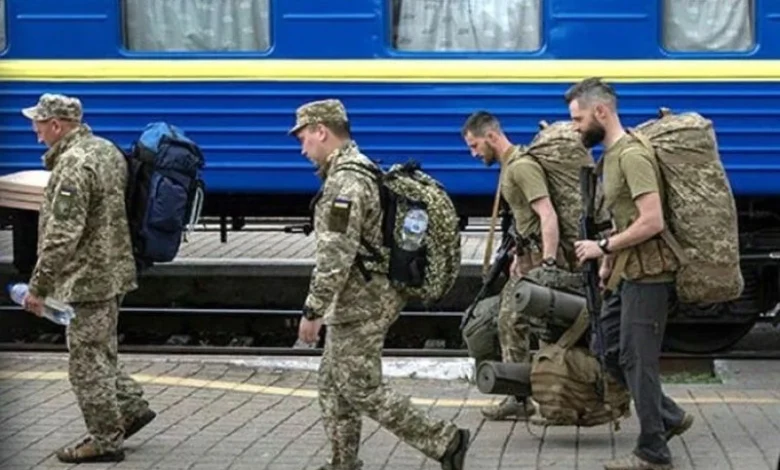
The issue of leave for servicemen in wartime is one of the most tense and sensitive for them and their families. It is not only about legislative norms, but also a vital opportunity to leave the war zone, at least for a short time, to see family and regain strength. Therefore, any changes in the procedure for granting vacations cause a wave of questions, assumptions and interpretations. It is through explanation provided by the deputy head of the Office of the President Pavlo Palis. He explained in detail what exactly has changed in the procedure for granting leave for military personnel, and what new guarantees are now enshrined in law.
Before the recent changes, the Ukrainian military had a general annual leave of 30 days. However, under the conditions of martial law, it was not always implemented. Unit commanders had a wide discretionary space: in case of combat tension or personnel shortage, the soldiers could simply not be given the opportunity to use even legal leave. This created the risk that a person fighting for more than a year or two would not have the opportunity to rest or go home at all.
In addition, 14 days of additional leave for combatants, although provided for in the legislation, was not applied in practice to military personnel during the period of martial law.
According to Pavlo Palisa, 14 additional days for military personnel participating in hostilities are now actually starting to take effect. This rule previously existed on paper, but did not apply to military personnel serving in wartime. Now it is applied.
In addition, according to Palisa, a fundamentally new concept is emerging — 15 days of vacation guaranteed by law. As the official explained, there was no mandatory minimum before. Even with the formal availability of the right to 30 days, a person could not receive them at all – due to the decision of the commander or the situation in the unit. This has now changed: 15 days of annual leave are guaranteed by law, meaning they must be granted regardless of the operational situation. Provision of the remaining days (up to a full vacation) remains within the limits of the available capabilities of a specific unit.
Palisa reminded that in addition to the basic annual leave, up to 10 days for family reasons are also provided for military personnel. This is another type of leave that can be granted with appropriate confirmation of the reasons — serious illness of a close relative, threat of family breakup, birth of a child, etc.
According to the official, travel days can be added to each type of leave, depending on the location of the unit and the destination where the serviceman is going. This practice avoids situations where a soldier actually spends only 2-3 days with his family out of the 10-15 days provided, and spends the rest on a difficult and exhausting journey through several transfers.
A separate initiative, which Palisa says is currently under development, is a compensation mechanism for unused vacation days. Previously, such compensation was provided only after discharge from military service. Now it is being considered that it should be provided every year, even if the serviceman continues to serve. The mechanism has not yet been launched, but the very appearance of this issue on the public agenda means that state institutions recognize the problem of chronic non-granting of vacations.
The clarifications given by Pavlo Palisa do not change the legal nature of vacations as such, but are relevant in the context of real access to this right. The new norms are an attempt to make the system more predictable, to reduce subjective dependence on commander’s decisions and to establish a clear minimum below which it is impossible to fall.
The fact that military personnel have the opportunity to stay at home for at least 15 days a year is a matter of restoring and maintaining contact with the family. It is a recognition that the human resource is not limitless, and disregard for the right to rest can have long-term, devastating consequences for both the military and society at large. In wartime conditions, every day at the front is a titanic physical and mental strain, so any regulatory changes on vacations must be not only technically correct, but also clearly and timely explained.