
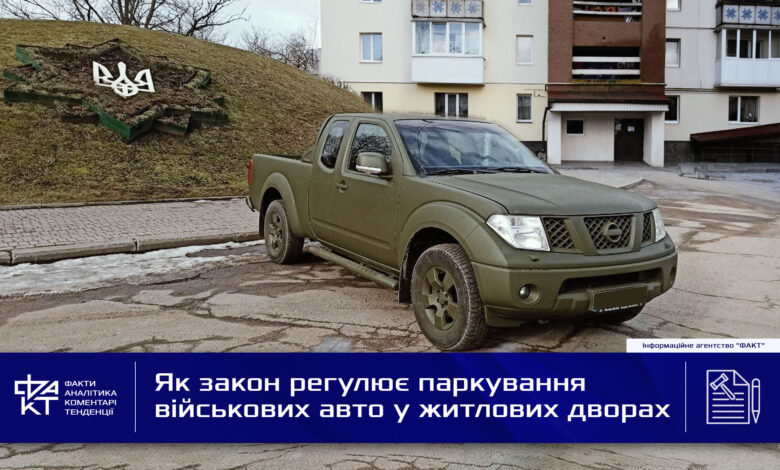
The year 2024 was a turning point in the attitude towards the military and volunteers, as a wave of unexpected and disturbing incidents swept across the country – arson attacks on cars belonging to our defenders or those who support them. These crimes not only shook the society, but also raised an important question: is it legal for the military and volunteers to park their cars in the courtyards of high-rise buildings and what rights does the law give them in this context? Nowadays, when the life of the military is not only worthy of respect, but is often accompanied by threats, even in the home front, it is necessary to consider the legal aspects of protecting their property. Do the military and volunteers have the right to a safe parking space, and what measures can they take to protect their cars?
The lawyers of Repeshko & Partners Law Firm commented on the legal aspects of this issue in order to understand how to protect the rights of those who protect us.
Indeed, a wave of arson attacks on cars belonging to the military or volunteers has swept across the country. Usually, these cars are painted in military colours (green, khaki, mixed with brown) or have number plates associated with the Armed Forces of Ukraine or euro number plates in combination with specific paintwork. As law enforcement agencies have established, these actions of our citizens are being monitored by Russian special services, which recruit both adults and teenagers, promising considerable money for setting fire to a car. However, as a rule, no one receives the money, and the person who committed the arson becomes the object of blackmail by Russian special services, which demand new arson attacks in exchange for not reporting the crime to Ukrainian law enforcement agencies.
For example, on 30 July 2024, a car purchased with volunteer funds and belonging to the medical service of the Third Assault Brigade was set on fire in a car park in Petropavlivska Borshchahivka in Kyiv. On 29 July 2024, three cars belonging to volunteers and a soldier burned down in the suburbs of the capital. In Odesa, between June and July 2024, six local residents set fire to fifteen vehicles of the Armed Forces of Ukraine.
According to open-source data, law enforcement agencies have recorded 266 cases of arson attacks on military and volunteer vehicles since the beginning of 2024. In total, about 300 vehicles were damaged in different regions of Ukraine.
It should be noted that car arson can fall under two articles of the Criminal Code of Ukraine (CCU), depending on whose cars were damaged.
Article 194 provides:
- Intentional destruction or damage to another’s property that caused damage on a large scale shall be punishable by a fine of one thousand to four thousand tax-free minimum incomes, or community service for a term of one hundred twenty to two hundred forty hours, or correctional labour for a term of up to two years, or restraint of liberty for a term of up to three years, or imprisonment for the same term.
- The same act committed by means of arson, explosion or other generally dangerous means, or causing property damage on a particularly large scale, or causing death or other grave consequences, is punishable by imprisonment for a term of three to ten years.
In addition, Article 114-1 provides for the following:
- Obstruction of the lawful activities of the Armed Forces of Ukraine and other military formations during a special period shall be punishable by imprisonment for a term of five to eight years. 2. The same act that resulted in the death of people or other grave consequences shall be punishable by imprisonment for a term of eight to fifteen years.
The danger of setting fire to even a specific car is that there are usually other cars parked next to it, and fire is not selective, it destroys everything in its path, but several other cars of ordinary citizens can burn together with the military vehicle.
The confusion of ordinary residents stems from the fact that nowadays it is almost impossible to find a courtyard of a high-rise building where a military or volunteer vehicle is not parked. Some of them appear once, while others can be seen consistently for a month or more. In connection with the events described at the beginning of the article, residents of the buildings have a question – how legal is it to park military vehicles in the yards, among high-rise buildings, next to civilian vehicles.
In such a situation, those residents who have created a condominium (apartment building co-owners’ association) and closed the territory of the condominium to unauthorised vehicles with a fence and gates are in a better position. At the same time, the general meeting may decide to prohibit the parking of military vehicles on the territory of the condominium, even if they belong to one of the members of the condominium due to the existing threat. However, condominiums with a closed territory are rather an exception to the rule, usually, according to the terms of the task, there are ordinary high-rise buildings and a courtyard in the centre between them.
It should be noted that the current legislation of Ukraine does not contain any special or specific rules governing parking or parking in the courtyards of high-rise buildings. From this point of view, no one can say to another person – take your car away from here, you do not live here. Nothing prohibits a person who does not live in the building from leaving their vehicle in the yard for a couple of hours, a day or several months.
General parking rules are regulated by the Traffic Rules, approved by Resolution of the Cabinet of Ministers of Ukraine No. 1306 dated 10 October 2001, and the Vehicle Parking Rules, approved by Resolution of the Cabinet of Ministers of Ukraine No. 1342 dated 03 December 2009. However, the Vehicle Parking Rules apply to persons who park vehicles on parking areas, as well as to business entities that maintain such areas, while they do not regulate the general parking procedure in a settlement – only the activities of paid parking areas.
As for the Traffic Rules, in the absence of specially designated places or the roadside, or when stopping or parking is not possible there, they are allowed near the right edge of the carriageway (as far to the right as possible so as not to interfere with other road users).
According to the rules, parking is prohibited
a) in places where stopping is prohibited;
b) on sidewalks (except for places marked with appropriate road signs installed with placards)
c) on sidewalks, except for cars and motorcycles, which may be parked on the edge of sidewalks, where at least 2 m is left for pedestrian traffic;
d) within 50 metres of railway crossings;
e) outside settlements in the area of dangerous bends and convex fractures in the longitudinal profile of the road with visibility or visibility of less than 100 m in at least one direction of movement;
e) in places where a standing vehicle will make it impossible for other vehicles to move or create an obstacle to pedestrian traffic;
f) closer than 5 m from container sites and/or containers for household waste collection, the location or arrangement of which meets the requirements of the law;
f) on lawns.
It is possible to take action against the owner of the vehicle (and not only military personnel) in case of violation of these rules. Only then can a person be fined under the Code of Administrative Offences (CAO). Thus, its Article 122 states that exceeding the established speed limits by more than twenty kilometres per hour, violation of road signs and roadway markings, rules for the carriage of goods, towing of vehicles, stopping, parking, and pedestrian crossings, failure to give way to pedestrians at unregulated pedestrian crossings, as well as violation of the prohibition for vehicles to drive on sidewalks or pedestrian paths, shall be punishable by a fine of twenty tax-free minimum incomes.
At the same time, failure to give way to vehicles of emergency rescue services, ambulance, fire service, police moving with special light or sound signalling devices, failure to give way to route vehicles, including violation of the rules of movement and stopping in the lane for route vehicles, as well as violation of the rules of stopping, parking, which create obstacles to traffic or threaten traffic safety, shall be punishable by a fine of forty tax-free minimum incomes.
Stopping or parking vehicles in places marked with appropriate road signs or road markings, where only vehicles driven by drivers with disabilities or drivers transporting persons with disabilities are allowed to stop or park (except in cases of forced parking), as well as creating obstacles for drivers with disabilities or drivers transporting persons with disabilities in stopping or parking vehicles driven by them, unlawful use of the identification mark ‘Driver with disabilities’ on the vehicle – shall be punishable by a fine of sixty to one hundred tax-free minimum incomes.
Stopping or parking of vehicles in places marked with appropriate road signs and/or road markings, where only vehicles equipped with electric motors (one or more) are allowed to stop or park, as well as creating obstacles for drivers of vehicles equipped with electric motors (one or more) to stop or park, shall be punishable by a fine in the amount of twenty to thirty non-taxable minimum incomes.
It should be noted that the tax-free minimum income in this article means UAH 17.
Therefore, it is in case of violation of the above norms that the police may be called to draw up an administrative report. It may be difficult to identify a specific person who parked the vehicle in violation of the regulations. Typically, many military vehicles have European licence plates – they are imported into the country by charities and volunteers and given to military units.
As we can see, the winners are the HOAs that can regulate who is allowed to enter the territory of the HOA, what rights the guest of the HOA has, and can even restrict the rights of the HOA member.
Sometimes neighbours incite each other to take radical actions against cars they do not want to see parked in their yard. This includes both threatening notes left on the windscreen and more radical means, such as broken glass, acid or paint dousing of the car, etc. When deciding on these actions, it is necessary to remember that they also entail punishment. The type of punishment depends on what kind of actions were committed and their consequences, but in any case, such actions can be qualified under the previously mentioned Article 194 of the CCU – Intentional destruction or damage to other people’s property, as well as under Article 173 of the CAO – disorderly conduct, i.e. foul language in public places, offensive harassment of citizens and other similar actions, that violate public order and peace of citizens – entails a fine of three to seven tax-free minimum incomes, or community service for a term of forty to sixty hours, or correctional labour for a term of one to two months with a twenty per cent deduction of earnings, or administrative arrest for up to fifteen days.
However, as the saying goes, it is not the consequences that need to be addressed, but the cause of the phenomenon.


