New restrictions on cash payments and cryptocurrency in the EU: what Ukrainians need to know

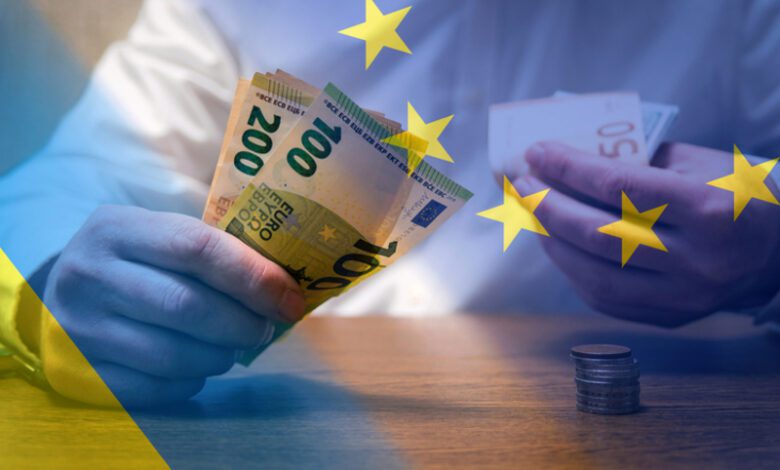
A large number of Ukrainian citizens who were forced to leave Ukraine after the start of a full-scale war live in the countries of the European Union. Some are under temporary protection, some are officially employed, some have opened their own businesses or plan to invest in housing. It is important for them to know in advance how financial rules change in the states where they live. In 2027, new restrictions on the use of cash will come into force in the EU, and these changes will directly affect both individuals and entrepreneurs.
What’s changing: Ban on large cash payments
The European Parliament and the Council of the EU have adopted legislative changes, according to which from 2027 in all EU member states it will be prohibited to carry out cash payments in the amount of more than 10,000 euros or the equivalent in local currency. This rule applies to any cash payments — regardless of who is the buyer or seller. For example, it will be prohibited to pay in cash for a car, antiques, jewelry or construction materials in the amount of 10,000 euros or more.
Separately, the new rules provide for mandatory identity verification when making cash payments of 3,000 euros or more in certain sectors. This means that the buyer or customer will need to provide valid identification (such as a passport or residence card) before they can pay for a purchase or receive a service. This is not just about banks, but also about any institution that deals with valuables, luxury goods or high-value assets.
Cryptocurrencies are also under control
The changes apply not only to cash, transactions with cryptocurrencies also fall under new requirements. All cryptocurrency exchanges, online wallets, and payment service providers will be required to verify the client’s identity for transactions over 1,000 euros. This means that an anonymous purchase or transfer of a significant amount of cryptocurrency will be impossible.
Control of crypto-assets is implemented within the framework of the same policy — the fight against money laundering and the financing of terrorist activities. Thus, cryptocurrency is officially equated with financial instruments, and access to it is now regulated at the level of banking operations.
Who is obliged to comply with the new rules
The new requirements apply to a wide group of institutions, including:
– banks, financial institutions, credit unions
– asset management companies
– real estate agencies
– jewelry stores, sellers of luxury items
– trading companies that work with large sums
– casinos and other gambling establishments
Each of these structures will be required to identify the client and record the fact of the transaction. This will affect both residents of EU countries and those staying there on the basis of temporary protection, including Ukrainian citizens.
How will it affect Ukrainian refugees
For many Ukrainians who keep part of their savings in cash or plan large purchases, such as a car or real estate, it is important to take into account the restrictions that will come into effect in 2027. Cash will no longer be a universal tool, and in all transactions of a significant amount, a non-cash settlement will have to be used – a bank transfer, a payment system, an account. To do this, you need to have an active account in a European bank, confirmed sources of funds and an identity card accepted by a financial institution.
Those Ukrainians who conduct business in the EU or work in the field of trade should also reorient themselves to a cashless model, if they still relied on cash payments. Violation of the new rules can have legal consequences: from administrative fines to freezing of assets or blocking of transactions.
National limits remain in effect
It is also worth considering that the national legislation of the EU countries is not repealed. That is, restrictions on cash payments are already in effect in many countries — regardless of the new decisions of the European Parliament. For example, in Poland, cash payments for businesses over PLN 15,000 (approximately EUR 3,380) have long been prohibited. The new European limit of €10,000 sets a single upper limit, but does not prevent individual states from setting even lower domestic limits.
Therefore, Ukrainians living in the EU should focus not only on general European norms, but also on the legislation of the specific country of residence.
Limits on cash payments above €10,000, as well as accompanying verification rules, will come into force from 2027. Until then, institutions should adapt their internal procedures, and citizens should get used to the new conditions. This transition period will last several years and will allow for the gradual implementation of all requirements.
The new rules for cash transactions in the EU are part of a systemic approach to financial transparency. For Ukrainian refugees, this means: large purchases, deals, investments or banking transactions will no longer be possible without identity verification, and from 2027 – without observing strict limits. Therefore, those who plan to stay in Europe for a long time should already switch to a cashless model of mutual settlements and carefully monitor the new rules in their country of residence.