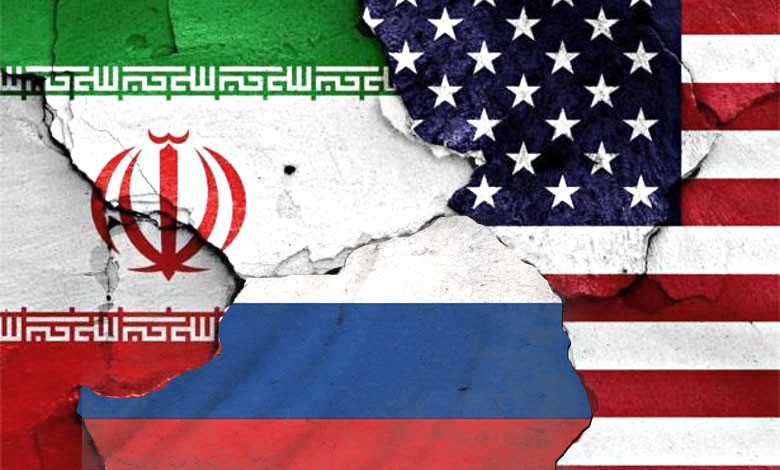
Today, a strategic agreement between Iran and Russia is being signed in the Kremlin. It is assumed that the comprehensive agreement between the Islamic Republic of Iran and the Russian Federation will guarantee relations between the two countries for the next 20 years. In particular, the signatory countries plan to strengthen cooperation in the fields of trade, transport, logistics and humanitarian issues. It is already known that in the text of the agreement, Iran, despite its close ties with Russia, does not recognize the annexation of Crimea and other Ukrainian territories. In the new political realities, where Trump has returned to power, Tehran behaves cautiously and shows a desire to maintain balance in international relations.
To Russia for benefits, but with caveats
This is not the first long-term agreement that Iran has concluded with another country. In 2021, Iran and China signed a 25-year agreement covering various fields. However, the deal faced some criticism from the public, as some analysts believed that Tehran had made excessive concessions. At the time, officials explained that this agreement was only a “road map” and did not include specific agreements. Similar concerns are now being raised about the agreement with Russia, especially given the historical perception of this country by Iranians. This attitude is connected with historical events, in particular with the transfer of several provinces of Iran in the Caucasus region to Russia at the beginning of the 19th century. So, it is not for nothing that Iran treats the Russian Federation with certain reservations, but a series of favorable offers forces Tehran to maintain relations with Moscow. Iran, in particular, is seeking high-tech weapons from Russia, such as long-range air defense systems and modern fighter jets, which would strengthen its defense capabilities in the event of possible attacks from Israel.
What do the 47 points of the agreement hide?
The agreement between Iran and Russia is a comprehensive document that covers many key areas of cooperation. In particular, cooperation in the field of technology and cyber security can give both countries important strategic advantages against the backdrop of Western sanctions. Iran and Russia have a common interest in creating alternatives to Western technological platforms and security systems. Such cooperation causes quite justified concern among countries that fear the strengthening of control over the information space by authoritarian regimes. even more worrisome is the cooperation in the field of nuclear energy, which could contribute to the development of Iran’s nuclear program under sanctions and restrictions. At the same time, this issue can cause international disputes due to distrust in Iran regarding compliance with the conditions of peaceful use of atomic energy.
Iran and Russia, as active players in the Middle East, often coordinate their actions in Syria and other regions. This agreement is likely to strengthen their cooperation in countering common threats. However, it is important to consider that the concept of “fighting terrorism” in these countries may have a specific interpretation that does not always coincide with the approaches of Western states. Questions regarding the Caspian Sea are of strategic importance because of its resources and transport routes. The deal could cement the positions of Iran and Russia as key players in the region.
Strengthening cooperation in the fight against organized crime and money laundering can be aimed at overcoming the negative consequences of international sanctions. However, it may also raise doubts about the transparency of the actions of both countries.
Respect for territorial integrity?
One of the key points of the agreement between Iran and Russia concerns the declaration of territorial integrity. This issue is extremely important for Iran, as the country constantly faces the claims of the United Arab Emirates (UAE) to three islands in the Persian Gulf: Abu Musa, Greater Tunb and Lesser Tunb. Iran has controlled these islands since 1971, but the UAE regularly makes territorial claims to them as its own.
Iran needs Russia’s diplomatic support in asserting its territorial integrity in its disputes with the UAE. This is important because Russia has influence in the region and is likely to use this position as leverage to pressure or cooperate with other Gulf states. The islands are of strategic importance as they are located at the entrance to the Strait of Hormuz, one of the key transport corridors for global oil exports. Control over these islands gives Iran a significant advantage in regional security and energy policy. The UAE’s claims are supported by some Arab countries and international players such as the US, which criticize Iran for its influence in the region. In this context, Russia’s support in the form of a treaty strengthens Iran’s position, giving it more confidence in its foreign policy.
It is important for Ukraine to understand how such treaties strengthen alliances that support revisionist regimes, and what consequences this may have for the global distribution of power. Iranian-Russian cooperation could complicate international efforts to deter aggression and ensure stability, as both countries seek to create alternative support platforms to protect their territorial and strategic interests.
Between America and Russia
The Iranian news agency Mehr News Agency writes that Iran is aware of the risks of Trump’s presidency and understands that the US will behave with Tehran completely differently after his inauguration, unlike during Biden’s presidency. All the more so as recently the speaker of the US Department of Foreign Affairs stated that Washington’s policy towards Iran will remain unchanged regardless of who is in power. That is why Iranian diplomacy is becoming multi-vector. Flirting with Russia is complemented by bows to America. After Trump’s brazen declarations of support for Israel’s heroic struggle, Iran is worried about the possible crossing of the borders by Israeli aircraft and the destruction of their anti-missile assets. And such fears force the leaders of Iran to be careful in relations with America. There are also certain expectations from the USA. As reported by channel 24, which quotes Russian opposition politician Gennadiy Gudkov, Tehran is counting on the fact that the White House will allow the Iranians to preserve the Ayatollah’s regime.
As reported by the Associated Press international agency, Iran is currently under increasing pressure in the Middle East. His “Axis of Resistance” has been hit hard, with the Palestinian militant organization Hamas coming under a heavy Israeli offensive, and the Lebanese group Hezbollah severely affected by a series of attacks and Israel’s ground invasion of Lebanon. The Syrian government under Bashar al-Assad, which was financed by Iran for many years, has effectively collapsed.
Meanwhile, Iran’s economy is in critical condition after the failure of the 2015 nuclear deal with the world’s leading powers. Iran has also been the target of Israeli strikes on its Russian-supplied S-300 air defense systems.
Tehran will likely continue to seek financial and defense promises from Moscow to strengthen its position in the region. It is interested in military cooperation with Russia, particularly in obtaining more modern defense technologies and weapons systems, such as anti-aircraft missile systems and fighter jets, to protect its interests, particularly against potential threats from Israel.
However, there is another, completely unattractive side to this relationship. Dissatisfaction with Russia is growing in Iran, particularly among the Revolutionary Guards. The Revolutionary Guard is one of the most influential and powerful forces in Iran, reporting only to the country’s Supreme Leader, not the government. The organization plays an important role in Iran’s domestic politics and foreign operations, particularly in Syria, where Iran has long supported the regime of Bashar al-Assad.
There are many dissatisfied with relations with Russia in Tehran
Recently appeared in the Iranian media audio leak, in which a senior Revolutionary Guard general accuses Russia of causing many of Iran’s difficulties in Syria. This may indicate differences in Iran’s policy towards Russia and internal pressure on the government to revise these relations. Such a situation could create additional challenges for Iran in managing its allied relations, particularly in the context of broader geopolitical developments.
Iran’s international position is not monolithic, hence the effort to balance between two opposing camps. Such was the geopolitics of Tehran after the death of Raisi and the election of a new president of Iran.
Iran according to Raisi
Ibrahim Raisi, as a representative of the conservative political wing of Iran, as the country’s president, followed a hard line in relation to the US and Israel, supporting the traditional rhetoric of the Iranian government. The slogan “Death to America!” (Marg bar America!) and “Death to Israel!” (Marg bar Israel!) remained important elements of his public speeches, rooted in the official ideology of the Islamic Republic of Iran since the 1979 revolution. These slogans were repeatedly sounded at mass actions organized by the authorities, and were aimed at mobilizing internal support for the regime.
In his speeches, Raisi accused the US of “hegemony”, “violation of human rights” and interference in the affairs of other countries, and called Israel a “Zionist regime” and an “enemy of Islam”. At the same time, such rhetoric, although it was part of his political position, reflected not so much his personal policy as the general course of Iran, determined by Supreme Leader Ali Khamenei.
These statements served ideological and mobilization goals within the country rather than specific foreign policy steps. In the context of Iran’s politics, they were supposed to ensure the unity of society in the face of international pressure and sanctions, but at the same time they provoked tensions in relations with the USA and Israel.
Iran under Pezeshkian
After the tragic death of Raisi, the situation changed. The new president, who is considered a pragmatic politician, has begun to show readiness for a more flexible approach in foreign policy. While the basic principles regarding Israel remain the same, the rhetoric has become noticeably less aggressive. As for the US, the new leadership is taking steps to possibly partially reopen diplomatic channels, especially on the nuclear program, seeking to ease economic pressures and find common ground on strategically important issues.
This turnaround can be explained not only by a change in political leadership, but also by international and domestic challenges facing Iran, including economic problems and growing instability in the region. The policy of the new president is aimed at achieving a balance between the protection of ideological values and the practical interests of the country.