Pathogenic fungi against humanity: how global warming is becoming the invisible epidemic of the 21st century

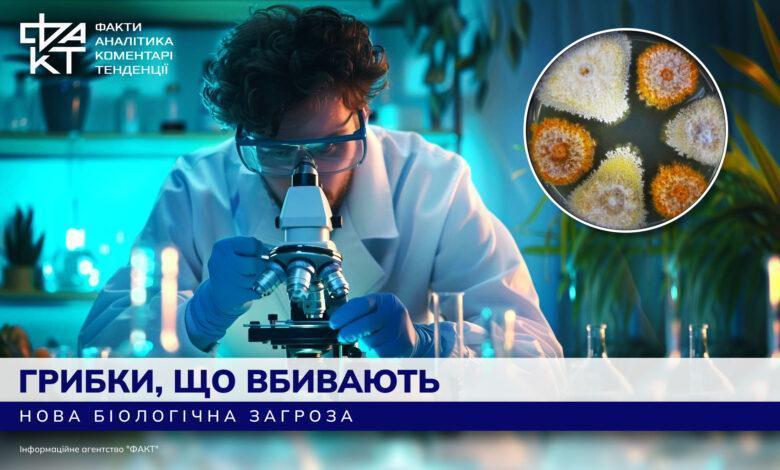
When the series came out “The Last of Us”, his plot about a fungus that turns people into the living dead, was perceived as a scary, but far from reality, fantasy. Some time passed, and the world began to look at this fiction differently. Of course, we are not yet on the verge of a zombie apocalypse, but the deadly fungi are indeed starting their slow, silent and sure attack. Former inhabitants of the tropics, they are now mastering new latitudes. Global warming has given them the key to Europe, and the medical system still has no answer. These microscopic creatures adapt to the temperature of the human body, develop resistance to drugs and spread faster than we have time to notice. This is not an epidemic in the classical sense, but a slow, quiet expansion that we have ignored for a long time.
Fungal map of the world: how warming changes the biological balance
High temperatures on the planet raised from the depths of the soil and walls an old and almost imperceptible enemy – a fungus that can cause a serious threat to the health of millions. Aspergillus fumigatus, one of the most common fungal pathogens, has been considered a threat to immunocompromised people for years. It was found in tropical regions and in agricultural areas. But climate change has changed the rules of the game. According to the results of a new study carried out with the participation of scientist Norman van Rijn from the University of Manchester and the Wellcome Trust, these fungi are no longer limited geographically, but are confidently advancing to the north of Europe, Asia and America. The reason for such travel was warming.
Global warming creates conditions in which Aspergillus not only survives, but feels perfect. Mushroom type Aspergillus develop at a temperature close to the temperature of the human body – 37°C. So, as soon as the surrounding environment becomes warmer, the mold is able to adapt to the human body faster. It infects the lungs, causes invasive damage to the respiratory system and, in the case of a patient’s immune system, can be fatal. According to experts, Aspergillus fumigatus can cause infections with a mortality rate of up to 88%, especially in cases where the pathogen becomes resistant to treatment.
Scientists predict that by 2100, if greenhouse gas emissions remain at current levels, the range of A. fumigatus can increase by another 77%, i.e. to most of the territory of Europe. This puts an estimated 9 million people on the continent at risk. Another species Aspergillus flavus, which affects cereals and vegetables, may spread to 16% of new areas in northern China, Scandinavia and even Alaska.
Fungi are no longer limited to the natural environment. Researchers indicate that they are able to penetrate residential premises, hospitals, offices, that is, anywhere where there is heat, moisture and organic materials. According to van Rijn, we are approaching a critical point, after which such pathogens will become permanently established in human environments. Asthmatics, people with chronic diseases, cancer patients, people with HIV, as well as elderly people with a weakened immune system fall into the zone of greatest risk.
The situation is complicated by the resistance of fungi to antifungal drugs. As studies have shown, excessive and long-term use of drugs has led to the development of resistance in a number of pathogens. One of the most famous examples was White ears — a fungus that has acquired resistance to almost all major antifungal agents. According to the US Centers for Disease Control and Prevention, this pathogen has a mortality rate of up to 53% and has already caused numerous outbreaks in hospitals around the world.
The World Health Organization officially admitted fungal infections are a serious global threat. For the first time in history, it created a list of 11 fungal pathogens that pose the highest risk to human health and require priority research. The category with the highest threat level included:
- Cryptococcus neoformans is the causative agent of cryptococcosis, the mortality rate of which ranges from 41% to 61%.
- Candida auris is an invasive, multidrug-resistant pathogen with a case fatality rate of 29–53%.
- Aspergillus fumigatus is a mold that causes invasive infections with a mortality rate of up to 88%.
- Candida albicans is the causative agent of invasive candidiasis with a mortality rate of up to 50%.
Seven more species have an average level of threat, including Histoplasma, Fusarium, Nakaseomyces glabrata, Mucorales. Each of them is dangerous for people with impaired immunity and can cause severe, sometimes incurable, lesions.
Doctors are sounding the alarm, because fungal infections kill about 1.7 million more people every year than malaria, and almost as many as tuberculosis. At the same time, funding for research, development of new drugs, and public attention are much lower than in the case of viral or bacterial diseases. According to the National Center for Biotechnology Information, more than 150 million people suffer from severe fungal infections each year, but the actual number of cases may be even higher due to underdiagnosis.
How agricultural chemistry creates superpathogens
As of today, the scientific community is increasingly paying attention to the rapid growth of fungal diseases, both in terms of the number of cases and the severity of the course. Dr Megan Lenardon, Microbiologist and Senior Lecturer in the School of Biotechnology and Biomolecular Sciences, University of New South Wales, notes, that for decades fungal pathogens remained out of the focus of medical research. Despite this, the diversity of fungi and the ways of their distribution have long been in need of more attention. Dr. Lenardon specializes in cellular and molecular biology research Candida albicans, one of the four most dangerous fungi according to the WHO classification.
Representatives of the genus Candida can cause both relatively mild infections, such as thrush, and severe invasive forms that are life-threatening. As the researcher explains, fungi of this type are especially dangerous for people with weakened immunity. Cancer patients, people with HIV/AIDS, those who have undergone organ transplantation, as well as patients in intensive care units remain vulnerable. In case of systemic damage to the body Candida albicans the risk of death can reach 40%.
Another invisible threat that arises in fields and greenhouses can turn into a real medical nightmare. Scientists found out: excessive use of antifungal agents in agriculture contributes to the emergence of drug-resistant strains Aspergillus fumigatus, which usually lives in rotting vegetation and humus. The team is led by Michael Botteri from the University of Manchester established, that strains that have already acquired resistance to drugs of the azole class show a five-fold higher ability to resist even the newest drugs.
Azoles are the main class of antifungal agents, but mutations that occur in fungi under the pressure of agrochemicals make them less and less effective. The situation is complicated even more, because some of the mutated forms already show resistance to olorofim (a promising drug of the new generation, which was supposed to be a breakthrough in the treatment of severe fungal infections – ed.). An additional risk is created by the new fungicide iflufenoquin, which is used in agriculture. It acts on the same molecular targets as olorophym, thus predisposing fungi to cross-resistance.
As microbiologist Joanna Rhodes from Imperial College London points out, those options are particularly dangerous A. fumigatus, which are not only resistant to drugs, but also have an increased level of genetic changes, because they mutate faster than science can react. The problem has already gone beyond the borders of the laboratories. In some hospitals of the world up to 10% of all cases of infections caused by Aspergillus fumigatus, are caused by strains resistant to azoles. According to Professor George Thompson of the University of California, even such newer drugs as olorofim and fosmanogepix may prove ineffective if fungi continue to mutate at this rate.
Currently, the World Health Organization is sounding the alarm. The growing resistance of fungal infections to medical drugs, which is partly provoked by agricultural chemistry, has become a serious threat to the health care system. Overcoming this problem requires an immediate review of global approaches: from regulating the use of fungicides to creating new treatments that can outpace fungi’s ability to evolve.
It is obvious that the world should prepare not only for new viruses. Fungi do not have a public image of the enemy, because they are silent, difficult to detect, invisible in everyday life. But if the current trend continues, they may become the main infectious problem of the 21st century.
Human’s thousand-year struggle with fungal infections for survival
Fungal infections accompany humanity throughout its existence. They belong to one of the oldest diseases, which had to be fought without a proper understanding of the causes, without effective remedies and in conditions where diagnosis was based on observation rather than science.
In ancient Egypt, Greece and Rome, there were already descriptions of diseases that modern medicine classifies as fungal. These are, in particular, candidiasis of the oral cavity, mycosis of the skin, and ringworm, which were quite common, especially in conditions of poor hygiene and close social life. Hippocrates and Galen mentioned skin diseases that were probably fungal. However, due to limited knowledge about microorganisms, these diseases were explained by an imbalance of body juices, the influence of bad blood or “lethargy of the skin”. Therapy consisted of rubbing with vinegar, applying ointments based on plants, mercury, sulfur, or even bloodletting.
In the Middle Ages, the situation did not improve, and in many aspects even worsened. Christian Europe, being under the strong influence of the church, increasingly turned to magical thinking, avoiding dissection of bodies and immersion in the microcosm. Fungal diseases remained common, especially among the peasantry and monks who lived in damp and cramped conditions. Few descriptions of fungal infections have been preserved in medieval medical treatises, but in the works of Arab scientists, such as Avicenna, you can find accurate references to the symptoms of candidiasis, ringworm, and mycosis of the nails. His “Canon of Medical Science” remained the basis of European medical knowledge for centuries.
At the same time, there are attempts to isolate patients with ulcers, rashes and putrefactive skin lesions. These infections were often perceived as a curse, a punishment for sins or the influence of “evil spirits”, so many patients became victims of marginalization. Fungal lesions of the feet or inguinal region were often confused with leprosy, which led to the expulsion of patients from communities.
It is also worth mentioning a separate episode of the medieval history of the fight against fungi — ergotism (poisoning by the sporine fungus Claviceps purpurea, which affects grains, in particular rye – ed.). Affected grain was the cause of large-scale poisoning, known as “Antonio’s fire”, which caused gangrene, convulsions, delirium and death. The most famous epidemics occurred in France in 944 and 1039, when thousands of peasants died. Since the nature of ergotism remained unknown, the treatment was reduced to prayers, pilgrimages to the monasteries of the Order of St. Anthony, and the application of “holy relics.” A scientific explanation will appear only in the 18th century, when medicine for obstetrics will be extracted from ergotamine.
Nevertheless, gradually the situation began to change. In the late Middle Ages, from the XIII-XIV centuries, the role of medical schools grew, in particular in Salerno and Montpellier, where the works of Arab doctors were studied and the first systematic observations were made. Although it is not yet about the discovery of fungi as a separate class of organisms, the approach to symptoms and treatment methods is changing. Herbalists appear with systematic descriptions of plants suitable for external use in “ringworm” and “ulcers”. Fungal lesions of the feet, nails, and scalp are increasingly treated with tar ointments, sage, mint, and sulfur mixtures, but without the proper effect.
But the real breakthrough came only in the New Age. The discovery of the microscope in the 17th century by Anthony van Leeuwenhoek made it possible to see yeast cells for the first time. However, only in the 19th century, with the works of Robert Koch, Louis Pasteur, David Gruber and Rudolf Virchow, mycology appeared as a branch of microbiology. Since then, the nature of mycoses has become clear, as infections caused by certain types of fungi, which have complex development cycles, are often resistant to antiseptics and are able to persist in the body or environment for a long time.
As we can see, until the 19th century, mankind had neither knowledge about the nature of fungal diseases nor effective means of treatment. Mushrooms were perceived as a symptom or consequence of moral decline, and the sick themselves as a source of curse. Only after the development of microbiology and pharmacology in the 20th century, effective antifungal drugs – nystatin, clotrimazole, fluconazole – appeared, which radically changed the situation. History proves that the fight against dangerous fungi can be an example of how long and painful the path to understanding an invisible enemy can be. And although fungal diseases are now generally considered non-fatal, the reality is that in immunocompromised people, after transplants or in HIV-infected individuals, fungi can still be fatal.
So fungi are bringing us back to the point where medicine becomes slower than evolution. Their ability to adapt, migrate, establish themselves in the human environment, and intercept the keys to molecular therapy challenges our notions of controlling infectious risks. There are no quick wins in this game, only a protracted struggle for the right to be the first.