
Rhetoric of strength, diplomacy of weakness: Trump and Iran on the brink of a new confrontation

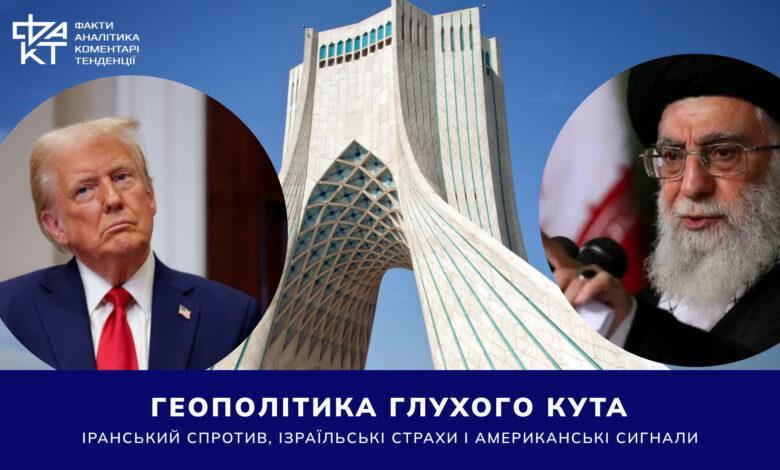
In a new round of crisis diplomatic relations between Washington and Tehran, Donald Trump announced the cancellation of plans to partially ease sanctions against Iran. The reason, he said, was Ayatollah Ali Khamenei’s disparaging statements about the ineffectiveness of American and Israeli airstrikes on Iran’s nuclear infrastructure. The situation, which is already quite acute after the 12-day war in the region, has actually returned the parties to the rhetoric of strength, where the room for compromise is getting smaller and smaller.
War, sanctions and the ghosts of diplomacy
The latest round of tensions came amid a deep escalation in the Middle East, particularly after a direct confrontation between Iran and Israel that lasted nearly two weeks. At the same time, Iran suffered strikes from the US on nuclear infrastructure facilities, which was a direct response to the shelling of American bases in Qatar. Despite the declaration of the success of the operations, Khamenei in a video message called these strikes “exaggeration” and “failed attempts to cover up a real failure”, stressing that Iran had given America a “slap in the face”.
At this very moment, Trump and his team, according to information from the White House, were preparing the groundwork for a potential meeting with representatives of Iran, which should take place next week. There was talk of a limited softening of sanctions, permission to export oil to China, and the restoration of diplomatic channels after the war. However, the statement of the supreme leader of Iran, his demonstrative victorious rhetoric, shattered these plans completely.
“I saved him from an ignominious death,” Trump wrote on his Truth Social network. He assured that he had personally stopped Israeli plans to eliminate Khamenei, which he said could have led to a “very ugly and shameful death” and caused casualties among many Iranians. The president hinted that he had accurate information about Khamenei’s location: he had been hiding in a bunker since the beginning of the war, but he deliberately did not give the “green light” for the strike.
Moreover, Trump said that he had been working for several days on “the possible lifting of sanctions” and “the rapid recovery of the Iranian economy”, but “instead received a flood of anger, hatred and disgust”, after which he stopped all efforts. In his typical style, he concluded: “I wish the leadership of Iran would realize that you often get more with HONEY than VINEGAR. PEACE!!!”
Iran responds: “Don’t play with illusions”
In Tehran, this change of mood was met with a cold threat. Foreign Minister Abbas Araghchi said that if Trump “really wants a deal,” he should drop his “disparaging tone” toward Khamenei. In a post on X, Aragchi stressed that the Iranian people “do not tolerate threats and insults” and “illusions lead to mistakes” that could end in a demonstration of true Iranian strength.
In fact, we have a return to the rhetoric that has been familiar since the time of the Iran-US confrontation under the Trump administration in 2018-2020, when the US withdrew from the nuclear agreement (JCPOA), renewed tough sanctions and eliminated General Soleimani.
Why it matters: The tension before the new round
Against the background of statements about the desire of the United States to resume negotiations, in reality, the diplomatic window remains narrow. Trump has made it clear that any further dialogue depends on concessions from Tehran, including giving up enriched uranium. He assured that he “does not believe in Iran’s plans to resume its nuclear program”, but at the same time threatened military action in the event of a movement towards the creation of nuclear weapons.
This approach is a combination of threats and potential incentives. It is classic for Trump, who combines demonstrative force with the rhetoric of an accomplice (deal-maker).
But it is worth understanding that in the Iranian context, humiliating the supreme leader is not just a personal insult. In Iran’s traditional political culture, such criticism is perceived as an attack on the entire state system. And that is why such rhetoric only strengthens the positions of the most radical politicians – the so-called “hard” or “irreconcilable”. They oppose any negotiations with the West and support confrontation. So instead of opening the way to a compromise, such statements on the contrary strengthen the influence of those who advocate a hard line.
Running to “Daddy”: How Iran mocks Israel and increases anti-Western rhetoric
One of the most telling and provocative moments in Iran’s reaction to Donald Trump’s words was a statement by Deputy Foreign Minister Abbas Araghchi, published on the X network. In it, he not only rejected the possibility of dialogue with the Trump administration, but also openly mocked Israel, saying:
“The Great and Powerful Iranian People showed the world that the Israeli regime had no other option but to run to “father” to avoid destruction by our missiles. We do not tolerate threats and insults.”
Aragchi’s post is part of a targeted information campaign in which Iran tries to portray itself as a regional hegemon and Israel as a weak actor dependent on US support.
Such statements deliberately blur the line between political criticism and personal insults. They increase polarization and make even cautious steps toward compromise impossible. It is not only a diplomatic reaction, but rather a demonstrative closing of the door.
Iran: between demonstrative toughness and conditional diplomacy
The reaction of the Iranian official media to the latest statements of Donald Trump was expectedly sharp and unequivocal. The state press called the American president’s words not only “lies” and “political manipulation”, but also emphasized their offensiveness towards the supreme leader of Iran. This tone is set not only by the media, but also by political heavyweights – notably representatives of the Islamic Revolutionary Guard Corps (IRGC) and the conservative political faction commonly referred to as the “hardliners” or “intransigents”. It is these groups that dominate Iran’s foreign policy discourse today, actively shaping the narrative of “resistance to the West” and the inadmissibility of any concessions.
The main message from both Iran’s military and diplomatic representatives is that the Islamic Republic is ready to respond harshly to any threat, including potential Israeli or American attacks. One feels not only demonstrative confidence, but also an effort to demonstrate determination – both for the external and for the internal addressee.
Despite all this, Iran does not completely reject the very idea of dialogue, however, under conditions that can be considered almost ultimatum. Tehran insists on:
– complete and irreversible lifting of sanctions, in particular secondary sanctions against the financial and energy spheres;
– recognition of Iran’s right to a peaceful nuclear program within the framework of the Treaty on the Non-Proliferation of Nuclear Weapons;
-guarantees of US non-interference in the country’s internal affairs;
-and, most importantly, restoring trust by publicly acknowledging Washington’s responsibility for withdrawing from the nuclear deal in 2018.
So, the diplomatic door remains open, but Tehran articulates clearly: no negotiations under pressure or humiliation.
This is the main paradox of the current situation: outwardly, Iran demonstrates rigidity and self-sufficiency, but at the same time it is under the pressure of a deep economic crisis, social discontent and international isolation. And although “hawks” dominate the rhetoric now, the potential for pragmatic dialogue, subject to certain changes in the political tone on the part of the West, still exists.
But only on the condition that the United States – whether under the leadership of Trump or another leader – will be ready to negotiate not from a position of strength, but taking into account the political and cultural specifics of the Iranian regime.
What’s next: the Israeli factor and the July intrigue
Israeli Strategic Affairs Minister Ron Dermer will arrive in Washington on Monday. He is expected to hold consultations on the future strategy against Iran, the war in Gaza and possible agreements between Benjamin Netanyahu and Trump. A personal meeting of the two leaders is also being prepared in the second half of July, which could become a new point of reference for US Middle Eastern policy.
Today, as five years ago, the parties found themselves in a classic trap: each is waiting for the other to make the first move, and the rhetoric of power only cements the enmity. Despite signals of peaceful intentions, the reality is that both Washington and Tehran are still playing more for their domestic audiences than for the world.
China, Russia and Regional Players: The Quiet Arena of Struggle Around Iran
Although the conflict between Iran, the United States and Israel at first glance has a local dimension, behind the scenes the situation is being carefully observed and modeled by other major players – primarily China and Russia.
China, as one of the main buyers of Iranian oil, has a direct interest in Iran’s stability. That is why Beijing is closely monitoring the escalation and – although it does not officially support either side – is actually strengthening Tehran’s position by continuing economic cooperation despite sanctions pressure. For China, Iran is an important hub in the One Belt One Road initiative, as well as a potential counterweight to US influence in the region.
Russia, for its part, seeks to establish itself as a guarantor of security for allies in the Middle East and at the same time as a mediator capable of curbing Tehran. For the Kremlin, moderate tension is beneficial – it keeps the West in good spirits, but does not turn into an uncontrolled conflict. In case of escalation, Moscow can act as an arbiter, which will strengthen its international weight against the background of the war in Ukraine and the conflict with NATO.
In addition, Iran’s neighbors, primarily Saudi Arabia, Turkey, the UAE, and Qatar, play their role. Although Riyadh and Tehran have recently renewed diplomatic ties, their dispute over regional leadership continues, and every move by the US or Israel toward Iran potentially energizes these centrifugal forces as well.
Thus, the question is not only whether Trump and Khamenei will be able to find a diplomatic bridge, but also to what extent global players are willing to support or sabotage such a process based on their strategic interests.


