Russia trades wheat for cars and electronics from China to avoid sanctions: Reuters

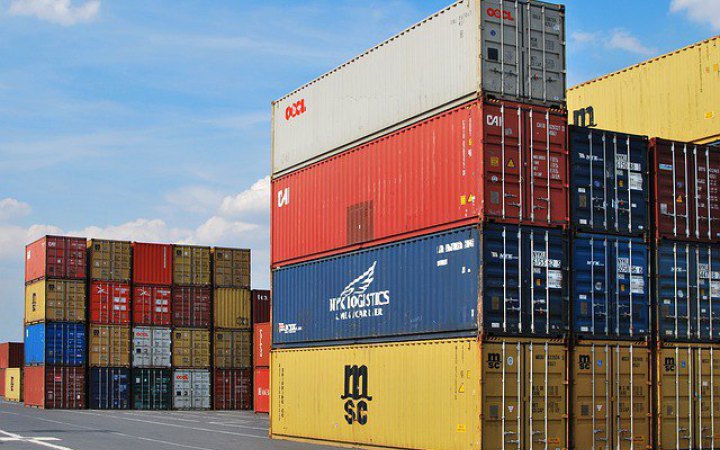
Russia has introduced barter trade with China and India due to US and European Union sanctions, which limit financial transactions and access to the SWIFT system. In this way, Moscow, in particular, exchanges wheat for cars and electronics from China, reports Reuters.
Barter has become an outlet for mutual transactions, as Chinese banks are wary of secondary EU sanctions for cooperation with Russia. At least eight barter agreements are known, in which the Russian Federation transferred metal alloys and grain, receiving in return engines for ships, electronics for the production of weapons, cars and other goods. At the same time, a discrepancy of 7 billion dollars was found between the data of the Central Bank of the Russian Federation on foreign trade and customs statistics, which indicates a greater volume of exports of goods and raw materials than recorded inflows of funds.
Russian customs confirmed that the country was indeed engaged in barter trade with various countries “in a wide range of goods”. At the same time, the government of the Russian Federation and the Central Bank refused to comment. Among the deals recorded was the exchange of flax seeds for household appliances worth about 100,000 dollars between Russia and China, registered through the Ural Customs Service. China is one of the world’s largest importers of flax seeds.
According to the information of the Russian government, some barter agreements allowed the importation of Western goods into the Russian Federation, contrary to the sanctions of the EU and the USA, which prohibit the import of equipment and products. At the Kazan Expo business forum in August 2025, Chinese companies named problems with financial settlements among the key obstacles in the development of trade with Russia.
Xu Xinjin, chairman of a Chinese marine engineering company, said that a barter form of cooperation could be a way out. Speaking at the conference, Xu emphasized that “in the current environment of limited payments” barter opened up new opportunities for enterprises in Russia and Asian countries.