Scholz called on Ukrainian refugees in Germany to find work as soon as possible

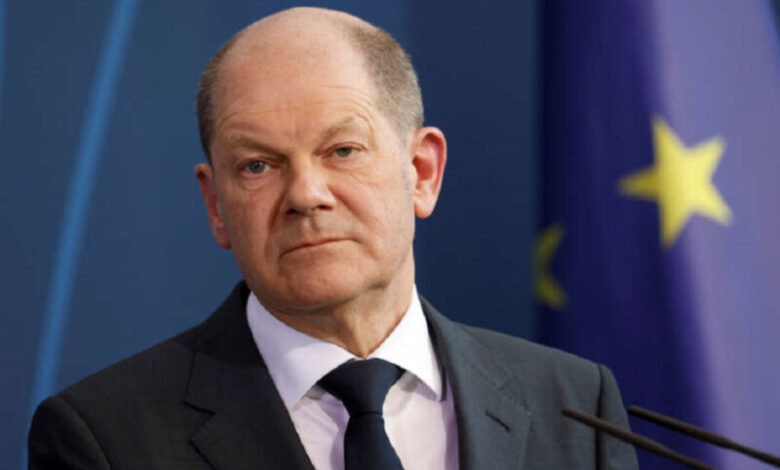
German Chancellor Olaf Scholz made an important statement regarding the employment situation of Ukrainian refugees in Germany during a meeting with voters in the city of Teltow in the Brandenburg electoral district. The event took place on September 7, when Scholz spoke as a member of the Bundestag, and his words were quoted in the well-known German publication Süddeutsche Zeitung.
The main message of his speech was that the hundreds of thousands of Ukrainian refugees who arrived in Germany as a result of the Russian invasion should integrate into the labor market and find work as soon as possible. Scholz noted that more than 200,000 Ukrainians have already been able to find work in Germany, but, according to him, this is not enough, as hundreds of thousands of refugees remain without work. He emphasized that a situation where refugees are temporarily unable to work or limited to only part-time work is acceptable at the initial stage. However, in the future, it is necessary to solve the problems that prevent their employment.
The chancellor drew attention to the fact that the German bureaucracy is one of the main factors hindering the employment of Ukrainian refugees. He gave the example of doctors – out of 2,000 Ukrainian doctors who wanted to work in Germany, only 120 received the necessary permits to start working. According to Scholz, this situation is unacceptable, and he believes that the approach to recognizing the qualifications of foreign specialists needs to be changed. He suggested allowing refugees to start work even without a full set of certificates and documents, because the necessary certificates can be obtained later in the work process.
The problem of employment of refugees is also closely related to other factors, such as the need for language courses and the insufficient number of places in kindergartens, which is especially relevant for women with children. Many Ukrainians who have arrived in Germany are forced to stay at home due to a lack of childcare opportunities, which also limits their opportunities to find work. At the same time, other refugees receive public assistance instead of actively joining the labor market.
This debate also raises arguments that the welfare system in Germany is generous enough that it may reduce the incentive to actively seek work. However, Scholz noted that the government and the federal states should bear responsibility for the fact that the process of employment of foreigners is too bureaucratic. According to him, there are too many parallel institutions in the federal states that deal with the recognition of professional qualifications, which only complicates and delays this process. Scholz emphasized the need to reduce the number of such bodies in order to make the process more transparent and efficient.
This situation has far-reaching social and economic consequences. Germany has taken in more than a million Ukrainians since Russia’s full-scale aggression against Ukraine began in February 2022, according to the UN. A large number of these people need not only temporary protection and social assistance, but also the opportunity to actively integrate into the German economy. Therefore, the issue of speeding up the process of recognition of qualifications and simplification of bureaucratic procedures becomes a key element of the successful integration of Ukrainian refugees.
In addition, the topic is part of a wider debate in Germany about how the country is dealing with the large number of refugees and their adaptation. The situation, where a large number of foreigners remain unemployed or receive social assistance instead of actively working, causes concern among the local population and political forces. Therefore, Scholz’s words are aimed at emphasizing the need for reforms in this area, which would allow more people to integrate into German society and contribute to the development of the country’s economy.