Seven teenagers were returned from the occupation: how it happened and what stories are behind this operation

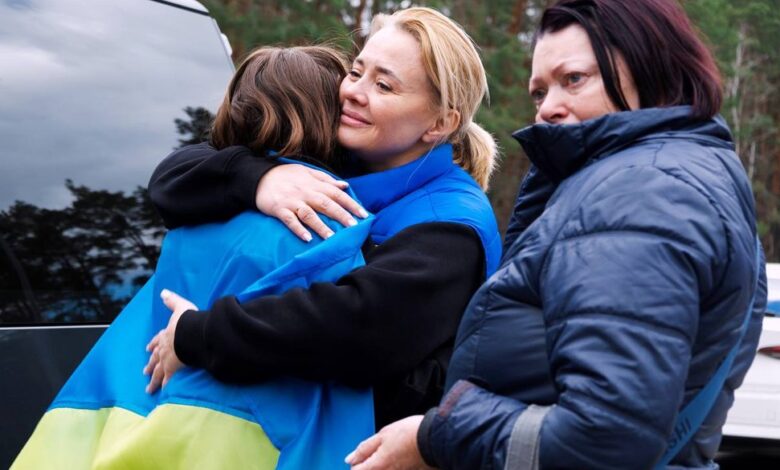
The return of Ukrainian children from temporarily occupied territories is one of the most difficult humanitarian issues of the war, because such stories intertwine the loss of family, forced isolation, life under foreign control and prolonged separation from loved ones. Each such case requires separate coordination, the participation of state institutions, the search for a safe route and further accompaniment of children after departure.
Return of adolescents from occupation
The Verkhovna Rada Commissioner for Human Rights Dmytro Lubinets reported that on April 3, seven more adolescents who were under occupation were returned to the territory controlled by Ukraine. The children aged 13 to 17 are already in safe conditions. All of them are now safe, and the operation itself became part of the Bring Kids Back UA state initiative, within the framework of which Ukraine seeks the return of children separated from their families, displaced or trapped in occupation. The published details concern both the organization of this return and the personal stories of the children, for whom the departure meant the end of a long period of loss, pressure and forced isolation.
Information about the return of the seven teenagers was published after the completion of another rescue operation, thanks to which the children left the temporarily occupied territories and reached the part of the country controlled by Ukraine.
The appearance of this news again drew attention to the topic of the return of children who found themselves in isolation due to war, loss of parents, severance of family ties or stay in institutions in the occupied territories. Each such operation has its own complex story, so the brief official report on the number of returned children in this case was supplemented with specific examples showing the scale of personal tragedies experienced by the teenagers.
According to the Ombudsman, the US First Lady Melania Trump also joined this process, providing humanitarian support. The report on the return of the children mentioned this aspect as part of international assistance, without which such operations would in many cases require even more time and resources.
Since the beginning of the full-scale invasion, Ukraine has already managed to return 2,070 children. This figure gives an idea of the scale of the long-term work that has been carried out throughout the entire period of the great war and covers numerous individual cases, where each return is associated with separate negotiations, searches for relatives, documentary procedures and security solutions.
At the same time, the Ukrainian side emphasizes that thousands of children still remain in the temporarily occupied territories. Because of this, each new return is presented in the broader context of ongoing work, which continues continuously and requires both internal coordination and external support.
The story of the children who were taken away
The Ombudsman reported that among the returned children was a 13-year-old boy who had survived the death of both parents and was left alone in the occupied part of the Kherson region. Due to the lack of close relatives who could immediately take him into custody, the child was placed in a social rehabilitation center, which at that time was already under the control of the occupation forces.
The story of this teenager shows how vulnerable children who have lost family support remain under occupation. Upon his return, the boy was reunited with his sister, and this episode became one of the most emotional in the entire report on the rescue operation, as the dry lines about the evacuation revealed the fate of a child who had gone through orphanhood, isolation, and being in a captured institution.
Two brothers, aged 13 and 16, who had stayed together after the death of their parents to avoid separation, were also taken away. While in the occupied territory, they were under the care of a cousin, and their situation was complicated by psychological pressure and intimidation, which were also reported after the operation.
The return of these teenagers ended with a reunion with their sister in Ukrainian-controlled territory. What is particularly noticeable in this story is the family’s desire to maintain contact despite the loss of their parents, the occupation circumstances, and the constant threat of separation, which is often one of the most painful for children in such situations.
Another story that the Ombudsman published was the fate of a 14-year-old teenager who had not seen his mother for more than four years. A long separation that stretched over years meant life without full family contact for a child of that age during one of the most difficult periods of growing up.
After returning, the family was reunited. The report presented this case without unnecessary details, but even in such a concise presentation, the main point is clearly visible: for some Ukrainian children, returning from the occupation means not just a change of place of residence, but the restoration of family ties that had been interrupted for a very long time.
The published stories show several typical circumstances that Ukrainian children face in temporarily occupied territories: the death of their parents, forced stay in someone else’s care, life in institutions controlled by the occupation authorities, isolation from loved ones, and prolonged separation from their family. Because of this, each return has a legal, humanitarian and deeply personal dimension, as for the child it means leaving an environment where daily life was defined by fear, dependence on circumstances and lack of choice.