Switzerland plans to introduce restrictions on the purchase of housing by foreigners: what will the new reform change for Ukrainian refugees?

The housing issue in Switzerland has ceased to be a purely everyday topic, as the shortage of apartments, rising prices and tensions in the rental market increasingly influence government decisions regarding foreigners. For Ukrainian refugees, this topic is of particular importance, because after several years of war, some families have already enrolled their children in schools, found jobs, entered the local environment and began to look for a longer-term basis for life. The Swiss government is proposing stricter rules for the purchase of real estate by foreigners, and for Ukrainians, such an initiative could become an important boundary between a relatively orderly life and another reminder of the fragility of their situation.
What the Swiss government is proposing
The Swiss Federal Council has advocated a significant strengthening of the legislation regulating the purchase of real estate by foreigners. The main idea of the changes is to curb speculation in the housing market, reduce pressure on domestic demand and return the law to its stricter original purpose.
Among the key proposals is the requirement to obtain permission to purchase primary residence for citizens of countries that are not members of the European Union and the European Free Trade Association. In addition, the government wants to introduce a rule according to which a foreigner, after leaving Switzerland, will have to sell such real estate within two years. A separate block of changes concerns commercial properties: foreigners are planned to be prohibited from buying them for further rental or leasing. Stricter rules are also being prepared for holiday homes, apart-hotels and indirect ownership of residential assets through shares of companies and investment funds.
Why does this concern Ukrainian refugees
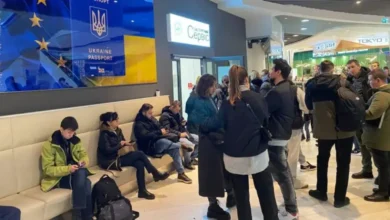
Ukrainians who are in Switzerland under temporary protection status S belong to the category of foreigners from countries outside the EU and the European Free Trade Association, so the proposed restrictions also cover them. For many Ukrainian families, the issue of buying a home during the war years has ceased to be an abstract prospect, as a long stay in the country, children’s education, employment and the need to live in predictable conditions gradually push people to make decisions that were previously postponed for an uncertain future.
In this situation, the Swiss reform changes the very approach to housing as a tool for arranging life. A family that has saved up money, is considering a loan or wants to get out of the unstable rental market will no longer be able to perceive the purchase of an apartment as a relatively direct path to household stability, because an additional state link in the form of a permit appears between the intention to purchase a home and the transaction itself.
For Ukrainian refugees, the emergence of a new administrative barrier will be most noticeable. Previously, the main conditions were the availability of money, the willingness of the bank to provide financing, checking solvency and finding a suitable object, while under the new rules a separate approval procedure also becomes a decisive stage. Because of this, buying a home is turning into a process in which not only the financial resources of the family are important, but also the consent of the state to allow such a transaction.
Another part of the proposal looks even more serious, which obliges a foreigner to sell his main residence within two years after leaving the country. For Ukrainian families whose lives depend on the development of the war, the security situation at home, changes in protection rules, or the need to move to another state, such a condition creates tangible instability. In this case, an apartment or house no longer looks like a long-term point of support that can be preserved for the future, but becomes an asset rigidly tied to the actual stay in Switzerland.
For Ukrainian refugees, housing in a European country has long been associated not only with comfort, but also with a sense of control over one’s own life, which the war in Ukraine has already destroyed in many cases. Renting, especially in the expensive and scarce Swiss system, often means dependence on the market, a difficult search for affordable options, strict requirements from owners and a constant awareness that the family lives in someone else’s space, the rules of which can be changed by any decision of the landlord.
Therefore, some Ukrainians saw buying a home as a way to get out of prolonged temporaryity, to establish themselves in a place where children are already studying and adults are working, and to stop depending on the unstable rental market. The proposed restrictions reinforce the opposite signal: the state shows that even a longer stay, social adaptation and financial readiness do not mean an automatic transition to a more sustainable life model.
What the reform will mean for those planning to buy a home
For Ukrainians who have already reached the level of practical planning, the changes may mean a review of the entire process of buying a home. A family that has saved money for a down payment, looked for a bank, analyzed prices, and looked at properties for permanent residence will have to take into account the risk of delay or refusal at the permit stage. In Swiss conditions, where the market itself is expensive and complex, this raises the threshold for entry even higher.
In addition, the new rules change the logic of long-term choice. If housing needs to be sold after leaving the country within the established period, a Ukrainian family will no longer be able to perceive real estate as a reserve space in case of changes in status, temporary return to Ukraine, or further relocation to another country. For people whose biography has depended on war and government decisions for several years, such tying of property to residence will have a very specific consequence: less room for maneuver and more dependence on the rules of the host state.
A separate block of restrictions applies to commercial properties and the purchase of real estate for the purpose of further rental or leasing. For some foreigners, including Ukrainians, this model could be seen as a way to preserve capital, receive a stable income or create a reserve of financial security in conditions of military uncertainty. The Swiss government proposes to close this particular area, leaving the possibility of acquisition only for one’s own economic activity.
This decision means that the housing market will be increasingly seen as an area where a foreigner can build a private investment strategy. For Ukrainian refugees, who have been trying to maintain at least some of their financial independence during the years of forced departure, this reduces one of the few opportunities to convert their savings into a more stable asset on Swiss territory.
For local authorities, real estate is part of economic and demographic policy, while for Ukrainian refugees it is closely linked to a much wider range of circumstances. Living conditions affect whether a family can remain together, how long children will stay in the same school, whether adults can hold down a job without the constant risk of moving, and whether people will be able to resume their daily routines after losing their homes in Ukraine.
This means that any tightening of the rules on buying a home for Ukrainians is read much more broadly than a simple technical change in the law. In a situation where people have been living for several years between the military reality of their homeland and the administrative framework of the country of refuge, real estate becomes part of the question of how deeply a refugee can embed his or her life in a new space and whether the state allows the transition from forced stay to a more stable way of life.
What is important to consider now
The Swiss government’s initiative does not yet mean that the new rules will come into force immediately, as the final decision still has to go through further stages of consideration. However, already at the supply level, a clear direction is visible: the housing market in the country will be increasingly protected from external demand, and foreign participation in it will be much more strictly controlled.
For Ukrainian refugees, even with income, stable living conditions, school integration of children, and a desire to establish themselves in the country, the issue of their own housing will remain dependent on the state logic of temporality.