Tax return in Germany in 2026: what opportunities do Ukrainians have to return part of the funds paid?

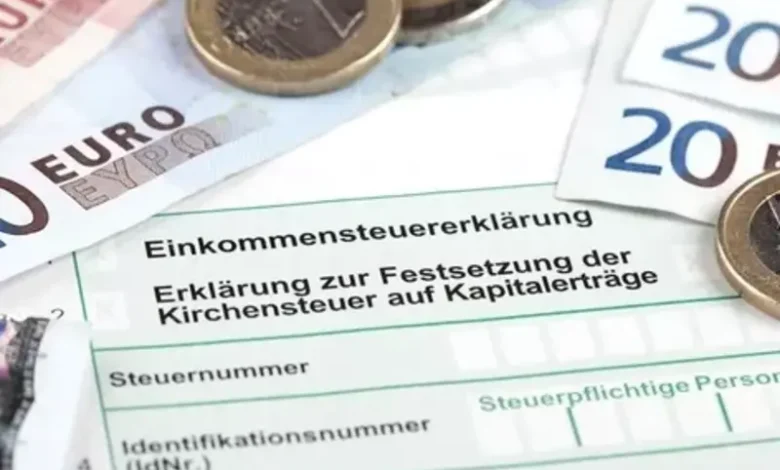
For Ukrainians living and working in Germany, taxes have long been part of everyday life, along with finding a job, renting a home, filing paperwork, and planning a family budget. Many people pay deductions from their salaries automatically every month, but not everyone understands that part of these funds can be returned through the legal procedure provided for by the German tax system. Due to the growth of the Ukrainian community in Germany, the topic of tax returns in 2026 is gaining practical importance for a large number of people who want to better navigate their rights, expenses, and opportunities to receive compensation.
How taxes are withheld from wages
For those who work officially in Germany, tax payments are automatic, since the employer withholds the necessary amounts before the employee receives his salary. This system is familiar to the German labor market, but for many Ukrainians it seems complicated at first, because the amount of deductions is immediately noticeable, while the mechanism for a possible refund becomes clear only later.
Because of this, many people perceive monthly tax deductions as a final amount that is no longer subject to revision. In fact, German law provides for a different approach: after the end of the calendar year, an employee can file a tax return and indicate in it income, previously paid taxes and expenses that affect the amount of taxation.
A tax return in Germany, which is filed in the Steuererklärung format, opens up the opportunity to review the amounts paid during the year, taking into account the circumstances of a particular person. Such a document records all income for the calendar year, data on taxes already paid and expenses that can reduce the taxable base.
In a practical sense, filing a declaration often means a chance to return part of your own funds that were paid during the year in a larger amount than follows from the final calculation. This procedure does not belong to exceptional mechanisms and does not require special status, because it is a standard part of the German tax system.
For whom filing a tax return is relevant
Although filing a tax return in Germany is not mandatory for everyone, in many cases it makes financial sense. First of all, this applies to people who worked officially and paid taxes on their wages during the year, because it is for them that the recalculation most often opens up the opportunity to receive a refund.
Anyone who has worked legally in Germany can file a tax return, regardless of the duration of employment. This right is also preserved in cases where a person worked for only a few months, had a temporary or seasonal contract, and also left the country after completing their work. For many Ukrainians, this detail is of particular importance, because their employment was often associated with part-time work, short-term contracts, or a forced change of residence.
What amounts are most often returned
About 90% of people who file a tax return receive a tax refund. The average amount of compensation, according to the Federal Statistical Office of Germany, is around 1,095 euros, so for many workers filing a declaration becomes a tangible financial opportunity.
This amount is not fixed, as the final calculation depends on income, length of employment, tax bracket and expenses that the person can take into account when filing. This is why two workers with similar salaries can get different results after reviewing their declarations if one of them had additional expenses related to commuting, moving or training.
The amount of compensation can increase if the declaration correctly includes expenses that are allowed by tax law. Such expenses include commuting, moving, vocational training, kindergarten, charitable contributions, work tools, medical services and integration courses.
For Ukrainians who have adapted to a new country, this part of the declaration is often of particular importance, because the costs of household equipment, travel, retraining or learning new rules of life in Germany often accompany the first years of stay. Because of this, the tax declaration turns into a tool that allows you to take into account the real circumstances of a person’s life, and not just dry figures of annual income.
The German tax system has a reputation as one of the most complex in Europe, so the process of filling out the declaration itself often causes difficulties for those who encounter it for the first time. The reason lies in the number of rules, exceptions, categories of expenses and documents that need to be correctly compared with each other so that the submission is correct.
For a person who works in another country, uses a foreign language in an official environment and at the same time tries to understand the German bureaucratic logic, this process can be too confusing. A basic understanding of taxation principles already helps to avoid some mistakes, but without paying attention to details, it is easy to miss expenses that affect the amount of a possible refund.
Is it possible to file a tax return yourself
Ukrainians can file a tax return on their own if they have access to the necessary documents and are sufficiently well-versed in the system. This path is possible for those who are ready to independently collect data on income, taxes paid and expenses, and then correctly enter this information into the declaration.
At the same time, self-filing requires attention to every detail, because inaccuracies in documents, missed expenses or errors in interpreting the rules can affect the result. Because of this, many people, especially at the initial stage, seek professional help to avoid unnecessary difficulties and reduce the risk of incorrect filling.
Turning to a specialized tax return consultant provides several practical advantages for those who do not feel confident working with German tax documents. First of all, it is about overcoming the language barrier, which for many Ukrainians remains one of the main obstacles when communicating with official structures and filling out complex forms.
In addition to the language aspect, the consultant helps to better navigate the system, in which the accuracy of each entry, the correct registration of expenses and an understanding of what data really affects the final calculation are important. For a person who wants to avoid mistakes and file a declaration correctly the first time, such support often becomes a way to save time and maintain peace of mind in a procedure where small errors have quite tangible financial consequences.
In recent years, the Ukrainian community in Germany has grown noticeably and has become one of the largest in Europe. In 2026, for Ukrainians in Germany, the tax declaration remains a tool that helps to put their own financial affairs in order, take into account the expenses incurred and take advantage of the opportunities provided by German legislation.