
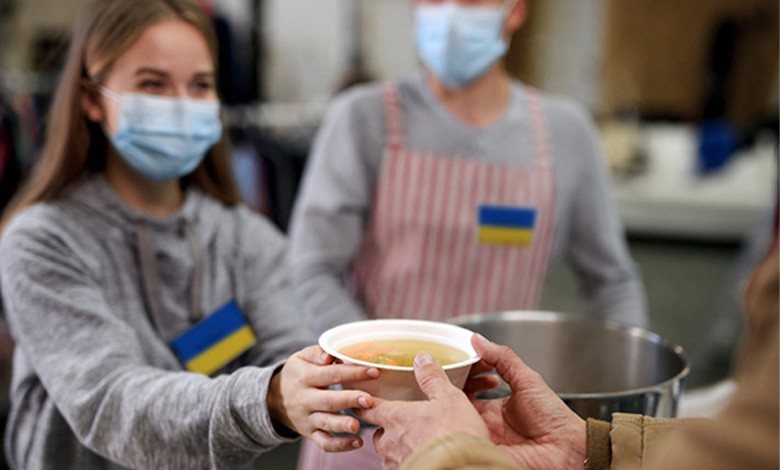
The generosity of people around the world is impressive, as evidenced by this year’s Charity Giving Index, published by the UK-based Charities Aid Foundation. Despite economic difficulties and humanitarian crises, people from all over the world continue to support those in need. The study, which covered more than 140 countries, shows that volunteering remains at a high level, and the number of people making donations and helping strangers is growing. Charity remains a trend even in Ukraine, a country at war.
There are more than 4.3 billion philanthropists in the world
The Global Philanthropy Index has now reached its highest level yet, a figure that was previously recorded only during the pandemic. Indonesia topped the ranking. The top ten also includes countries from all continents – Africa, Asia, Europe, the Middle East and North America. Over the past year, 73% of the world’s population donated money, helped strangers or volunteered.
Infographic: IA ‘FACT’
The most impressive example is that of Singapore, which, thanks to government initiatives, has increased its volunteering and charitable giving, rising 19 positions to third place in this year’s ranking. Current government programmes have introduced initiatives for active cooperation between businesses and charities in the field of volunteering, tax benefits and compensation for part of donations.
A study by the Charities Aid Foundation has recorded many encouraging trends that have swept humanity over the past year.
It was recorded that more than 4.3 billion people around the world joined charitable activities, giving their time, money or helping strangers.
Over the course of the year, 75 countries improved their scores in the World Giving Index, a trend that reflects the growing level of charitable giving in many countries, where more and more people are getting involved in helping others.
After the devastating earthquakes in Morocco in autumn 2023, the number of people donating money increased by 800%. This significant jump shows that natural disasters mobilise communities to actively help and support victims.
After the earthquakes, many Moroccans began to actively donate not only money but also time to volunteer. Such acts of charity not only help on the ground, but also reflect a general trend towards increased social responsibility.
The most ‘breakthrough’ donor country in the World Giving Index this year was Greece, which improved its score by 15 points. This demonstrated a significant increase in charitable activity among its population. Azerbaijan, on the other hand, showed the largest decline, which may reflect the difficulties faced by local charitable initiatives.
The UK also demonstrates a decline in charitable giving. In 2014, the country was ranked 6th in the ranking. Now it has dropped to 22nd. The reason for this is economic problems that are changing the behaviour of the British. Due to the high cost of living, many of them are forced to limit their spending, including donations, to cope with the daily financial burden. The proportion of people who donate time to volunteer has also decreased significantly, especially since the end of the pandemic, which in one way or another temporarily stimulated charity. Although there have been periods of short-term increases in donations, primarily to support Ukraine, the overall trend remains downward.
Infographic: IA FACT
In any case, the overall dynamics of charity in the world is positive. The surge, caused by the pandemic and the urgent need for many to be useful to people, was repeated in 2022, with the start of Russia’s full-scale invasion of Ukraine.
The world’s most generous and responsible countries
Indonesia has once again been recognised as the world’s most generous country. It has been ranked first in the World Giving Index for the seventh year in a row, having overtaken Myanmar for the first time in 2017. An impressive 90% of Indonesians have donated money to charity, and more than 60% have volunteered their time, making the country a global leader in both of these categories
In this year’s World Giving Index, the United States ranks 6th with 59 points, demonstrating a stable level of charitable giving. Ukraine, in 7th place with 57 points, continues to show high activity in philanthropy, especially against the backdrop of the current humanitarian crisis.
Malta, Australia and the United Arab Emirates tied for 9th place with 54 points each. This is the first time that Malta has entered the top ten, reflecting the country’s growing cultural and social engagement.
Charitable giving amounts to 2-2.5% of GDP
Charity in Ukraine has a significant impact on the country’s economic situation. According to a study by Forbes Ukraine, in 2023, the amount of funds allocated for charitable giving will be between 2% and 2.5% of Ukraine’s gross domestic product (GDP).
The publication also records other important trends:
- The top 50 largest charitable organisations raised UAH 37 billion, which is approximately 0.6% of the country’s gross domestic product.
- If the wider group of 200 charitable organisations is taken into account, together with the redistribution of funds, their total volume is estimated at UAH 80-85 billion, or 1.25% of GDP.
- In addition to formal charitable structures, less formalised forms of charity, such as P2P transfers, assistance from NGOs, as well as monetary and in-kind contributions, grants, etc., play an important role.
- According to Forbes, these alternative forms of charity add another UAH 20 to 50 billion, which is 0.3% to 0.8% of GDP.
- Thus, the total amount of charitable giving in Ukraine is equal to 2-2.5% of GDP. For comparison, the contribution of such sectors as construction and financial activities is 1.6% and 2.4% respectively.
Ukrainians have a habit of giving back
Charitable giving in Ukraine has deep roots, as many Ukrainians have always felt a desire to help others. Today, this tradition is evolving: more and more people are actively involved in charitable initiatives, realising that help is available to everyone. This growing interest in good deeds is evidence of a changing social climate and the willingness of citizens to support each other in difficult times.
Mind magazine summarised the trends in charity in 2024.
Total digitalisation. The global trend towards digital payments continues to grow. In Ukraine, despite challenges such as the lack of electricity in some regions, charity is actively using digital payment systems.
Peer-to-peer fundraising. This trend helps to attract new donors and increase the number of contributions. People become active participants in the meetings, which creates a sense of personal contribution to the overall success.
Younger donors. It is encouraging to see that the younger generation is ready to support projects that align with their values and experience. Fundraising campaigns or donating their own time at volunteer stations or hospitals provide an opportunity to feel empathy for others. Such initiatives are becoming increasingly popular.
Demand for human resources. There is a growing need for qualified professionals (fundraisers, project managers, communicators) in the social sector. Communities realise the importance of professionalising charitable activities.
Automation and AI technologies: The use of artificial intelligence has not escaped the charity sector, where it is used to process information and evaluate applications.
Additional trends include the growth of trust in charitable organisations, the development of multichannel communications and new fundraising formats.
The key trend in charity remains the constant desire to win.


