The last bell in wartime Ukraine: the silence of shelters, the sound of sirens and the desire for a holiday

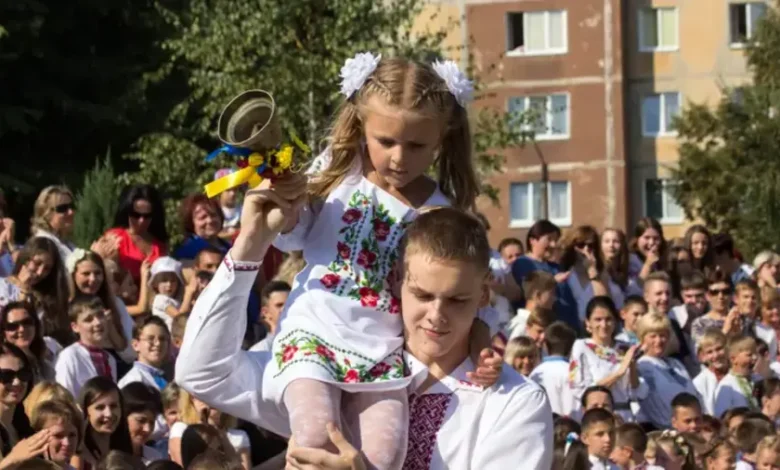
Even during the war, the calendar keeps to its usual rhythms: spring comes to an end, May comes to an end, and the last bell rings in schools. However, this year’s school farewell, as in previous years, has a special weight, it sounds not only as a sign of the end of the school year, but as a reminder of losses, changes, circumstances that have forever changed school life for millions of Ukrainian children. Due to the full-scale war, the school year in many regions continued in a remote format, in shelters, basements, metro schools. Some of the children are studying abroad, some are studying online without even having constant access to the Internet.
In the frontline areas, there is no permanent form of training, and the decision on whether an offline end of the year is possible depends on the specific security situation. At the same time, despite the danger, fatigue, and loss, children, parents, and teachers want to feel that the school year is over. Even if it’s just a short meeting, an online connection, or a token greeting, the need for a moment of closure and recognition of the year’s efforts remains.
The academic year 2024-2025 officially ends on June 30, according to government decree No. 841, but the format of the last bell, as well as the date of its holding, can be determined by schools independently. In many cities and communities, May 30 and 31 have become the main dates when schoolchildren say goodbye to the school year. Some schools are planning a holiday for the beginning of June, especially in regions where the situation remains unstable. And everywhere, the key criterion for holding the event is the security situation in a specific settlement.
In relatively peaceful regions far from the war zone, the last bells are held in more or less familiar formats: in schoolyards, in open squares, sometimes even with guests, flowers and traditional lines. But even here, a necessary condition is the presence of a shelter nearby, where you can quickly go in case of an air alarm. The Minister of Education and Science of Ukraine, Oksen Lisovyi, emphasized that the safety of students should be an absolute priority: if the situation allows and the school has a secured premises, then the event can take place offline. But this decision is made at the institution or community level, depending on the actual risk.
In the frontline regions, the situation is much more complicated. In many localities that are subject to the 376th order, offline events are not held at all. The Department of Education of the Dnipropetrovsk region notes that the first priority is the safety of children, and if there is no shelter that accommodates all participants, no festive gathering can take place. Where possible, the holiday is held for individual grades—for example, only for first, ninth, and eleventh—and only within the number of students that the shelter can accommodate. The director of the educational institution bears full responsibility for the safety of the participants.
There are 796 educational institutions in the Dnipropetrovsk region, so it is impossible to unify the format of the last bell. Someone makes a short meeting in the corridor, someone prepares presentations with thanks, someone records a video. It is recommended to avoid any after-hours celebrations, the handing out of certificates and report cards should take place exclusively during working hours and only under cover. But the general attitude is this: if there is an opportunity to give children at least a symbolic end of the year, it is worth doing.
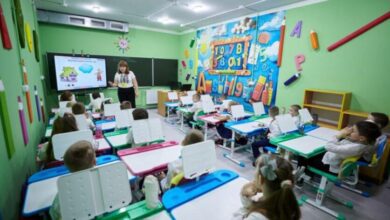
In Kharkiv, where some schools work remotely, and some are in equipped underground rooms, the format depends on the specific location. Director of the Department of Education of the Kharkiv City Council, Olga Demenko, reported that in safe underground schools, the last bell is traditionally held, albeit with a limited number. Where this is not possible, an online event is organized. Schools create videos, hold zoom meetings, arrange farewell online meetings with students. As for proms, Kharkiv plans to hold them offline, but only in verified safe locations — and in each of the nine districts of the city. Some districts will hold even two events to reach all graduates.
In the Sumy region, the situation is somewhat different. The academic year in schools of the Sumy city community will not end at the same time everywhere: in 24 institutions – on May 31, in 16 – on June 7. Completion formats are mixed. Where the distance from the border allows and there is a shelter of sufficient capacity, classic school holidays are organized. But most schools, for security reasons, choose an online or combined format. In the front-line areas of Sumy Oblast — only remotely. No mass events are planned in such communities.
Despite all the burden of war, fatigue, destruction, lost buildings and removed classrooms, the last bell rings. It sounds in the most unexpected places – in dungeons, in metro schools, in zoom rooms, in cramped basements converted into classrooms. And in each of them there is a desire to maintain a connection, faith, rhythm, at least something familiar. Teachers record appeals to children, children write poems and draw postcards, parents take pictures from the screens of the moment when their child says goodbye to school.
In each of these scenarios, the common goal remains: to give the child the feeling that his efforts for the year have been seen and completed. In most schools, teachers prepare greeting letters, videos, photo collages, and newsletters. Some organize synchronous online meetings where the class teacher thanks the students, discusses the year, and says goodbye to the graduates. Where conditions permit, certificates are handed out, symbolic photos are taken in shelters, sometimes even with decorative elements — flags, banners, ribbons.
This last bell is neither triumphal nor decorative. For the teacher, this is a sign that the study was successful despite all the obstacles. For the child, it is a confirmation that he has reached the end, has not broken, endured. For parents, it is evidence that the educational process is preserved even when everything around is collapsing. And although the sound of the bell today often sounds from a laptop or between sirens, it means: the school year is over, and despite everything, life goes on.