
Ukrainian children in Europe: what has changed in the statistics of temporary protection during the war

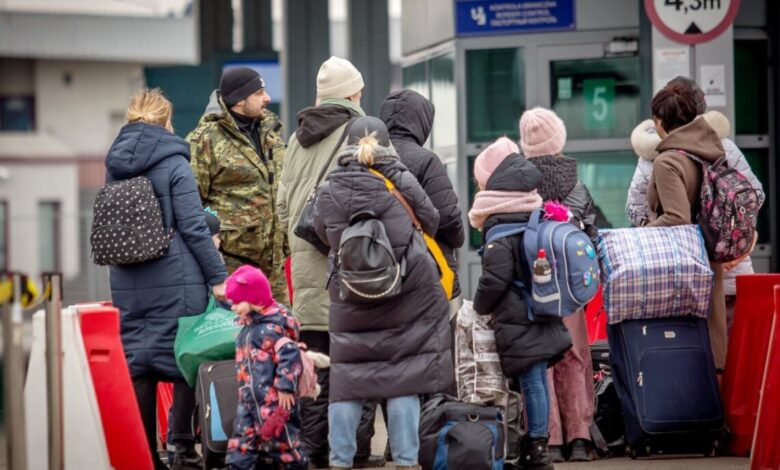
The forced departure of Ukrainian children to Europe has become one of the most visible demographic consequences of the full-scale war, as behind the dry statistics are families who have been living for several years between issues of security, education, adaptation and possible return home. Ukrainian children remain one of the largest groups among Ukrainian citizens who have received temporary protection in Europe after the start of the full-scale war, but new statistics show that the period of constant growth has already ended.
What the new statistics show
According to calculations based on statistics of Eurostat, which includes the countries of the European Union and several states outside the bloc, the number of Ukrainian children and adolescents under the age of 18 with temporary protection now stands at 1.32 million. This figure remains very high, although it no longer shows the growth typical of the first stages of mass departure from Ukraine.
This group includes almost 699 thousand boys and a little over 623 thousand girls. The difference between these categories does not change the general trend, since the main change is the gradual decrease in the total number of children under protection. For European states, this means that the burden on schools, social services, housing programs and the health system is no longer growing at the same pace as before, but remains significant.
When the number of children was the largest
The highest figure was recorded in January 2024, when 1.427 million Ukrainian children and adolescents had temporary protection status in Europe. Among them were about 736 thousand boys and 691 thousand girls, which shows the scale of child forced migration after the first two years of the great war.
After that, the number of minor Ukrainians in the statistics began to gradually decrease. This reduction can be explained by several processes that affect the accounting at the same time: some families return to Ukraine, some move to other countries where the status may be calculated differently, some children lose temporary protection, and adolescents who turn 18 move to the adult age category.
How the total number of Ukrainians with protection has changed
The total number of Ukrainians with temporary protection in Europe is 4.42 million people. After the beginning of 2024, this figure has stabilized at a close level, and fluctuations remain within approximately 100-300 thousand people.
Against the background of a stable total number, the share of children and adolescents remains very large. They make up 29.9% of all Ukrainians with temporary protection, that is, almost every third citizen of Ukraine in this category is a minor. This proportion explains why the issue of school integration, language adaptation, access to medicine and support for families with children still remains important for countries that have accepted Ukrainians.
Why the statistics are no longer growing
The decrease in the number of children in the statistics does not mean a sharp change in the situation, because it is a gradual movement after the peak period. The first years of the full-scale war gave the largest wave of departure of families with children, while later some people adapted in the countries of residence, some returned home, and some changed their country of residence.
The age of the children also affects the indicators. Teenagers who left Ukraine in 2022 are gradually reaching adulthood, so they no longer fall into the category of under 18. Because of this, the number of children in the statistics may decrease even when the total number of Ukrainians with temporary protection remains almost stable.
What this means for families and host countries
For Ukrainian families in Europe, these data show that child forced migration has moved from an acute phase of mass arrivals to a longer phase of living abroad. Many children are already studying in local schools, undergoing language adaptation, getting used to other educational programs, and at the same time maintaining contact with Ukraine through family, online learning, or Ukrainian communities.
For European countries, stabilizing the number of children does not eliminate the need for support. Even without further growth, 1.32 million Ukrainian minors mean a heavy burden on education systems, social services, and local budgets. Not only the number of children is of the greatest importance, but also the duration of their stay, because temporary protection for many families has effectively turned into a multi-year period of living outside Ukraine.
For Ukraine, these statistics show the scale of the loss of the child population due to the war, even if it is a temporary stay abroad. More than 1.3 million children and adolescents in Europe mean hundreds of thousands of families whose future depends on safety, housing, parents’ work, children’s education and the possibility of return.
After the peak in 2024, the number of children under protection has gradually decreased, but the scale itself remains extremely large. The statistics for March 2026 do not record the end of the problem, but the transition to a stage where the fate of Ukrainian children in Europe will depend on the duration of the war, the conditions of return, integration abroad and the decisions of the families themselves.


