The mobilization crisis in Ukraine: what undermines people’s willingness to join the army

The long war has presented Ukraine with a complex and increasingly visible problem that concerns the army, society and the state system of governance at the same time, as the need for replenishment of the army grows along with fatigue of people, delays in rotations, cases of voluntary abandonment of units and distrust in the extent to which the rules apply equally to everyone. Under such circumstances, mobilization has ceased to be perceived only as a necessary state mechanism of wartime, since for a large part of society it is increasingly associated with an indefinite term of service, the risk of exhaustion and the belief that the burden of war is distributed unevenly.
Journalists The Independent have written about their vision of one of the most painful topics of wartime — the increasingly acute perception of service in the Armed Forces of Ukraine as a path without a defined term, without a clear replacement and often without a sense of fair rules for all. At the heart of the material is a set of concrete facts: millions of people wanted for evasion, hundreds of thousands of proceedings for unauthorized abandonment of units, testimonies of servicemen about exhaustion and the stories of those who refused to join the army after the first months of a full-scale invasion.
The publication notes that the problem is becoming more acute at a time when Ukraine is entering a new stage of the war, where quick solutions have long disappeared, and the front increasingly relies on the endurance of people who serve without long breaks and without the certainty that someone will replace them. Against this background, the public attitude towards mobilization is also changing: if in 2022 for many it was a response to a direct threat, now it is increasingly perceived as an entry into a system from which a person may not be able to leave for years.
In the material of The Independent, the mobilization crisis is presented as a combination of several processes that reinforce each other. On the one hand, the country needs constant replenishment of the army, because the fighting has become protracted and exhausting. On the other hand, more and more men are avoiding conscription, and among those who are already serving, the number of cases of voluntary abandonment of units is increasing.
Journalists also link this situation to the external background, which is becoming increasingly difficult for Ukraine. The text mentions Volodymyr Zelensky’s warning that the protracted conflict in the Middle East is complicating Ukraine’s efforts in the war against Russia. It is separately noted that the Trump administration has shifted its attention from Ukraine to the conflict with Iran in recent weeks, while peace talks have reached a dead end and Vladimir Putin has launched a spring offensive. Therefore, the issue of mobilization ceases to be an internal topic of personnel support for the army. It becomes a key element of the state’s overall stability, since the lack of people at the front directly affects the ability to hold positions, conduct rotations and maintain the combat readiness of units.
One of the main arguments in the material was the previously voiced assessments of the Minister of Defense of Ukraine Mykhailo Fedorov. According to him, there are 2 million “evaders” in Ukraine, and hundreds of thousands more are in the NWCH.
In addition, the topic of unauthorized abandonment of units is supplemented by data from the prosecutor’s office. According to the publication, since 2022, about 290,000 cases have been opened against soldiers for deserting their units. This figure no longer shows individual violations of discipline, but a deep personnel crisis that has been accumulating for a long time and has now become public.
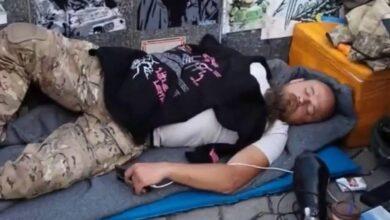
A separate touch to this picture is given by reports of escapes through the Carpathians to neighboring countries. The publication mentions that some servicemen recorded and published videos of their escape from conscription or service. Such stories have not only a domestic dimension, because they form a sense of rupture between duty, fear, exhaustion, and distrust of the rules in society.
One of the key issues of the material is the change in the psychological perception of service. At the beginning of a full-scale war, for many Ukrainians, joining the army was a reaction to the danger that was at the door. In the current conditions, according to the observations of the publication’s interlocutors, motivation is undermined by a completely different feeling: people do not see a clear mechanism for return, replacement, or at least an expected term of service.
The Chairman of the Verkhovna Rada of Ukraine’s Committee on Foreign Affairs, Oleksandr Merezhko, explains this change very clearly in the material: “People perceive service in the army as a one-way ticket, because they do not see rotations”. He elaborates on this point even more clearly:
“If they knew they would fight for one year, and that was it, and they could rest, they would be more inclined to join the army. It is a psychological issue, because if you look at the number of men, we have enough human resources to continue the fight for 10 years and even more. The key problem is how to manage these resources and how to create psychological incentives, because if you see an army of draft evaders, you yourself will not want to fight.”
This assessment captures the main motive of the entire material: society sees not only the risk of death or injury, but also the lack of a clear horizon of service. It is because of this that mobilization is increasingly associated with exhaustion without a deadline.
The Independent also cites the personal story of 37-year-old Denis, who evades the draft. His words are important because they show a change in the mood of a man who had a completely different position at the beginning of the war.
“At the beginning of the war, I went to the draft board myself. Then everyone went and said: “Take us!” I was the same way. They told me: “We don’t need you yet, go home, we’ll call you.”
Later I saw everything that was happening — injustice, a lot of people who are redeemed, untouchable, and others are being forced into the barracks, despite their illnesses. Now I have a sick father, and I have to take care of him. If I lose an arm or a leg, I won’t be able to help anyone anymore. But if the Russians are again near Kyiv, and everyone is serving, then I will go too,” Denis adds.
The Independent shows another dimension of the crisis through conversations with servicemen who have been at the front for a long time. According to the publication, the intelligence officers talk about exhaustion, but understand that they are in no hurry to change them because of their benefit to the units.
Near Zaporizhzhia, a drone pilot said that before switching to drone control, he was on the front line as an infantryman for three years without a break. Such a detail in the material is important: the army relies on people who have been fighting for much longer than the period that society is psychologically ready to accept as feasible.
Because of such a long service, the problem of mobilization is no longer limited to the question of how many people can be called up. Another issue comes to the fore: is the system capable of providing rotation, recovery, and a sense of predictability for those who are already fighting.
A separate block in The material concerns abuses in the units. In Sloviansk, an infantry battalion major said that his commander took bribes to give people time off, overpriced the price for the opportunity to avoid going to the front, and sold rations and other resources allocated to soldiers who deserted.
Such episodes explain why the topic of mobilization is increasingly perceived through the prism of distrust. When society sees that someone can buy off, get favors or avoid the front for money, the willingness to take the risk of service weakens sharply. In such an atmosphere, even the duty that was unquestionable for many at the beginning of the war begins to be viewed through the questions of justice and equality of rules.
The Independent emphasizes that an important reason for this crisis was the change in the very nature of the fighting. The beginning of a full-scale invasion was associated with desperate defense, high mobilization of society and a sense of emergency. Over time, the war turned into a grueling conflict, where frontline routine consists of long workloads, limited rotations, and little certainty that a person sent to a position will return to civilian life in a reasonable time frame.
Thus, the mobilization crisis appears in the material as a consequence of a protracted war, personnel exhaustion, social fatigue, corruption stories, and a gap between the needs of the front and the expectations of those whom the state seeks to attract to the army. That is why service is increasingly perceived as a “one-way ticket” — an expression that in the publication became the most accurate definition of the general mood around conscription.