
The Polymarket platform accepts bets: will Trump be able to end the war in Ukraine in 90 days after his inauguration

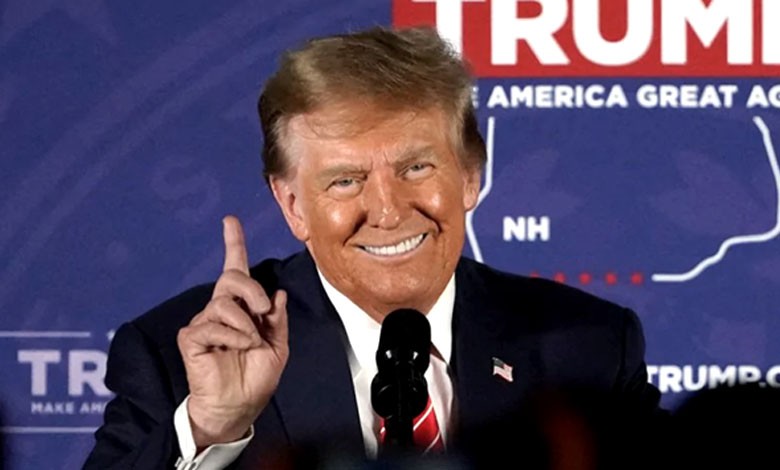
For whom war is sorrow, and for whom it is a mother. War alone brings pain and loss. It gives others a chance to make money on other people’s blood and ruins, to turn human grief into numbers in bank accounts. In a world where war has become part of the global market, even the hope of ending it can become the subject of bets and bargains, just as the stock market soared on speculative expectations related to the election of Trump in November 2024.
So, the election of Donald Trump as the President of the United States has become a new point for speculation. Among others, bets are accepted by the platform Polymarket: Will he be able to end the war in Ukraine within 90 days of his inauguration? After the 2024 elections, the chances of this were estimated at 50% – parity of hope and doubt. But already in January 2025 this indicator fell down up to 29%.
What does collective intelligence demonstrate in such betting dynamics? Loss of faith in the political will of the newly elected president? Perhaps the forecast markets have realized that the end of the war is not only diplomacy, but also an economic and military tool? For some, every day of war is destruction and loss. And for some – a strategic game where “peace” or “war” is only a bet, a subject of agreements and a price that they are willing to pay or, on the contrary, avoid.
Do the bids on the Polymarket platform reflect real public expectations or are they just speculation
Polymarket is a platform where people can bet on the results of various events using blockchain technology. People buy or sell tokens that represent the probability of a certain outcome, and the prices of these tokens change based on supply and demand.
Users choose the outcome of the event and buy the corresponding tokens. If the result is correct, they win $1 per token. If not, they lose their funds. The results of events are confirmed by oracles, and bets are executed by smart contracts, which prevents fraud.
However, regarding Polymarket, the question remains – do the rates on the platform reflect the real expectations of society, or is it just speculation? Token prices fairly accurately show the probability of events thanks to the collective opinion of market participants. Analysts often use this data because collective intelligence can be more effective than a single person’s predictions.
However, prediction markets can be subject to speculation. Sometimes participants make decisions based on emotions or personal preferences rather than rational analysis. It is worth remembering that the big players can manipulate the market by artificially changing prices to influence the expectations of others. This is especially evident in events with low transparency or limited access to objective information.
So, Polymarket is an interesting tool for studying public expectations and forecasts, but its results are a synthesis of real estimates and elements of speculation. The more liquidity and information in the market, the more accurately it reflects the probabilities of events. At the same time, emotions and speculations can distort this reflection.
Trump and the war in Ukraine: between promises of a quick peace and geopolitical reality
During the election campaign, Trump repeatedly stated that he was able to end the war in Ukraine in 24 hours. However, after winning the elections, his rhetoric changed, and he admitted that achieving peace quickly and easily was not possible. On the eve of the inauguration of the 47th president of the United States, it is worth analyzing how his statements about ending the war have evolved.
Trump likes to emphasize that under his presidency, Russia would not have dared to invade Ukraine at all. His arguments are based on the image of a “strong leader” capable of using personal connections with Putin and economic pressure to force the parties to the conflict to sit down at the negotiating table. However, after winning the elections, his loud promises became more cautious: he now talks about long negotiations and the need for compromises.
The shift in emphasis in Trump’s rhetoric also applies to his vision of the US role in the war. He hints at reducing military aid to Ukraine, stressing that America should not waste resources on protracted conflicts. This approach causes concern in Kyiv and among Ukraine’s allies, who count on the support of the West in the face of Russian aggression.
Calls for a reduction in foreign military presence and an end to “endless wars” appeal to a large part of the American electorate. Trump’s isolationist rhetoric resonates with voters who believe the US should focus on solving domestic problems. At the same time, this approach splits the Republican Party: Trump is supported by a part of the conservative wing, while “hawks” criticize him, warning that the United States will lose its traditional global influence.
Potential diplomatic and economic mechanisms for ending the war
As a former president, Trump can use his ties to Putin to become the main mediator in the conflict between Kiev and Moscow, to force Ukraine to seek a compromise, the 47th US president can cut Kiev’s military aid. But experts warn that this will weaken Ukraine’s defense capabilities and make it vulnerable to Russian aggression.
In addition, Trump may propose a new format for negotiations that will exclude the Minsk agreements and the Normandy format, involving the United States as a key player. But this may cause doubts among international partners, because changes in the sanctions policy or pressure on NATO and EU allies may lead to a split within the blocs.
Its criticism of the “insufficient” contribution of NATO countries in military spending could increase tensions among allies. If the US withdraws from its leadership in aid to Ukraine, European states will be forced to take on more responsibility, which will challenge their already strained budgets. Poland and the Baltic states, which risk being left without the active support of major allies, may become particularly vulnerable.
Trump’s reduction of support to Ukraine may be a signal for Russia to ease international pressure. It is more than likely that this will not only encourage Moscow to continue its aggression, but will also set a precedent for other authoritarian regimes, which will see this as an opportunity to revise the borders with impunity.
According to leading experts, a “quick peace” under the conditions of territorial concessions by Ukraine, in particular, recognition of the annexation of Crimea or the occupation of Donbas, could become a dangerous precedent. Such a scenario will not only weaken Kyiv’s position, but also, by legitimizing aggression, undermine confidence in the idea of the supremacy of international law. Reducing the role of the “global policeman” in war may also open the door for global players like China to use the vacuum to increase its influence. This will become an additional challenge for the West, which is trying to maintain the balance of power in the world.
It is obvious to many: if Trump implements the policy of isolationism and “quick reconciliation” at the expense of Ukraine, it will call into question the reliability of the USA as an international partner. The breakdown of transatlantic unity and the weakening of American leadership will be a blow to stability in Europe and the world, as well as a risk to the very concept of collective security. Trump’s actions, while appealing to certain voters in the US, pose a risk to the international order, weakening democracies and creating new opportunities for autocracies.
According to most experts, a quick end to the war in Ukraine is a utopia. The Russian-Ukrainian conflict is deeply rooted in geopolitics, history, and ideology, and even the most active diplomatic efforts cannot instantly reconcile the interests of Ukraine, Russia, and world players. And a simplified solution to a complex problem can only deepen it, leaving Ukraine trapped in compromises that do not guarantee either security or justice.
…The United States is faced with a choice that could change the course of history: continue to support Ukraine in its struggle for freedom or give in to internal pressure and focus on its own problems. The political arena is heated, the economy is draining, and military resources are in danger of being exhausted. A reduction in aid will be a blow not only to Ukraine, which risks losing its main shield, but also to the entire democratic world. It will signal the triumph of autocracies and a betrayal of the principles that America has promised to defend for centuries. Now the question before Washington is whether it is ready to stand up to the darkness when it is most difficult and prove that democracies can win.
Tetyana Viktorova


