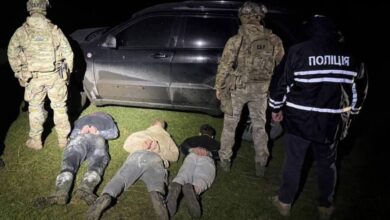
The second wave of forced evacuation of children from frontline communities has started in the Dnipropetrovsk region

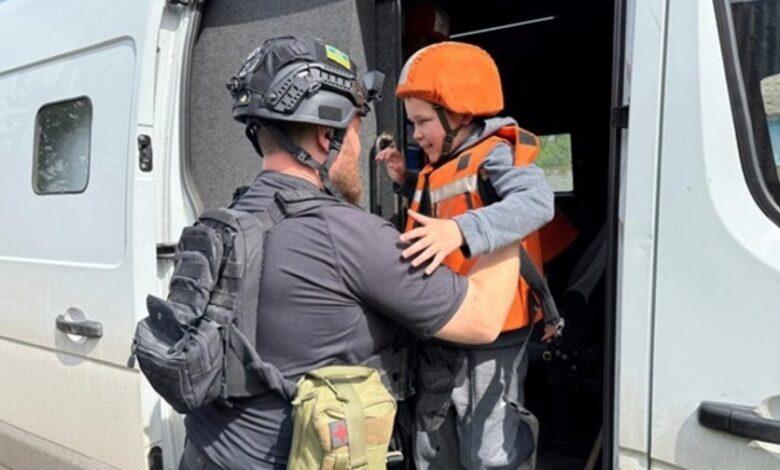
The full-scale war in Ukraine has been going on for the fourth year, and during this entire period, not only its scale, but also serious internal problems have become evident, in particular, the inability of some citizens to respond adequately to threats that endanger the lives of their own children. On June 1, the second wave of forced evacuation of children together with their parents from front-line settlements began in Dnipropetrovsk Oblast. Despite daily shelling, dozens of civilian casualties, regular sirens and official warnings, many parents continue to refuse to evacuate. People stay at home, often motivating it by the fact that “no one will go anywhere”, “it’s all our own here” or “we’ll survive somehow”. And if adults themselves choose risk, children do not. That is why the state begins to act instead of them.
The second wave of forced evacuation of children in Dnipropetrovsk region
On June 1, the second wave of forced evacuation of children and their parents from front-line settlements began in Dnipropetrovsk Oblast. The decision was made due to systematic attacks by Russian air defense systems, drones, and artillery, which have intensified in the central and southeastern regions of the region in recent weeks. About this reported Serhiy Lysak, head of OVA.
According to official information, we are talking about residents from five front-line settlements of the Mezhiv community, seven from Velikomykhailivska and two from Malomykhailivska. Regular shelling, deaths and injuries of civilians, damage to homes and critical infrastructure were recorded in these villages. Now these territories have already been identified as high-risk zones, where the presence of children is unacceptable from a humanitarian and legal point of view.
Why parents do not want to leave and how it threatens children
In most cases, parents’ refusal to evacuate is based on several typical motivations:
– fear of leaving the farm: people are afraid of looting, crop loss, abandoned animals;
– disbelief in danger: despite sirens, explosions and real losses, some families do not perceive the situation as critical;
– mistrust of the state: fear that the conditions will be worse in the places of evacuation, that there will be no help or that the children may be taken away;
– war fatigue: some parents are emotionally burned out and are no longer able to plan, make decisions or even assess reality.
The result of this attitude is that children live for weeks and sometimes months under explosions, without stable sleep, without school, without walks, in constant fear. Many of them already have signs of post-traumatic stress disorder, behavioral disorders, reduced ability to learn, problems with adaptation to any changes.
Forced evacuation is not a punishment, but a protection
The term “forced evacuation” does not mean the physical removal of a child by force. It is an obligation for parents – if they refuse to voluntarily evacuate with the child from the danger zone, the authorities can apply administrative or social mechanisms to remove the child, sometimes even through deprivation of guardianship rights, if the situation is critical.
Head of the Dnipropetrovsk Regional Military Administration Serhiy Lysak noted:
“I have already signed the relevant order. Children must leave together with their parents or legal representatives. Social services visit every house where such families live. Because there is no place for little ones under cabs and drones.”
According to the head of the region, all evacuees will receive guaranteed housing in quieter areas of the region or will be able to choose another region of Ukraine for temporary residence. The procedure has already been worked out: logistics are provided by rescuers, police, doctors, local authorities, and humanitarian funds. The evacuation will last up to two months to cover all settlements identified as potentially dangerous for children.
After signing the order, social services receive a list of addresses where families with children live. After the first visit, parents are given information about the obligation to leave, evacuation routes, living conditions in new places are explained, and humanitarian support is provided (clothing, food, basic necessities). If the family agrees, they are helped to pack up and are transported in an organized manner to a designated safe location within 24-72 hours.
In case of refusal without an objective reason, guardianship authorities, juvenile prevention and the police are involved in the case. In some cases, the authorities apply to the court to restrict parental rights, if there is evidence of systemic neglect of the child’s safety. Sometimes children are evacuated with temporary guardians, and parents have the right to join them later.
In cases where the parents are unable to realize or recognize the threat, the state must assume the function of the child’s protector. This is not a restriction of rights, but a responsibility for life, which is enshrined not only in Ukrainian legislation, but also in international humanitarian conventions.
War creates situations where no house, garden, basement or household can be more valuable than a child’s life. And it is this limit that separates a civilized model of state policy from indifference. In a situation where the choice is between the refusal of an adult and the potential death of a child, it is obvious – the child must be evacuated.