Children of war and easy money: law enforcement officers in the Carpathian region exposed a group of teenage drug dealers

Ukrainian teenagers are growing up in a time that divides life trajectories too early and too harshly: some schoolchildren raise funds for the military, help volunteers, sew, pack, knit, learn to be responsible and quickly grow up under the pressure of a common misfortune. At the same time, stories of a completely different nature appear alongside this, where young age is combined with criminal cynicism, cold calculation and the desire to get a big salary in a short way. Therefore, the news from Ivano-Frankivsk region about drug production organized by teenagers with large volumes, equipment, packaging and sales caused a public resonance.
What law enforcement officials reported
Prosecutor General Ruslan Kravchenko reported on the liquidation of a large-scale drug production operation, which, according to the investigation, involved four local residents: two 18-year-old boys, one minor and their 37-year-old accomplice.
Despite their young age, the suspects, according to law enforcement officers, acted systematically: they independently manufactured psychotropic substances, packaged them and established a sales channel. They used postal items to send the goods, and investigators documented at least thirty such episodes, which indicates not a random attempt at quick part-time work, but a scheme with a clear organization, distribution of roles and constant movement of products.
What is most striking in this story is the level of involvement of teenagers in the process, which law enforcement officers describe as a full cycle — from production to sale. For a society accustomed to speaking of youth in the language of inexperience, such a picture sounds especially sharp, because it shows teenagers no longer on the periphery of crime, but in its active center.
How the scheme worked
According to the investigation, the group members were not limited to individual episodes or small-scale storage of prohibited substances. Investigators reported that the teenagers set up the production of psychotropic drugs, were engaged in packaging and selling, using logistics that allowed distributing the goods beyond the borders of one settlement. At the same time, postal delivery in such cases means not only convenience for sales, but also a certain discipline, caution and understanding of how the illegal market works, where every step requires agreements, conspiracy and control over the movement of money.
For adolescents, this scheme looks especially alarming, because it already reflects an adult criminal approach: produce, package, send, make a profit and repeat the cycle. The random impulse here gives way to the mechanics of illegal business, in which age does not eliminate the public danger, but only adds an even more bitter content to the case.
Law enforcement officials reported that three members of the group are charged with illegal production and sale of drugs in particularly large quantities. The pre-trial investigation continues under the procedural guidance of the Ivano-Frankivsk Regional Prosecutor’s Office. It is important to maintain accuracy for this story: at this stage, the investigation establishes all the circumstances, and the court will later give a legal assessment of each episode.
What was seized during the special operation
During the special operation, which included twenty-four searches, law enforcement officers seized more than 165 kg of amphetamine, cannabis, 99 “ecstasy” tablets, as well as equipment, “black accounting”, bank cards, telephones and cash in various currencies for a total amount of about 1.5 million UAH.
Such a list is important not only as an evidentiary base in criminal proceedings, because it gives an idea of the scale of this story: the investigation describes not a home-made experiment of several young men, carried away by a dangerous game, but a production that already had industrial features.
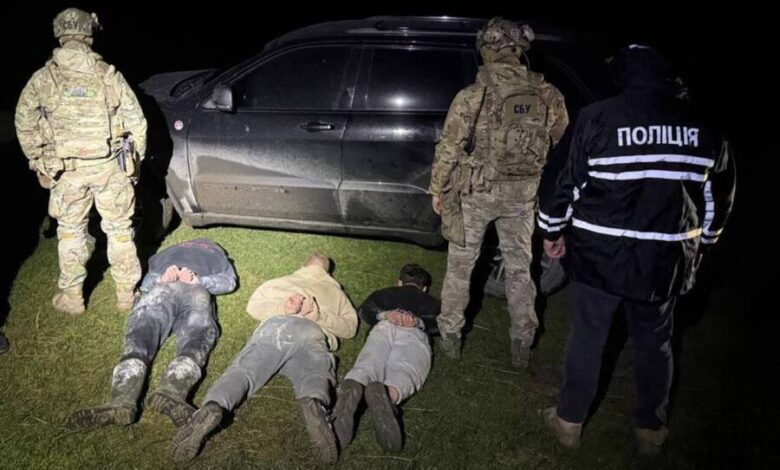
The moment of detention is especially revealing: according to the prosecutor’s office and the police, the suspects were caught during the production of another batch of amphetamine. This detail encapsulates the whole point of the matter — the process was already working, the products were moving, the turnover was going on, and adolescence did not prevent the participants from acting with the cold regularity usually associated with adult criminal groups.
For millions of children and adolescents, war became a daily environment for the formation of character, habits, moral decisions, and an idea of the value of life. Against this background, the fact that in one society teenagers grow up organizing fairs for the benefit of the army, helping displaced people, joining volunteer initiatives, and learning empathy, while others master the language of quick profit, risk, and criminal calculation, looks particularly contrasting.