The US allocates $25 million for the return of deported Ukrainian children: what will the funds be used for?

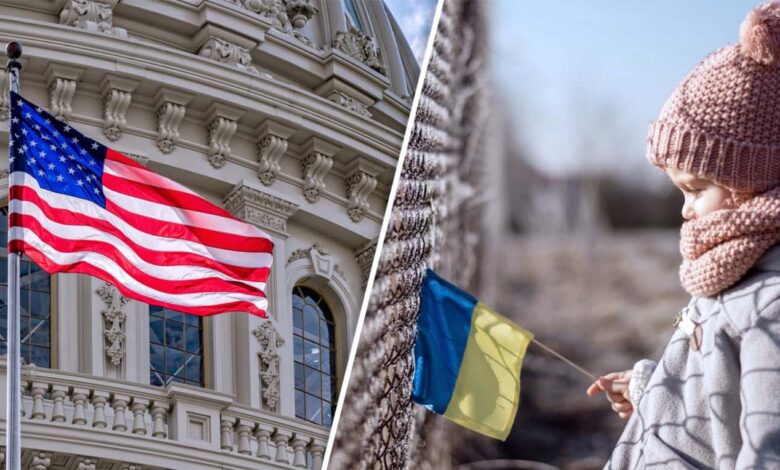
The return of Ukrainian children who were deported, forcibly relocated, or kept outside their families and familiar environment by the Russian Federation remains one of the most pressing humanitarian problems of the war. Its solution requires precise coordination between state structures, international partners, and organizations involved in the search and support of victims. In this process, determining the whereabouts of children, preparing mechanisms for their return, and subsequent assistance after the experience are crucial, without which the restoration of normal life often proves too difficult. The United States has announced new assistance that will be directed to the search, return, and rehabilitation of Ukrainian children deported or kept outside their families and communities.
What US assistance includes
The United States will allocate $25 million to the search, return, and rehabilitation of Ukrainian children who were deported or kept outside their families and communities. As the press service of the US Department of State reports, the funding is intended to support the identification of victims, their return to Ukraine and further rehabilitation.
The program announced by the American side is built on two directions, each of which is associated with a separate stage of the return of children. The first concerns establishing the whereabouts of those who were forcibly removed or relocated, as well as maintaining records of such cases, without which it is impossible to confirm the fact of illegal displacement or prepare further diplomatic and legal steps.
The second direction includes support for the Ukrainian government and trusted local partners who will work with children after their return. The State Department statement stressed that the funds should help ensure proper care, recovery, and further integration, meaning that the process goes beyond simply bringing a child to Ukrainian-controlled territory.
The US State Department said dozens of US-funded programs continue to provide critical assistance to civilians, including children who are among the most vulnerable victims of the war. The new $25 million package is part of a broader policy of support for Ukraine that includes humanitarian initiatives related to child protection.
The US also stressed that the State Department continues to support the US administration’s efforts to achieve lasting peace in Ukraine, and that the new assistance programs are being considered as a tool to facilitate the return of children who have been forcibly displaced to Russian-controlled territory.
Why tracing children is a key step
The return of deported or forcibly displaced children begins with establishing their whereabouts, and this stage is often the most difficult, as children may be in different regions, in changed living conditions, under different administrative supervision, or without direct contact with relatives. Therefore, funding for case identification and tracking is not ancillary, but fundamental, because without verified data, any return applications remain political intentions without a real implementation mechanism.
The American side’s statement emphasizes that support will be provided to reliable partners who are engaged in the identification and registration of such children. For such programs, the accuracy of data, documentation of the circumstances of displacement, comparison of information from different sources, and subsequent transfer of the developed materials to structures that can use them in negotiations, international advocacy, and organization of return are important.
What is included in the rehabilitation of children after return
After the child returns, the issue of security does not end, since prolonged stay outside the family, forced displacement, the breakdown of social ties and psychological pressure leave consequences that cannot be overcome by a single administrative decision. Therefore, the second part of the program involves work on recovery, and it concerns not only household arrangements, but also assistance in returning to normal life, as much as possible after the experience.
In such cases, support usually includes care, psychological support, social adaptation, restoration of documents, return to school and assistance with integration into the family and public environment. For children who have been isolated from their usual environment for a long time, this stage is no less important than physical return, since without it the risk of re-traumatization or disorientation remains high.
The issue of the return of Ukrainian children has long been considered at the international level, since it is extremely difficult to achieve a systemic result without the involvement of governments, international organizations and human rights structures. It was previously reported that the European Union also plans to increase pressure on Russia to establish the whereabouts of abducted children and promote solutions that pave the way for their return.
Such attention from the US and the EU shows that the problem is no longer perceived as a collection of individual humanitarian cases for which a local response is sufficient. International partners face a large-scale task that requires both political decisions, a verified evidence base, coordination with the Ukrainian authorities and resources for long-term support after the children return home.
For Ukraine, such assistance means an additional resource in an area where each decision requires careful verification, time and coordination between state structures and partners on the ground. For affected children, it can become the basis for more systematic support, which gives a chance not only to return physically, but also to gradually restore contact with family, community and normal life.