The Verkhovna Rada in crisis: comments from people’s deputies and the president about what is happening in parliament now

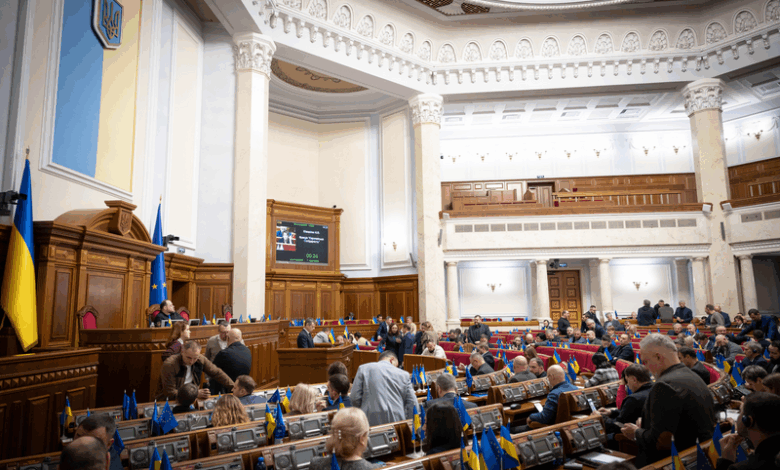
The Verkhovna Rada of Ukraine has been constantly criticized by society in recent years for its inefficiency, inability to make key decisions on time, and low level of public trust. Recent events, comments by MPs and even the president indicate a deeper crisis that threatens the parliament’s ability to perform its functions and pass laws necessary for the state and international obligations.
Fedyr Venislavsky on the impact of anti-corruption suspicions on the motivation of deputies
Member of the Verkhovna Rada of Ukraine Committee on National Security, Defense and Intelligence Fedyr Venislavsky explained that a certain part of MPs is losing motivation due to the announcement of suspicions over voting in parliament. He noted:
“Some of the deputies are demotivated because the National Anti-Corruption Bureau or other law enforcement agencies report some suspicions over their voting, this really is the case.”
At the same time, Venislavsky emphasized that there is no reason to talk about a systemic crisis that would make it impossible to pass laws: there are no “one hundred percent grounds” for such a statement yet. He also emphasized the importance of adhering to the law and norms of international law when publishing information about deputies:
“Until there is such a conviction, only the conduct of searches and other procedural actions, their publication contradicts both the norms of international law and the Criminal Procedure Code of Ukraine, and first of all creates the negative image that we talked about. Therefore, everyone here should be sufficiently balanced in their actions and assessments, and employees and heads of law enforcement agencies should also understand what such, say, accusations against deputies can lead to.
Andriy Motovylovets on the loss of the faction’s core, fatigue, confusion and fear of deputies
The first deputy head of the Servant of the People faction, Andriy Motovylovets, also spoke about how anti-corruption suspicions affect the faction’s ability to form the necessary majority in parliament. According to him, about 40 people’s deputies can apply for mandates, which significantly complicates the collection of votes for bills necessary for budget formation and fulfillment of international obligations.
“The key problem is that the Servant of the People faction has lost its core. What is a core? When I collect votes in parliament, I clearly understand which deputies are ready to support this or that law… Previously, I could count on 180 deputies from the Servant of the People. Currently, the core of the faction consists of 111 deputies,” Motovylovets explained.
He also noted that the aggravation of the internal situation in the faction was the result of the scandal with the rollback of the law on the elimination of the independence of the NABU and the SAPO, when the deputies who supported this law were criticized and faced the consequences of their decisions.
“The situation is such that we cannot vote for our commitments. The Servant of the People faction is my family, and the current situation is this: fatigue, multiplied by confusion and fear, has led to the fact that the arguments about collecting votes no longer work. And I have no plan for getting out of the situation today…”, – the MP emphasized.
The President of Ukraine on the crisis in the Verkhovna Rada
On March 14, while talking to journalists, Volodymyr Zelensky commented on the situation in the Verkhovna Rada, which he considers to be a crisis due to the demotivation of some deputies and problems with collecting votes for key bills. According to him, from the beginning of the full-scale invasion, there were deputies who considered the possibility of resigning, but now they must continue to fulfill their duties.
“People’s deputies will either have to serve in parliament in accordance with Ukrainian legislation, or I am ready to negotiate with representatives of parliament a law on changes to mobilization so that deputies can go to the front. If you do not serve the state in parliament, then serve the state at the front. This is my approach,” Zelensky noted.
The president emphasized that an alternative to solving the problem with voting in the Rada could be changes to the legislation and holding elections. However, now, in wartime, their implementation is impossible, which complicates the political situation.
Zelensky also drew attention to the role of opposition factions, which often do not support important bills. He recalled that we are talking about bills necessary for financial support from the IMF, the unblocking of 90 billion euros from the EU, and the implementation of measures for Ukraine’s European integration.
“Even about laws that are not sharp, you always have to negotiate with the opposition forces, convince them for a long time in order to demonstrate the unity that is so often talked about. But besides words, we need to demonstrate it in actions,” the president believes.
Zelensky announced his meeting with the head of the Servant of the People faction, David Arakhamia, during which they will discuss ways to overcome the crisis in parliament.
“We need to gather our strength and make a decision for ourselves. We live until the end of the war, cooperate, vote, implement relevant laws, changes, personnel decisions, etc., or change the law and allow the mobilization of deputies who are not ready to continue working in parliament,” the president emphasized.
The president’s statement on the mobilization of deputies was misinterpreted: Arahamia
At the same time, David Arahamia explained that the president’s statement on the mobilization of deputies was misinterpreted in the media. According to him, there will be no forced mobilization:
“Many deputies understand this. And there were certain requests from them about their desire to join the Armed Forces of Ukraine, but the legislation does not allow this. There are individual colleagues who are attached to certain units, do some work there, and are present in the Council during plenary days. But legally they are not military personnel, but deputies of parliament. Obviously, this is what was meant. That the President is ready to discuss with the parliament legislative changes that would allow deputies to be military personnel.
Arakhamia emphasized that deputies have a choice: either to work in parliament, performing legislative functions and contributing to the defense of the country, or to participate in military units, where they legally become military personnel.
Therefore, the position of the Servant of the People faction clarifies the president’s words and clarifies that this is not about coercion, but about legislative changes that could legalize the combination of parliamentary and military activities.