
“There are no minor environmental problems”: how the media can help preserve the environment

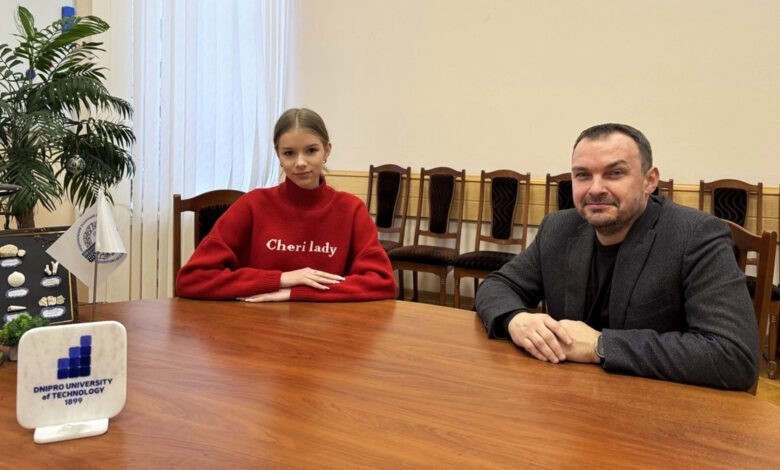
The war brought Ukraine not only humanitarian and economic losses, but also caused serious damage to the environment. Ecosystems are destroyed during shelling, air, water and soil are polluted, and environmental problems that have been accumulating for years become even more acute. Is our society ready to solve environmental problems? How can mass media contribute to the formation of environmental awareness? And why is ecology today not only about nature, but also about our common future? These and other important questions were answered by Artem Pavlychenko, professor of the Department of Ecology and Technologies of Environmental Protection of the Dnipro Polytechnic National Technical University, to the “FACT” information agency.
Artem Volodymyrovych, how did the war affect the ecological condition of our country?
This is an extremely difficult question. Why? Because there is a complex impact on most environmental objects. And here we can talk about several types of influence at once. The first is the direct impact, when during shelling fires occur, houses are destroyed, and waste disposal sites are damaged. The second type of impact is pollution that occurs during the burning of various products, oil products and other raw materials. As a result, pollutants are released that enter the environment. All this has a direct impact both on the territory where the action takes place, and on much wider areas, since the pollution is spread by air masses over long distances.
It is very difficult to assess this impact and predict its consequences for the population that is in the zone of direct contact and hostilities. One of the biggest problems is the scale of the shells and weapons used. This war exceeds all previous ones in terms of volume, so its consequences are catastrophic and pose a threat to future generations. First, unique species of living creatures that lived in certain territories are being lost. Secondly, unique ecosystems are being destroyed, which will be very difficult to restore. In addition, the environment is changing, especially in areas where active hostilities are ongoing.
If industrial enterprises or infrastructure facilities are located in such territories, there is an uncontrolled release of substances that have accumulated there. These can be, for example, clarifiers with waste water that can spread and get into sources of drinking water supply. All these are extremely serious challenges that our state is currently facing, and which require a quick response.
Given the scale of environmental damage caused by war, how important is it today to develop environmental awareness in society so that every citizen is aware of their role in preserving the environment and overcoming these challenges?
Environmental awareness is the responsibility of each of us for a safe environment for future generations. Each of us must understand that he affects the environment when, for example, he leaves garbage where it is difficult to remove and dispose of it, when he destroys plants, etc. Environmental awareness must be formed from childhood. This is a collective consciousness that guides us to a careful and responsible attitude to the conditions of our living, to the understanding that these conditions and comfort are just for us. Let’s not forget that each of us is a part of the environment. And our actions or inactions are significant for the sustainable and balanced existence of our descendants. Environmental awareness is formed over many generations and is an important component of national identity. Mass media play a significant role in its development. Therefore, it is important that journalists rely on professional and reliable information that will help society realize the importance of environmental problems, as well as the role of everyone in solving them.
What environmental topics, according to your observations, are now most actively covered in the mass media?
Mass media promptly respond to challenges that arise in real time, and this deserves support and trust. At the same time, the quality of information depends on the competence of specialists who are involved, for example, in interviews and complex information support of a crisis situation. It is extremely important that journalists know how to attract truly professional experts who are able to provide well-founded comments and explanations taking into account all possible scenarios of the development of events. Experts who are involved in covering environmental issues must have an appropriate level of knowledge and a clear understanding of the current state of the situation, including the worst-case scenarios of its development. Let’s remember, for example, that no one believed in the possibility of the destruction of the Kakhovskaya HPP, etc.
I would like to emphasize that the mass media are capable of both calming public opinion and attracting significant attention to problems. And this further emphasizes the importance of a high level of professional training of journalists. So, for example, involving an incompetent “expert” in the discussion can lead to destabilization of the situation and negatively affect the behavior of people in dangerous circumstances.
That is why journalists need to keep their finger on the pulse of current environmental problems and respond to them promptly. Informing the population about current environmental and man-made threats in the conditions of war can save someone’s life! And this once again confirms the key role of mass media in ensuring social and environmental responsibility.
Please name the top 5 topics that journalists should write about now?
It is difficult to give an unambiguous answer to this question, because we live in conditions of war and face many threats. But it is worth saying that man cannot live without clean water and air, we also depend on food, and this emphasizes our sensitivity to many factors that affect the state of the environment and resources. That is why, among the key topics that should be paid attention to, the following can be highlighted: water quality in sources of drinking water supply, especially in the context of the consequences of the destruction of the Kakhovskaya HPP; the state of the air, which worsens due to explosions and fires at industrial enterprises and oil depots; radiation background in connection with the seizure of the Zaporizhzhya NPP; as well as current risks, including mining of agricultural land and fires in nature reserves.
What environmental problems, in your opinion, are not covered by journalistic attention?
The peculiarity of the work of journalists is that they promptly respond to a problem that has arisen, but over time lose interest in it. And this can to some extent inhibit the public reaction and reduce the desire to join in solving the problem. The ecological situation is constantly changing, and the social environment does not always have time to adapt to these changes, which makes it difficult to involve all interested parties in solving problems. Local problems of individual communities, houses, territories, etc. often remain outside the attention of journalists. It is important to understand that there are no minor environmental problems. But it all depends on the format and volume of the information provided. The quality of environmental objects directly and indirectly affects each of us, which once again emphasizes the responsibility of journalists in covering environmental issues.
And what questions do you think journalists should avoid?
According to the Aarhus Convention, to which our country joined, there should be no such topics, because each of us has the right to access information about the current state of the environment and its possible impact on each of us. I would like to emphasize that a professional comment or reliable information about environmental problems can literally save lives, which emphasizes the importance of the professionalism and competence of journalists. But at the same time, low-quality information or lack of information about the problem can harm society. This imposes a special responsibility on the mass media for the reliability and quality of the submitted materials.
What fakes on environmental topics have you come across?
It is worth noting that we are all under constant stress, so the presence or absence of information can significantly affect our emotional state. Any dissemination of unverified information can have a negative impact on society. That is why every piece of news that appears in the mass media must be carefully checked and verified. For example, we have repeatedly witnessed messages about the shutdown of nuclear power plants and the need to take appropriate measures. In such situations, it is important to understand that each information leak requires time for an adequate reaction of the authorities and the provision of a competent comment and assessment.
How can Ukrainian media encourage citizens to actively participate in solving environmental problems?
Mass media play a key role in drawing public attention to current environmental issues and can become a catalyst for change in society. For example, the topic of waste sorting needs wide public coverage and accessible clarification, which will contribute to faster ecological integration of Ukraine into the European environment. Thanks to its ability to influence people’s consciousness, the media can form a culture of responsible attitude towards the environment, increase environmental awareness and motivate citizens to take actions necessary for nature conservation.
How promising is the direction of ecojournalism in general?
This direction is gaining relevance almost every day! This is the result of threats arising on the territory of our country. Therefore, professional support for environmental issues is relevant now and will be relevant in the near future. After all, we all depend on the state of the environment and try to understand the current situation, which, among other things, arises as a result of military operations.
How do you rate eco-activism in social media?
Ecoactivity in social networks provides an opportunity to quickly respond to environmental problems. Information about a certain threat, spread through social networks, allows you to quickly take measures, for example, to close windows or limit your stay in open areas. Thanks to this, social networks have become an effective tool for informing about environmental and man-made risks, which helps to reduce the danger for each of us. However, everything depends on the level of trust in this information and the adequacy of the actions we take in response.
Kateryna Shulga


