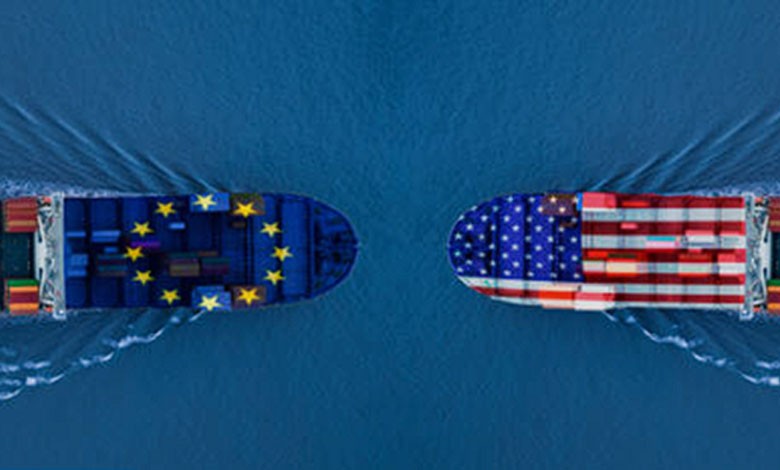
They say that history develops in a spiral, where a new round is repeated after a century. The world is on the brink of multiple trade wars, which will be fueled by the arrival of the most powerful man in the world – the US president-elect, who has called tariffs the best thing the world has ever invented.
According to some experts, what happened a century ago seems to be just a rehearsal for what is happening today. The Economist noted that Trump’s second term could become a “protectionist nightmare” for the world economy. His policy of raising tariffs and restricting international trade could significantly change global economic relations.
Today, the world is facing trade wars that are more severe than the conflicts of the 1930s. However, even more than 90 years ago, there was an era of strict protectionism. We propose to consider the characteristic features of the previous cycle of trade wars in order to predict the possible consequences of the current conflicts at a new historical stage.
Trade wars, the “currency war” of the 1930s, and the Great Depression
The centuries-old trade conflicts created a difficult economic situation, especially against the background of the Great Depression. A characteristic feature of these conflicts was the introduction of high tariffs and the policy of protectionism.
Law Smoot-Gauley In 1930, the US raised import duties on more than 20,000 goods, which made them more expensive for Americans. The law was supposed to support domestic producers and stabilize the economy during the crisis. However, he restricted the access of foreign goods to the American market and reduced the volume of imports, which negatively affected global trade.
Canada, France, Great Britain, and Germany responded to the Smoot-Gawley Act by imposing their own tariffs and restrictions on American goods. This led to the closure of national markets and a wave of protectionism. As a result, international trade declined by nearly two-thirds from 1929 to 1934, deepening the economic crisis.
Instead of the promised economic recovery, the Smoot-Gawley Act exacerbated the Great Depression by raising unemployment and reducing production. The negative consequences of this law were felt not only by the USA, but also by many other countries. This experience led to the creation of a new system of international trade after the war.
It was created in 1947 General agreement on Tariffs and Trade (GATT), which helped reduce tariffs and stimulate free trade. GATT later became World Trade Organization (WTO). It supports open markets and helps avoid trade conflicts like those caused by the Smoot-Gawley Act. The latter reminds that protectionist measures can have negative consequences for the world economy.
Trouble does not go away alone: in addition to trade restrictions, a “currency war” began: countries tried to devalue their currencies in order to make export goods cheaper and stimulate sales on foreign markets. This caused exchange rate instability and crises as countries competed to devalue their currencies.
In such conditions, countries began to actively implement the policy of economic autarky and self-sufficiency. Thus, Germany and Japan, which a few years later would launch global military aggression, developed programs for the development of domestic production in order to avoid dependence on the import of strategically important resources. Protectionism and economic autarky significantly weakened cooperation between countries that were previously reliable trading partners, which led to the breakdown of international ties and the formation of new blocs and alliances.
The shrinking of markets and the loss of foreign trade revenues worsened the already difficult economic situation. Protectionist measures deepened the crisis, increased unemployment, reduced production and lowered living standards in many countries, causing social tension and discontent. The results of these trade wars have had a devastating impact on the global economy, with lasting consequences and a lesson for generations to come.
“Imperial Preference” of the British Empire
After the First World War, many countries experienced economic problems, so trade policies changed. The United Kingdom, which had previously supported free trade, began imposing tariffs to protect its producers. This was supposed to support domestic production, create jobs and reduce dependence on imports.
Other countries of the British Empire – Canada, Australia and India – also agreed to lower tariffs on British goods, creating the so-called “Imperial preference“. This favored British goods and strengthened economic ties within the empire.
However, this led to the division of international trade. Other countries, observing this, began to introduce similar measures to protect their economies, which reduced the volume of global trade and created economic tensions. Imperial preferences also contributed to the emergence of economic blocs, which worsened the situation in the world economy.
Common agricultural policy for European farmers
The European Union supports its farmers through the Common Agricultural Policy, created in the 1960s to guarantee stable incomes, food security and rural development. Farmers receive subsidies to reduce costs, invest in new technologies and improve products, allowing them to sell goods at competitive prices.
The EU also imposes customs barriers on the import of agricultural goods from other countries – the USA, Brazil and Argentina – which makes it difficult for them to compete with European products. Of course, exporting countries criticize this policy, calling it protectionist, and turn to the World Trade Organization. In response, some of them impose their own tariffs or restrictions, creating trade conflicts and problems for international trade.
Therefore, the Common Agricultural Policy of the EU is an attempt to balance between the support of local producers and compliance with international trade agreements, which demonstrates the complexities of the global economy.
How Japanese protectionism of the 1970s forced the United States to modernize
In the 1970s Japan succeeded in steel and automobile production thanks to government support: subsidies, low taxes, and cheap credit. This gave Japanese business a competitive advantage in domestic and international markets.
However, the rapid growth of exports of Japanese goods to the United States began to worry the American government and manufacturers, as cheap Japanese goods displaced local counterparts. Because of this, American companies lost profits and the level of employment decreased.
Accordingly, the US began to impose restrictions on the import of Japanese goods, especially cars. They set import quotas to protect American manufacturers and jobs.
This led to tension between the countries, but at the same time stimulated American manufacturers to invest in modernization, introduction of new technologies and improvement of product quality. Japanese competition forced the US to improve its products.
These tensions also led to negotiations and agreements in the 1980s that partially mitigated the conflict and showed how complex global trade has become, where economic interests influence international relations.
Consequences of protectionist policy over time
All that glitters is not gold. In summary, it can be argued that historical precedents show that protectionist policies often cause economic failures, and even trade-friendly countries are forced to respond to protect their national industries. Protectionist policies that seem attractive to support the domestic economy often lead to economic problems and corresponding measures from other countries. History shows that such actions create barriers to trade, raise prices and reduce corporate profits.
So, with broad strokes, we painted a picture of the economic confrontation between the countries of the West in the last century. Next time, we will compare this picture with the modern economic context, describing the economic approaches of the “Tariff Man”, the specifics of the modern trade war between the countries of the Eurozone, Beijing and Washington.
Tetyana Viktorova