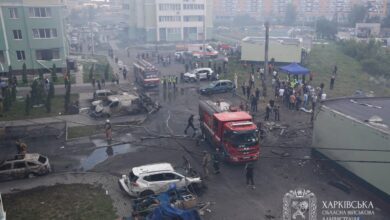
Throughout the war, the frontline Kharkiv region has been under constant shelling from the Russian Federation, and the consequences of these strikes are felt daily by residents of the frontline areas. Explosions destroy residential buildings, schools, and infrastructure, leaving people homeless. Unfortunately, among the dead and injured are children who do not have time to hide from the strikes every day. Each attack leads to new victims and damage, emphasizing the scale of the humanitarian crisis and the constant danger to the civilian population.
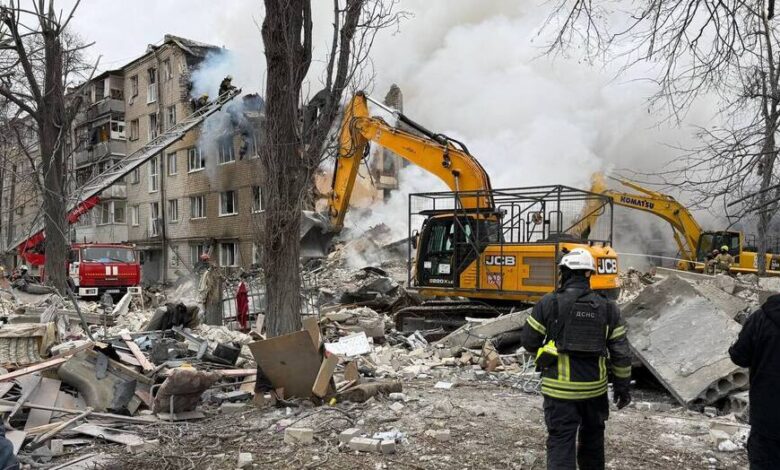
On the night of March 7, Kharkiv was subjected to another brutal attack by unmanned aerial vehicles of the Shahed type and ballistic missiles. The first drone strikes were recorded in the Kyivsky district, and later a direct ballistic hit caused the collapse of the entrance to the building from the first to the fifth floor, a fire, and the destruction of two floors of a neighboring high-rise building. At least ten people, including children, were trapped under the rubble.
In the morning, Kharkiv Mayor Igor Terekhov reported that six people had died as a result of the strikes. Among them were a second-grade student and his mother, a primary school teacher from the sixth lyceum, and an eighth-grade student from the 16th lyceum and her mother. In addition, an eleven-year-old boy was hospitalized among the victims.
These facts emphasize that children’s lives continue to be the most vulnerable during shelling, and families are forced to face unspeakable losses and destruction of their homes.
Destroyed entrances, collapsed floors and fires complicated the work of rescuers and medical services. In addition to the dead, there were injured people under the rubble, who were evacuated to hospitals. The explosions affected not only residential buildings, but also nearby infrastructure, which led to a temporary interruption of utility services and difficulty in moving around the city.
Rescue services worked throughout the night and morning, coordinating actions with doctors and city authorities. The bodies of six deceased people, including a child, were found under the rubble, and searches continued to identify all those who remained under the rubble. Coordination of work was complicated by the fact that residential buildings were damaged during the attack, and clearing the rubble required maximum safety for the rescued children and adults.
The families of the deceased and injured children are currently receiving psychological and humanitarian support from local authorities and volunteer organizations. Documenting the destruction and circumstances of the attack is essential for further organizing assistance and holding those responsible internationally accountable.
The loss of people, especially children, during shelling leaves an irreparable loss that cannot be compensated. Every life lost in one’s own home is a reminder of the cost of war and the emptiness that losses leave in the hearts of families and in the city.