Transfer of the prosthetics sector to the Ministry of Health: Antonina Kumka spoke about the risks for military personnel with amputees

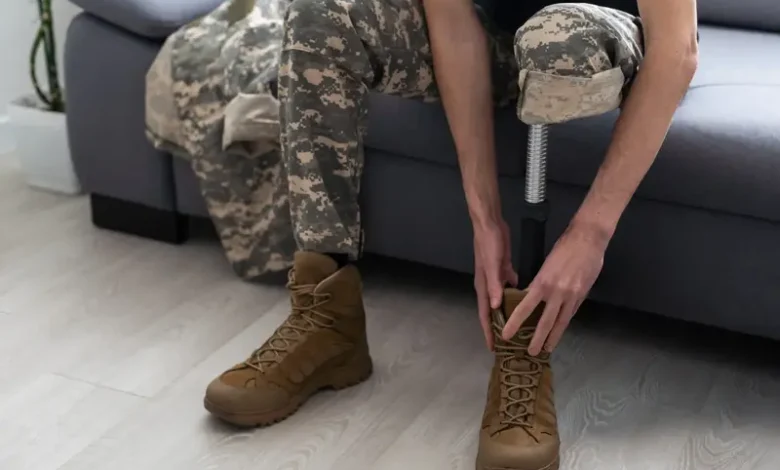
The topic of providing servicemen with amputations with high-quality prostheses has been the subject of heated discussions for a long time. The reasons for this lie not only in the complexity of the medical and technical procedure itself, but also in the need for coordinated interaction between government structures, service providers, component manufacturers and patients who have the right to free choice and quality results. Since the beginning of the full-scale war, Ukraine has faced an unprecedented demand for high-tech prosthetics, which requires not only funding, but also systematic management of the process. Against this background, the initiative to transfer powers on prosthetics from the Ministry of Social Policy to the Ministry of Health is causing concern among professionals who work directly with the injured. Among them is Antonina Kumka, general director of the “Prosthesis Hub” charitable foundation.
Antonina Kumka considers, that the transfer of the prosthesis supply system from the Ministry of Social Policy, Family and Unity of Ukraine to the Ministry of Health will create serious risks for wounded soldiers. The current model, under which prostheses are part of the state program for providing rehabilitation aids, is financed by the Fund for Social Protection of Persons with Disabilities and allows servicemen to independently choose a service provider. The system does not set restrictions on manufacturers of prosthetic components — they can be Ukrainian or foreign, the main thing is compliance with European standards. This approach provides the patient with the right to choose and allows him to receive a prosthesis within an average of two months. According to her, more than 97% of users of prostheses in 2023-2024 received them precisely through this state program.
According to Kumka, claims that chaos reigns in this system are not supported by real performance indicators. A change in the funding mechanism, especially its transfer to the Ministry of Health, will inevitably lead to delays in calculations, disruptions in the supply of prosthetic components and the possibility of market monopolization. Similar consequences have already occurred in the past and were part of the experience of more than a decade ago. According to her, the repetition of this mistake in the conditions of war will be critical for thousands of patients.
Kumka draws attention to the lack of a clear patient routing system. On March 6, 2025, the Ministry of Health issued Order No. 405, which aimed to formalize the list of institutions for the rehabilitation of amputees. This document was worked on by the Protez Hub team, and the main goal was to ensure access to rehabilitation services as close as possible to the patient’s place of residence. At the same time, this logic is often not implemented, and in some cases patient routes are built in the interests of individual providers, rather than the advocates themselves.
Antonina Kumka emphasizes that the transfer of prosthetics to the Ministry of Health will not solve these problems. The Ministry of Health is already responsible for the complex infrastructure of the medical system, and an additional burden on it without providing new resources will only deepen the existing challenges. The Ministry of Health will not be able to guarantee control over the quality of prosthetics on the scale that the country currently needs.
Another important element Kumka calls the activity of the State Medical Service, which is subordinate to the Ministry of Health, is supposed to control the quality of medical products, but in practice does not check providers of prosthetics services. Licenses are often issued without a proper assessment of the quality of work, without expert checks and compliance with production standards. This leads to the fact that some of the new centers do not have properly trained staff and allow people without professional education to work with patients. Such practice, in her opinion, contradicts European standards, in particular the directive 2013/55/EU.
Kumka also notes that the Protez Hub team initiated the creation of a professional standard for prosthetists and orthotists, which was approved by the Ministry of Health in 2024. In September of the same year, the first master’s programs were opened in three Ukrainian universities. State policy should be aimed at improving the qualifications of specialists and standardizing access to patients. Instead, the transfer of powers without changing the principles of work will not be able to improve the situation. In her opinion, the Fund for Social Protection of Persons with Disabilities has more institutional potential for organizing an effective system of providing prostheses. It is to this structure that control over the quality of services, personnel, production, and compliance with standards should be delegated, as the experience of the Ministry of Health in this area has turned out to be limited.
Kumka also draws attention to the need to preserve the patient’s right to choose a service provider. Relinquishing this right in favor of a centralized system linked to a specific medical facility places the patient in a dependent position. In such a case, a person after amputation, being in a psychologically and physically difficult state, will actually be deprived of a real alternative. There are already known cases when patients are sent to centers with a low level of expertise, without the possibility of choosing another option.
Antonina Kumka believes that instead of centralization, it is necessary to improve the current model, establish digital interaction between ministries, improve the quality of patient support and ensure that decisions are made in their interests. The issue is the real access of the wounded to prosthetics that meets international standards, preserves human dignity and ensures quality of life.
According to her, Protez Hub has been working for a long time on the implementation of structural changes in the field of prosthetics, implements educational programs, consults specialists and state bodies, cooperates with international partners. She emphasizes that the experience of this organization confirms that the existing model has potential if it is supported and not destroyed by random transformations. Therefore, the transfer of powers in its current form will have consequences that will be felt first by the military amputee. And this should be the decisive argument when making any management decision.