The victory of Republican Donald Trump in the US presidential election has sparked a significant rise in stock markets. This is due to Trump’s support for tax cuts and deregulation, particularly in the financial sector. The cryptocurrency markets showed a particularly strong reaction, welcoming the 47th president and calling him the ‘President of Bitcoin’.
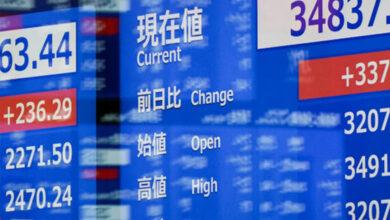
On Wednesday, US stock markets hit record highs on the back of optimism caused by Trump’s victory. Investors believe that the new president’s tax and regulatory policies, as well as his ‘America First’ slogan, will bring significant benefits to domestic companies. All three major US indices hit historic highs: the Dow Jones rose by more than three per cent to 43,570 points, the S&P 500 rose by more than two per cent, and the Nasdaq added about 2.3 per cent.
In our infographic, you can see the changes in the S&P 500 index under different US presidents.
Infographic: IA FACT
What does the S&P 500 index show?
The S&P 500 index is calculated by Standard & Poor’s, which is considered the leading provider of financial information in America. This index is used to reflect the state of the US stock market and the economy as a whole. It includes 500 large companies from various sectors, such as technology, energy, finance, healthcare and others. The broad coverage of various industries makes it representative of the entire US economy. The index, in particular, takes into account data from such giant companies as Apple, Microsoft, and Amazon and is considered an important indicator of the overall state of the US economy.
S&P 500 index under different presidents
Interestingly, the infographic above shows the difference in economic performance during the presidencies of presidents of different parties. Note that democratic presidents (marked with a donkey logo) mostly demonstrate high percentage growth in the S&P 500 index. On the other hand, Republican presidents (marked with the elephant logo) have mixed results, i.e., both positive and negative performance.
The S&P 500 index can show the impact of political policies on the stock market. However, for the sake of objectivity, it is worth adding that economic performance also depends on external factors, such as global crises, technological development, or global markets, which can have an impact regardless of the policies of a particular president. In particular, George W. Bush’s two terms, according to the index, show a financial crisis that was nevertheless caused by another – the bursting of the tech bubble and the bankruptcy of Lehman Brothers.
Moreover, positive market movements during presidential elections usually do not have a long-term perspective. The S&P 500 index showed similar growth rates under many previous US presidents.
As for European countries, there are already warning voices about the protectionist strategy that Trump plans to pursue.
The protectionist steps that his administration is likely to take could increase pressure on weak economic growth in Germany, Austria and other European countries. Such policies could lead to higher import costs, new customs barriers and export restrictions, which would hit European companies, especially those dependent on international markets.
Donald Trump promised to ‘restore’ the United States, which was met with significant fluctuations in global stock prices. The enthusiasm was not limited to Wall Street, as so-called ‘Trump trades’ in different countries also showed strong growth.
What are Trump trades?
Donald Trump’s victory in the presidential election is having an impact on investment sentiment around the world, as his policy agenda includes a number of measures that could support certain sectors of the economy.
‘Trump trades’ are investments that can benefit from Trump’s victory. This includes cryptocurrencies, in particular bitcoin, which reached a record high on the day the presidential election results were announced. During the election campaign, Trump was known to have expressed support for cryptocurrencies. Tesla shares also rose significantly, as Elon Musk strongly supported Trump during the election campaign. They increased by 15%.
Trump Media and Technology Group also went up. This media company, which was founded by Trump, owns and operates the social platform Truth Social. It was offered as an alternative to other popular social networks such as Twitter and Facebook. The events of the storming of the Capitol, which Trump managed via Twitter, led to the blocking of his account. So Trump decided to create his own social network to influence society despite the restrictive policies of other media brands. Trump’s company now also has ambitious plans to expand into other media segments, including entertainment and technology services.
Markets expect Trump’s Trump Media and Technology Group to demonstrate a successful business model that will allow it to compete with other media giants.
Will the euphoria last?
CNN assures that the euphoria surrounding Trump trades will soon subside. The markets reacted violently not so much because the Republican frontrunner won the election, but because there was at least some certainty. Traders prefer stability and political silence in the macroeconomic environment. Indeed, with the opening of the stock market after Trump’s victory was announced and the realisation that the Democrats would not counter the Republicans by criticising the election results, traders breathed a sigh of relief. However, this does not mean that the outlook for the markets is set for the long term. Art Hogan of B Riley Wealth Management, quoted by CNN, said that if Donald Trump fulfils his promises, it could lead to higher deficits, inflation and reduced economic growth due to deportations of workers.
Hogan also noted that although such changes have negative consequences, they have not yet become a reality. However, investors should remain cautious: Trump’s plans, especially for large-scale import tariffs, could lead to higher prices and additional inflation, creating a difficult economic situation for the US.
Deja vu of 2016?
Experts warn that we should not follow the logic of market changes in 2016, when Trump defeated Hillary Clinton. This is a dangerous déjà vu for investors, which forced them to increase the value of stocks and the dollar, while reducing the yield on Treasury bonds. After all, the situation in the economy and markets is now significantly different from the events of 2016.
David Rosenberg, head of Rosenberg Research, urges investors not to ignore these differences.
‘Now we see the old scenario playing out exactly as it did then, but how long will it last? Backthen, the prospects seemed much more attractive,’ the expert was quoted as saying by the popular American financial resource MarketWatch.
Thus, the markets reacted strongly to Donald Trump’s victory, seeing opportunities for economic growth due to his plans for tax cuts and deregulation. At the same time, experts are calling for caution, as the current economic environment and global challenges are significantly different from the situation in 2016. Investors should take into account the long-term risks associated with inflation, rising deficits and possible tariff wars, as the euphoria of the markets may be short-lived.