Underground kindergartens in Zaporizhia and Kharkiv regions: four years of delays and only the first real steps

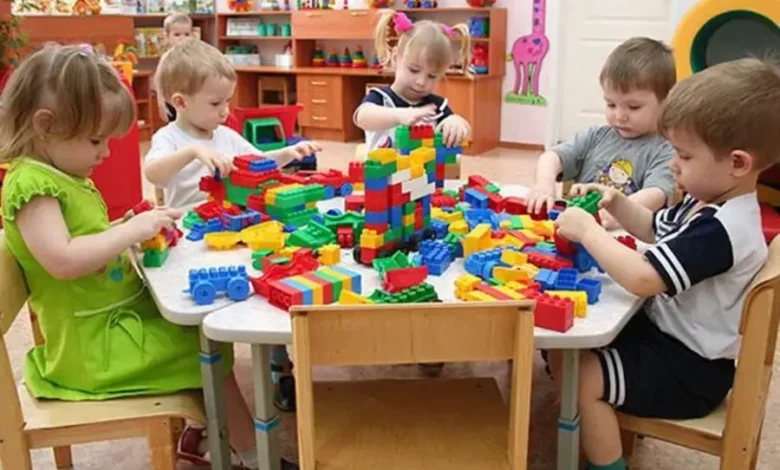
After four years of war, Ukrainian frontline cities are just beginning to build underground kindergartens that could have protected children from rocket attacks at the beginning of the conflict. The lack of strategic planning and systemic solutions during the first years of hostilities led to thousands of children being left without a safe educational space, and the construction of such facilities was postponed to a critical point. Only now are the authorities of Zaporizhia and Kharkiv regions starting real work, demonstrating the urgent need for a comprehensive approach to security and preschool education.
The first underground kindergartens in Zaporizhzhia
On March 10, 2026, the head of the Zaporizhzhia Regional Military Administration, Ivan Fedorov announced the start of construction of three underground kindergartens in Shevchenkivskyi and Zavodskyi districts. The cost of one facility is estimated at approximately 120 million hryvnias, and financing is provided by subventions from the Ministry of Education and Science and international donors. The first kindergartens are planned to open by September 1, 2026.
Previous decisions regarding the operation of preschool institutions in Zaporizhia provided for mixed education of children of senior preschool age for three hours without meals, with the written consent of parents. The resumption of work of 18 municipal kindergartens in August 2025 was the first step towards adapting the education system to the new security conditions.
Kharkiv experience: massive construction of underground schools and kindergartens
In the Kharkiv region, where the threat of shelling remains high, 43 underground schools are already being implemented, most of which are planned to be completed by the end of 2025. The cost of building a school for 500 students is about 150 million hryvnias, while an underground kindergarten that meets sanitary standards and has space per child will cost even more.
The first underground kindergarten in the Pisochyn community, designed for 500 children, is 70% ready, and the construction is financed by local and regional budgets, as well as international investments. Next year, ten such kindergartens are planned to be implemented in the region.
The Head of the Kharkiv Regional Military Administration, Oleg Sinegubov stressed that this is the largest number of underground schools among the front-line regions. Of the 43 schools, seven are being built with the support of international partners, five schools are financed by the Warren Buffett Foundation and are designed for a thousand students, two schools are being built with the participation of Lithuanian partners, and the rest are using state funds. Most of the facilities are planned to be completed by the end of 2025, the last of them by the end of April 2026.
Underground schools allow for safe education for children: currently, 44 thousand schoolchildren study offline out of 200 thousand in the region. After two years of active implementation of the projects, it can be expected that about half of school-age children will have safe educational spaces.
However, this raises a number of related problems: organizing transportation, studying in two shifts, moving children by bus during air raids, which creates additional risks and requires comprehensive solutions.
It is impossible to use the premises of underground schools for preschool education due to their occupancy and sanitary standards. That is why the decision was made to build separate shelters at kindergartens. Sinegubov explained that small kindergartens for 50 children require costs comparable to projects for 200 children, so comprehensive projects are being developed to ensure safety and proper learning conditions. The plan for next year includes the implementation of ten underground kindergartens.
Underground kindergartens are built taking into account all safety standards, which allows them to be used as shelters during air raids or missile strikes. This arrangement ensures the minimization of risks and the preservation of children’s lives even in conditions of intense threats. The area per child in kindergartens is larger than in schools due to additional sanitary and technical premises.
Logistics and social challenges
The construction of underground kindergartens is accompanied by numerous organizational problems. Children need safe transportation, a schedule for staying in kindergarten, and proper arrangement of premises, which is especially relevant in the Kharkiv region, where some students study in two shifts. Traveling by bus during air raids creates additional risks that require a comprehensive approach to organizing the educational process.
Underground kindergartens and schools are becoming an important element of civil defense. They allow not only to ensure the safety of children, but also create a backup infrastructure for medical institutions, administrative premises and critical energy supply facilities. The experience of the Kharkiv region demonstrates that the large-scale implementation of such projects can ensure safe education for tens of thousands of children and increase the level of protection of the population in front-line regions.
The implementation of underground kindergartens in Zaporizhia and the Kharkiv region demonstrates that ensuring the safety of children in front-line regions could not be postponed for years. The construction of these facilities was critically needed at the beginning of the war, and the delay in making decisions led to the fact that thousands of children were left without reliable shelter, and the educational process was forced to adapt to limited conditions.
The introduction of underground infrastructure now not only allows us to guarantee the safety of children, but also forms a model for a comprehensive approach to civil protection, which includes medical facilities, administrative buildings and critical energy supply facilities. At the same time, it is obvious that four years of delay have cost significant time, resources and created additional risks for children, which makes these projects important, but at the same time belated from the point of view of strategic planning.