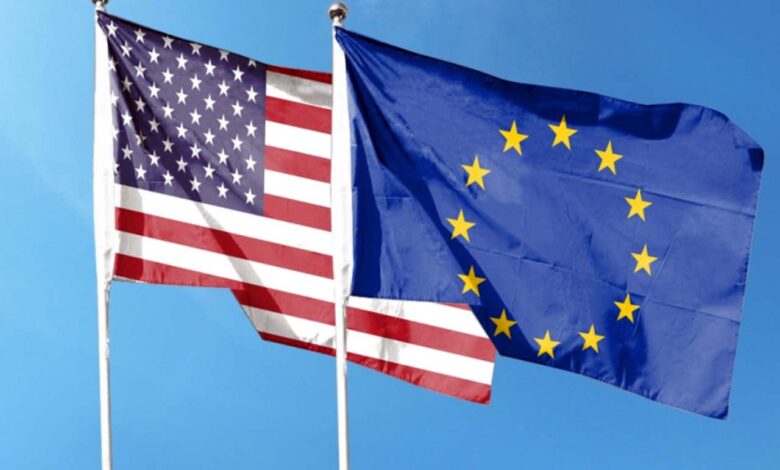
The United States and the European Union signed a strategic agreement on a partnership in the field of extraction and supply of critical minerals.
US Secretary of State Marco Rubio and EU Trade Commissioner Maroš Šefčovič signed a memorandum aimed at diversifying supply chains of materials that are vital for high-tech production.
The allies’ decision is due to the need to reduce dependence on a limited number of suppliers, in particular China, which currently dominates the processing of strategic raw materials. The US Secretary of State emphasized that excessive concentration of resources in one place creates unacceptable risks for the economic success and security of Western democracies.
“Excessive concentration of these resources, the fact that they are concentrated in one or two places, is an unacceptable risk. We need diversity in supply chains,” the US Secretary of State noted.
The US Trade Representative, together with European partners, is developing an action plan to coordinate policies that would effectively counteract non-market practices that distort global markets. The parties are discussing the introduction of special mechanisms, including setting minimum prices and forming strategic reserves of minerals needed for the production of electric vehicles, semiconductors and complex weapons.
“The agreement will strengthen transatlantic relations and ensure faster work on achieving common goals,” the EU Trade Commissioner noted.
The long-term strategy of Washington and Brussels involves the creation of a multilateral initiative with the participation of other partner states. The US has already signed similar memoranda with Japan and Mexico. Joint efforts are aimed at depriving individual countries of the opportunity to use dominance in the raw materials market as an instrument of geoeconomic pressure.
Strengthening the resilience of supply chains will allow Western manufacturers to ensure the stable development of advanced industries. The implementation of the signed agreement will be an important stage in the formation of a new architecture of global economic security, based on transparent trade rules and mutual support of allies.