Vegetables, fruits and berries are getting more expensive: experts explain why prices are rising and what to expect this season

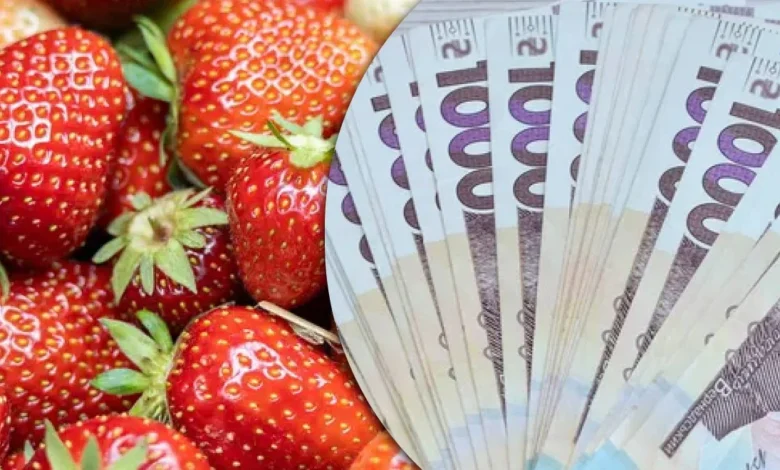
In Ukraine, it is becoming more and more difficult to afford quality vegetables and fruits. Once upon a time, every year Ukrainians traditionally expected the beginning of the season of strawberries, cherries, apricots, fresh potatoes and tomatoes. It was with the first harvest that the prices of seasonal fruits and vegetables gradually decreased, making them available to a wide range of buyers. Seasonal vegetables and fruits have always been a familiar element of the summer diet, and their appearance was associated with the opportunity to afford fresh vegetables at an acceptable price. But now more and more Ukrainians are forced to look at the counters only with cautious hope, because the prices of fruits and vegetables are constantly rising. War, climate change, production cuts and labor shortages are turning access to fresh summer fruits into a test for the family budget. Any chance we’ll see cheap strawberries and cherries this year? Experts answer these and other questions.
The cost of vegetables and fruits from this year’s 2024 harvest, which are still on the shelves of supermarkets and markets, is twice the price of last year’s 2023 harvest. And even this year’s first arrivals on the market also show higher price tags compared to last year. As remarked Deputy Chairman of the National Bank of Ukraine, Serhiy Nikolaychuk, current food prices in Ukraine have almost equaled the level of European countries, and in some cases even exceed them. The main reason is that domestic vegetables are simply lacking. According to the calculations of agricultural expert Ivan Tomych, due to the war circumstances, the amount of cultivation of some crops decreased by 3-4 times. As a result, up to 70% of the traditional “vitamin basket” today is covered by imports, and therefore, it is imported supplies that increasingly determine the price policy.
Potatoes are a vivid example. Today, last year’s potatoes are sold in supermarkets for an average of 36.70 hryvnias per kilogram, while last year in the same period they cost 32.32 hryvnias. New, young potatoes are even more expensive — 62.73 hryvnias now against 47.66 hryvnias in 2024. Although you can find lower prices in the bazaars: in the capital market, last year’s potatoes are asking 26 hryvnias for a kilogram, and young ones – 40 hryvnias.
Agricultural expert Ivan Tomych explains, that the price of early potatoes is significantly affected by the weather conditions, which this year were not too favorable: there was a drought somewhere, and somewhere, on the contrary, excessive rains. Therefore, he notes, there is no need to count on a significant decrease in the price of potatoes. Stocks of domestic potatoes usually last until November or, at most, until the New Year. After that, you have to buy imported potatoes from Poland and Lithuania, which, of course, is more expensive. If more potatoes were planted in Ukraine, their price could be lower, but such trends are not currently observed.
Olha Samoilichenko, executive director of the Ukrainian Association of Potato Producers, adds that the situation can improve in 2025 only if the weather conditions are ideal in summer and early autumn. However, according to her, this sounds utopian: potatoes need regular moderate rains and the absence of peak temperatures, and such weather conditions have already become rather an exception for Ukraine. In addition, in some regions there is already a shortage of water even for irrigation, which is connected both with the destruction of the Kakhov reservoir and with general climate change.
Cabbage is another vivid example of a volatile situation. Last year’s cabbage is currently sold at 54.89 hryvnias per kilogram in the “ATB” supermarket, while a year ago its average price was 17.65 hryvnias. Early cabbage, despite the fact that it has already become cheaper by 38% from the starting prices of suppliers, still costs 12-22 hryvnias per kilogram, which is three times more expensive than in June 2024.
The situation with cucumbers is a little more optimistic, but only comparatively. Ukrainian hothouse cucumbers are currently sold, depending on quality, at 30-55 hryvnias per kilogram at supplier prices. Despite the gradual price reduction, they are still 37% more expensive than last year. For example, at the Shuvar market in Lviv, the average price of gherkins is 36 hryvnias per kilogram. East Fruit analysts note that it was a certain consolation for producers that the drop in prices coincided with the completion of the first crop rotation of cucumbers. Currently, greenhouse farms are actively preparing greenhouses for the second stage of cultivation, which is planned to begin in the second half of summer.
Tomatoes currently cost an average of 95.70 hryvnias per kilogram. In some networks, you can find cheaper options, for example, Novus sells red tomatoes for 73.99 hryvnias. For comparison: in 2024, the average price of tomatoes was 79.49 hryvnias.
Despite the fact that Ukraine has large greenhouse farms in the western regions, in Vinnytsia and Cherkasy, a significant part of tomatoes and cucumbers is still imported from abroad – from Spain, Turkey, Morocco. At the same time, as Oleksandr Khorev from the EastFruit Weekly Ukraine project points out, the production cost of tomatoes is lower in Turkey – due to cheaper electricity and climatic conditions that allow tomatoes to be grown all year round. When the season began in May, Turkish tomatoes entered the Ukrainian market en masse. Although they are criticized for their taste, claiming that Ukrainian tomatoes are tastier, there is some truth in this: Turkish tomatoes are picked when they are still unripe in order to be delivered to the consumer in time, while Ukrainian tomatoes are picked in a more ripe state.
Among the deep reasons for the increase in the price of vegetables and fruits, agricultural experts single out, first of all, a catastrophic shortage of workers. As Ivan Tomych notes, growing vegetables is primarily manual, professional work, and there is such a shortage of such workers today that the situation is already approaching a critical limit. Many men who are considering jobs as tractor drivers or mechanizers at agricultural enterprises, first of all ask about the possibility of booking from mobilization, and only then – about the salary level.
The problem of storage creates additional complexity. The lack of a sufficient number of modern vegetable storage facilities does not allow the harvest to be stored for a long time. Andriy Marushchak, commercial director of Van Dyke Technics explains, that because of the war, the situation only worsened: many warehouses were destroyed, many remained in the occupied territories – in general, it is about a third of all vegetable warehouses in Ukraine. This is what leads to a catastrophic lack of capacity for storing vegetable products.
This year’s weather conditions seriously affected the formation of fruit prices. Due to abnormally low temperatures in April in Turkey, Greece, Spain, as well as due to a prolonged cold spring in Ukraine, the beginning of the season of stone crops – such as cherries, apricots, peaches and nectarines – has been shifted by almost a month. According to Lyudmila Bilous from the Novus retail network, if events develop normally, Ukrainian buyers should see a high demand for these fruits at attractive prices as early as May.
However, spring frosts caused serious damage to Ukrainian gardeners. According to the Deputy Chairman of the All-Ukrainian Agrarian Council, Denys Marchuk, the apricot and peach harvest was completely lost in some farms. As for cherries and sweet cherries, losses amount to 30-50%. Pears and apple trees were also partially affected.
The situation with apples is particularly telling. Now their average price is 85.20 hryvnias per kilogram, while in the same period last year it was equal to 28.11 hryvnias. If this trend continues, apples familiar to Ukrainians risk turning into a premium product. Agricultural expert Ivan Tomych explains this by the aging of gardens and the decrease in the area of new plantations.
As Oleksandr Khorev from the analytical project EastFruit Weekly Ukraine notes, nowadays there are practically no domestic apples left. The bulk of the apples on the shelves are imports, mainly from Poland. He adds that the price of bananas is often used as a proxy for apple prices, as bananas remain the most popular alternative.
Currently, bananas are sold for an average of 74.15 hryvnias per kilogram, although a year ago their average price was 64.03 hryvnias. According to Khorev, the price increase is related to weather disasters in the producing countries.
The price of cherries is also impressive. On the capital market, a kilogram of Ukrainian cherries costs 180 hryvnias on average, while imported cherries cost 380 hryvnias. In Lviv, at the “Shuvar” market, cherries are offered for 200 hryvnias per kilogram, while last year at this time they cost 70 hryvnias. According to Oleksandr Khorev, it is not worth hoping for cheap cherries or apricots this season, since in many farms the harvest has either completely died or more than half has been lost. He also reminds that a large part of the main regions of growing stone crops in Ukraine is currently under occupation.
As for apricots, imported apricots are sold at an average of 100 hryvnias per kilogram at the Capital Market, while at Lviv “Shuvar” they are sold at 130 hryvnias, which is higher than last year’s price of 105 hryvnias.
Strawberries show an even sharper jump in price. In the “Ashan” network, they ask for 269 hryvnias per kilogram of strawberries, while last year the average price was 123.40 hryvnias. On the capital market, domestic strawberries cost an average of 150 hryvnias per kilogram, while imported strawberries cost 130 hryvnias.
Agricultural expert Ivan Tomych explains that due to unfavorable weather conditions – rains and frosts – this year’s strawberry harvest in Ukraine is very small. Meanwhile, in Turkey and Greece, it is the peak of strawberry picking, and thanks to more favorable climatic conditions, the cost of its production there is lower. Tomych emphasizes that there will be a short period of active strawberry picking in Ukraine, after which the supply will decrease sharply.
Farmers predict that the price of strawberries may drop to 80-100 hryvnias per kilogram during the peak harvest period, but it will not become cheaper due to the general increase in cost. According to him, in the height of the season, less attractive berries for jam and freezing will also be offered for 25-30 hryvnias per kilogram.
Despite active imports, Ukrainians mostly prefer products of domestic production, in particular because of their taste, freshness and trust in local producers. Ludmila Bilous from the Novus chain emphasizes that it is in season that Ukrainian fruits and vegetables show their best taste. At the same time, in the winter period, the bulk of fruits and vegetables are imported: tomatoes come from Spain, Morocco, and Turkey; oranges – from Spain, Greece, Turkey and Egypt; tangerines — from Turkey, Greece and Spain.
The agricultural market gives a clear answer to the question of where prices will move in the future: the smaller the harvest, the higher the price. Such a balance often leads to the fact that it is even more profitable for farmers and agricultural holdings to get smaller volumes of crops, but it is more expensive to sell them. However, it is important for consumers that there are enough products and their price remains acceptable.
Oleksandr Khorev predicts that although the prices of fruits and berries will decrease, we should not expect a significant decrease in prices. According to him, the prices will be based on imported supplies from Turkey and the southern countries of the European Union. He clarifies that even in the best case, prices for fruits and berries this year will be higher by at least 20% compared to last year, and for some items – up to 50%.
The executive director of the Ukrainian Association of Potato Producers, Olga Samoilichenko, adds that Ukrainian potatoes are traditionally cheaper than European potatoes, although there is no economic basis for this. After all, most of the components of production — fertilizers, protective equipment, equipment — are purchased in Europe at European prices. Such a price paradox disappears as soon as the demand exceeds the supply, and then the price of Ukrainian potatoes begins to be oriented towards import prices, which happened last year.
Agricultural expert Ivan Tomych emphasizes that as long as the war continues, the Ukrainian fruit and vegetable industry will suffer from a labor shortage, and prices will remain dependent on imports. According to him, a state program is needed, which would be oriented towards the support of the peasants: it is the stimulation of people in the countryside that will be able to give an impetus to the increase of production.